Last reviewed: 19 November 2026
The quickest way to find aires in France is to use a dedicated digital map such as Campercation's searchable stopover map, which lists aires alongside overnight parking, waste disposal, water and fuel across Europe. You can also use printed guides like the ACSI or Camperstop Europe books, official French government signage on the road, and free apps such as Park4Night. Combining a reliable digital map with a backup guidebook gives you the most flexible approach, especially in rural areas with patchy mobile signal.
Quick facts
- France has thousands of aires de service and aires de camping-car, ranging from free rural spots to paid municipal sites with electric hook-up
- Many aires are free or charge €5-15 per night; some larger municipal aires charge more in peak season
- Campercation lists 19,350+ stopovers across the UK and Europe, including aires, on one searchable map (as at 20 September 2026)
- French aires are signed with a distinctive blue motorhome symbol on brown or white roadside boards
- Service points (aires de service) for emptying cassettes and taking on fresh water are often separate from overnight parking aires
- You'll need a Camping Gaz or Calor-compatible adaptor for LPG at French service stations
What exactly is an aire in France?
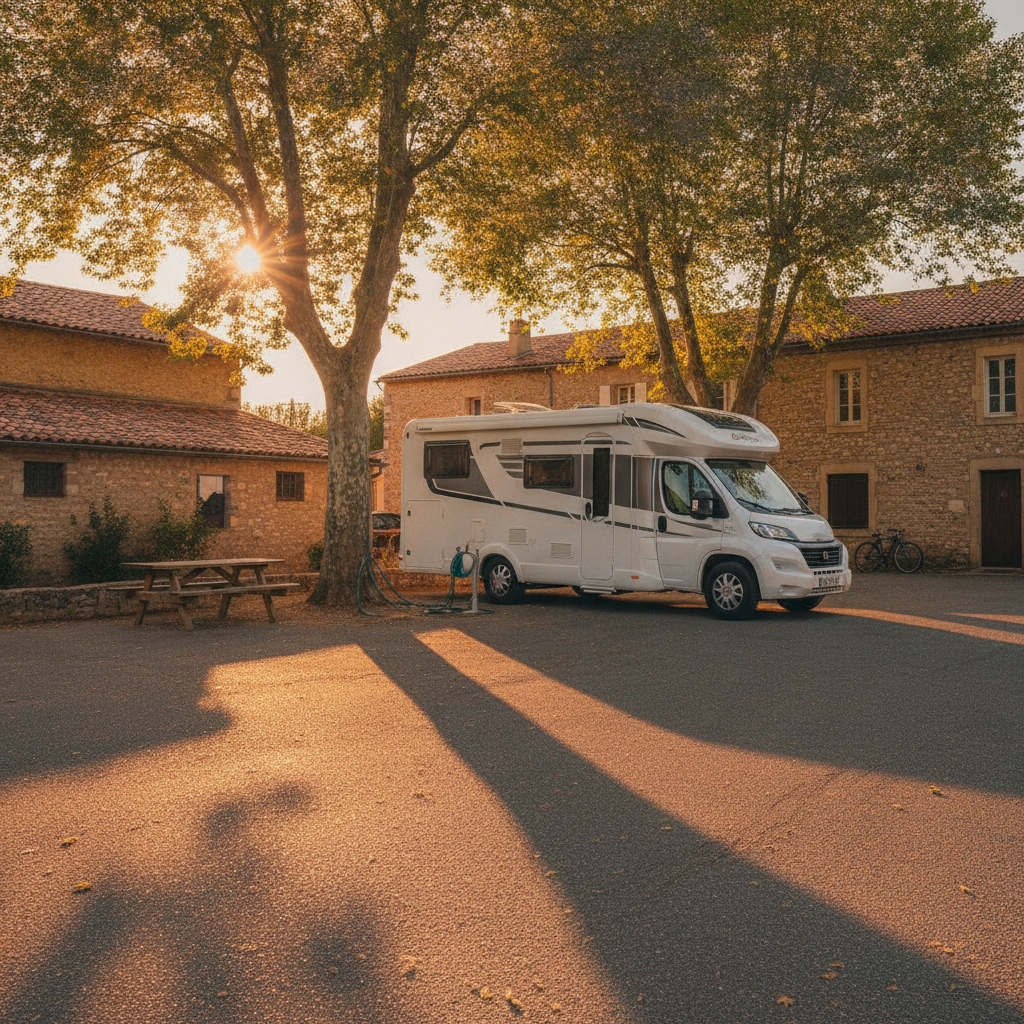
The word "aire" simply means area or stopping place. In practice, French motorhomers use two overlapping terms. An aire de service is a service point, usually a dedicated bay with a flap or drain for cassette emptying, a fresh water tap, and sometimes a grey water drain. An aire de camping-car (or aire de stationnement) is a designated overnight parking area for motorhomes, often provided by the local commune. The two things are sometimes on the same site, sometimes completely separate. Knowing the difference matters, because you might need to drive to a service point in the morning even if you slept overnight in a free parking aire nearby.
Facilities vary enormously. A basic rural aire might be a tarmacked corner of a village car park with a single water tap. A well-funded municipal aire in a town like Sarlat or Honfleur might offer electric hook-up, WiFi, individual service columns, a barrier system and an online booking platform. Both are called aires. That's why finding one that suits your needs, rather than just any aire, is the real challenge.
How do I find aires in France using a digital map?
A live searchable map is the most practical tool for finding aires in France, especially when you're already on the road and plans change. Campercation's aires in France listings sit alongside UK pub stopovers, waste disposal points, water, LPG and fuel on a single platform. That means if you're crossing from Dover and your cassette needs emptying before you reach your first overnight stop, you can search for a service point and an overnight aire in one place rather than switching between multiple apps.
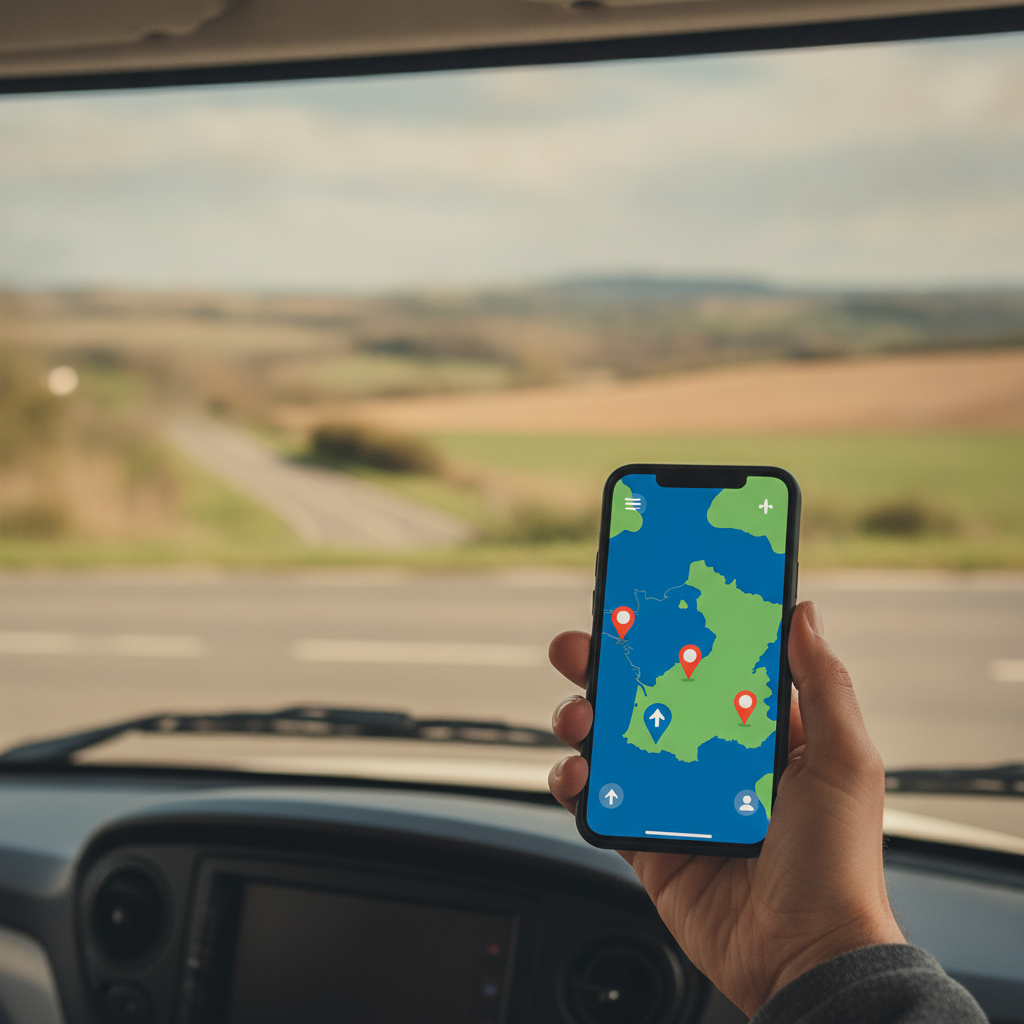
Campercation lists 19,350+ stopovers across the UK and Europe on one searchable map, as at 20 September 2026. When you're planning a route through Normandy, Brittany or the Dordogne, being able to filter by type (overnight parking, waste disposal, water, LPG) on a single map genuinely saves time. Use the Campercation stopover map to search your intended route before you leave home, then download or screenshot key pins for areas with unreliable mobile signal.
Other popular digital tools include Park4Night, Campercontact, and Motorhome Parking. Each has a different balance of user-submitted content versus verified listings, so it's worth cross-referencing two sources for any aire you're counting on, particularly out of season when some sites close.
How to Find the Right Aire in France
Are printed guidebooks still useful for finding aires in France?
Yes, and they're especially useful when you're in a valley, a gorge, or a rural department where 4G is non-existent. The two most widely used printed guides among British motorhomers are the Camperstop Europe book (published by ACSI) and the Guide Officiel Aires de Camping-Cars, published annually by the French camping-car federation. Both list GPS coordinates, facilities, prices and opening periods. The French guide in particular is thorough on small municipal sites that don't appear in English-language apps.
The practical drawback of printed guides is that they're out of date the moment they're printed. Prices change, some aires close in winter, new ones open. Use a printed guide as a solid backbone for pre-trip planning, then verify availability with a live map or a quick phone call to the local mairie before you commit to a long detour.
What do French roadside aire signs look like?
France uses a standardised blue sign with a white motorhome symbol, often on a brown tourist board if the aire is near a point of interest. Motorway service areas (aires d'autoroute) have their own signs but are not the same as motorhome aires, so don't confuse the two. The dedicated camping-car signs typically appear on the approach to a village or town centre, pointing you off the main road. In tourist regions like the Lot, the Ardèche and Alsace, brown signs are common and usually reliable. In less-visited departments, signing can be patchy and a GPS coordinate from your map app is a surer guide than following road signs alone.
How do I find the best aires in France for different trip types?
"Best" depends entirely on what you're after. Here are three common priorities and how to match them to your search:
- Coastal and scenic spots. Brittany, the Atlantic coast and Provence have hundreds of well-signed municipal aires, many with sea or mountain views. Search by region and filter for overnight parking on a map tool. These fill up fast in July and August, so either book ahead (many now have online systems) or arrive by early afternoon.
- Free overnight stops. Central France, the Massif Central, Burgundy and rural Normandy have a generous supply of free aires provided by small communes eager to attract tourist spend. Cross-reference Park4Night reviews with Campercation listings to get a current picture of whether a free aire is still open and genuinely free.
- Full-service aires with electric hook-up. Look for aires using the bornes system (Flot Bleu or Urba Flux service columns are the most common). These are usually paid and often require a jeton (token) bought from a local shop or a contactless payment card, depending on the system installed. The Campercation aires France listings flag service facilities so you can filter for what you need before you arrive.
Do I need to book aires in France in advance?
Most aires in France operate on a first-come, first-served basis and don't require booking. That's one of their biggest appeals compared with campsites. That said, popular coastal aires in Brittany, the Basque Country and the Mediterranean can fill by mid-afternoon during July and August. A small but growing number of municipal aires now use barrier systems and online booking platforms such as Parknight or the local commune's own site. If you're planning around a specific location in peak season, it's worth checking whether that aire has introduced a booking system in the past year or two, as practice has been changing.
Outside of July and August, pre-booking is rarely necessary anywhere in France. Shoulder season (May, June, September, October) is when many motorhomers find the best balance of pleasant weather, quieter aires and lower or zero nightly fees.
What should I check before arriving at a French aire?
A few practical checks will save you a wasted journey:
- Height and length restrictions. Many village aires have a barrier or a low bridge on approach. Check the listed vehicle limits before you rely on the GPS route.
- Opening dates. Seasonal aires, especially in ski resorts and beach towns, often close between October and April. App listings don't always update in real time.
- Service column payment method. Carry a mix of coins, a contactless card, and consider a Flot Bleu or Urba Flux jeton if you're heading into areas with older infrastructure.
- Waste water rules. Never empty grey water or cassettes on the ground. France takes this seriously, and local police (gendarmerie) do issue fines in popular areas.
Frequently asked questions
How do I find aires in France for free?
Use a digital map tool such as Campercation or Park4Night and filter by overnight parking, then check user reviews to confirm whether the site is currently free. Rural and central France have many free municipal aires provided by small communes. Always verify opening status before arriving, as some sites close seasonally or have recently introduced charges without updating their online listings.
What is the best aires France map to use?
Campercation's searchable map covers 19,350+ stopovers across the UK and Europe, including aires, waste disposal, water and fuel, on one platform (as at 20 September 2026). Park4Night and Campercontact are also widely used. For offline backup, the annual Guide Officiel Aires de Camping-Cars includes GPS coordinates and facility details for thousands of French sites and works without mobile signal.
Do you need to book aires in France?
Most French aires are first-come, first-served with no booking required. However, popular coastal aires in Brittany, the Basque Country and the Mediterranean can fill by early afternoon in July and August. A growing number of municipal aires now use online booking systems or barrier-entry. Check the specific aire's current booking policy before peak season travel, as practice has been changing in recent years.
What facilities can I expect at a French aire de camping-car?
Facilities range from a bare tarmacked area with a water tap to a full municipal site with electric hook-up, WiFi, individual service columns, showers and a barrier system. Most established aires have a cassette emptying point and fresh water supply. Electric hook-up is less common at free aires and in rural areas. Always check the facility listing before planning to empty your waste tank or recharge.
Are French aires open all year round?
Many are, but seasonal aires in beach towns, ski resorts and some tourist regions close between October and April. Opening dates vary by commune and aren't always updated promptly in app databases. If you're travelling outside the main summer season, cross-check the aire's details on two sources and, if in doubt, call the local mairie to confirm current access before making a long detour.
How is finding aires in France different from using UK pub stopovers?
French aires are dedicated motorhome stopping places, mostly provided by local councils, with no expectation of spending money at a nearby business. UK pub stopovers are informal arrangements with pubs, where staying the night is offered in exchange for visiting the pub. Aires tend to have standardised service infrastructure; pub stopovers are more variable in facilities but often more social and scenic. Both can be found on Campercation's map.