Last reviewed: 22 October 2026
Since Brexit, GB residents travelling to France and the wider EU cannot bring most meat, dairy, or products containing them, whether home-cooked or shop-bought. Plant-based foods, most packaged goods without meat or dairy, and some sealed commercial products are generally permitted, but the rules are strict and fines for breaches can be significant. Always check the latest APHA and French customs guidance before you travel, as the rules are subject to change.
Quick facts
- Fresh meat (beef, pork, lamb, chicken, game) from Great Britain is banned from personal import into France and the EU
- Cow's milk dairy products (cheese, butter, cream, yoghurt) from GB are banned for personal import into the EU
- Plant-based foods, bread, cakes without meat or dairy filling, fruit, veg, tea, coffee, and most dry goods are permitted
- Commercially sealed products with very small amounts of processed dairy or meat may be allowed, limits are very specific and you must check current APHA guidance
- French customs officers can confiscate banned food at the border; fines of up to €1,000 can apply
- A small number of exceptions exist for baby formula and medically necessary food, always carry documentation
Why did the rules change after Brexit?
Before 2021, UK travellers could carry virtually any food into EU member states because of single-market free movement rules. Since Great Britain left the EU single market, it is now treated as a third country for biosecurity purposes. France, like all EU member states, applies EU Regulation 2019/625 and related rules to prevent animal diseases from entering the bloc via personal imports of animal products.
The practical result: the vast majority of meat and dairy products you'd normally pack in a motorhome fridge are now banned. It's not a grey area. Border control officers at the Channel Tunnel terminal in Coquelles and at Calais port do carry out checks, and confiscation is the minimum consequence if banned food is found.
What meat and dairy can I NOT take to France?
The banned list is broader than most people expect. It covers:
- Fresh, chilled, or frozen meat of any kind, beef, pork, lamb, chicken, venison, sausages, bacon, burgers
- Home-cooked meat dishes, a shepherd's pie or bolognese in a tub is banned just as much as raw mince
- Cow's milk, butter, cream, yoghurt, and almost all hard and soft cheeses from GB
- Products containing meat or dairy where those components come from GB, pork pies, Scotch eggs, quiches, cheesecakes
- Raw eggs and fresh egg products
The key test is whether the item is an animal product originating in Great Britain. If it is, leave it at home.
What food CAN I take to France in my motorhome?
Plenty of motorhome larder staples are absolutely fine. The following are generally permitted:
- Bread, wraps, crackers, pasta, rice, oats, flour, and other dry goods
- Fresh fruit and vegetables (some species may face phytosanitary restrictions, so check for anything unusual)
- Jams, marmalade, honey, chocolate, biscuits, crisps, and confectionery
- Tea, coffee, soft drinks, squash
- Tinned goods, tinned fish, tinned veg, soups (check the label: no meat content from GB)
- Plant-based milks and plant-based cheeses or spreads
- Dried pulses, lentils, nuts, seeds
- Cooking oils, vinegar, condiments, spices
- Alcohol (subject to quantity limits for duty purposes, not biosecurity)
The good news is that once you're in France, shopping for fresh meat and cheese is genuinely one of the pleasures of the trip. French supermarkets, Leclerc, Intermarché, Lidl, are well stocked, competitively priced, and often located near the aires and overnight parking spots listed on Campercation.
What to do with your food before crossing to France
Are there any exceptions for meat and dairy?
There are very limited exceptions. Baby formula and food for infants, as well as food required for medical reasons, may be brought in if certain conditions are met, including that the product is commercially sealed, clearly labelled, and does not require refrigeration before opening. The quantities allowed are very small and the rules are precise. If you rely on these exceptions, carry documentation and check the current APHA guidance well before your departure date.
Some commercially produced, highly processed, shelf-stable meat or dairy products may fall within specific derogations, the EU rules allow very small quantities of composite products in some cases. But the rules here are complex, change periodically, and are not something to rely on without checking the most up-to-date official guidance. When in doubt, leave it out.
What happens if I try to bring banned food across the border?
French customs (La Douane) and EU border inspection posts have the authority to inspect personal vehicles, including motorhomes. If banned animal products are found:
- The food will be confiscated immediately
- You may be issued a fixed penalty fine; fines of up to €1,000 have been reported for serious breaches
- In cases involving large quantities, criminal proceedings are possible
The risk isn't worth it. The checks at the Channel Tunnel terminal and Calais docks do happen, particularly for motorhomes and campervans, which often carry food for longer trips.
How should I stock the motorhome for France?
The practical answer is to plan around what you can take, and shop for the rest when you arrive. Here's how experienced motorhome travellers handle it:
- Pack dry goods, tinned food, plant-based products, and alcohol before you leave
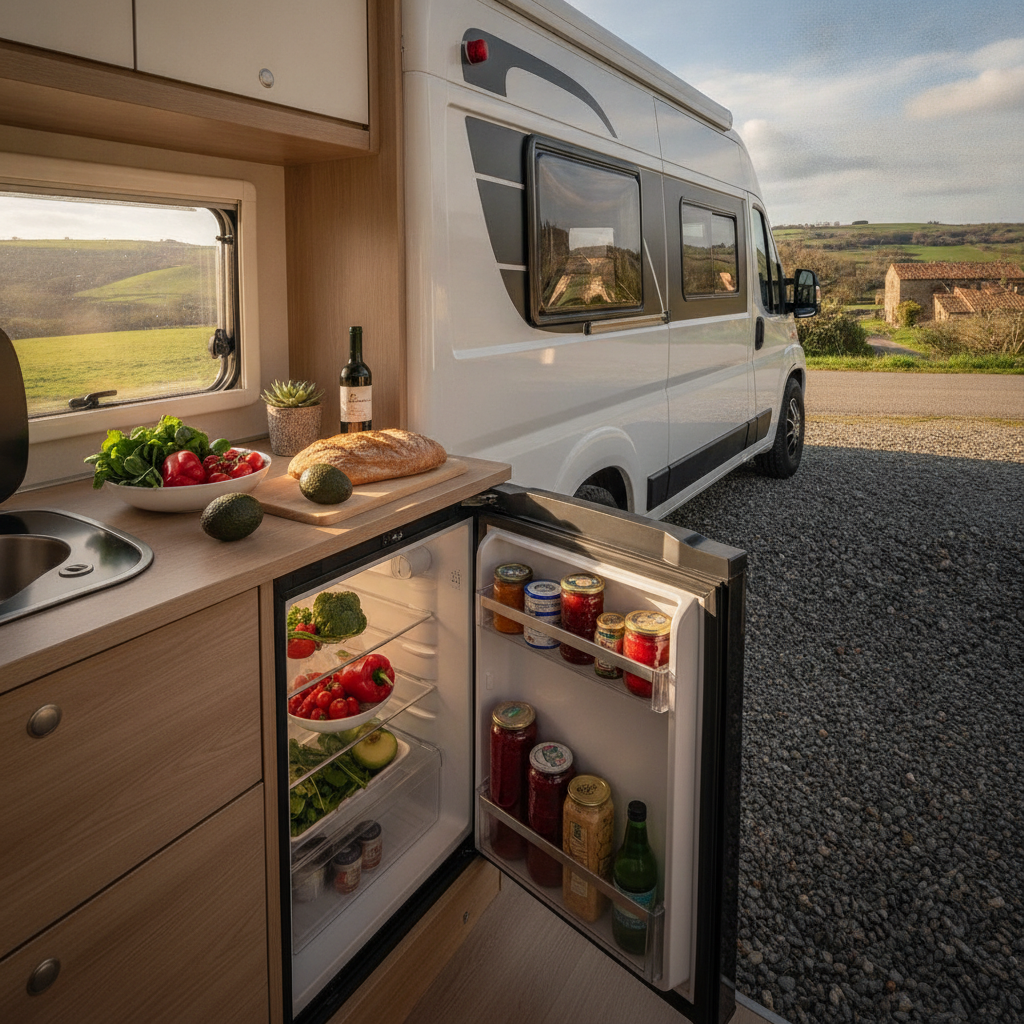
- Empty the fridge of all meat and dairy before crossing the border
- Buy fresh meat, cheese, and dairy at your first French supermarket stop after arrival
- Use your first overnight stop as the shopping opportunity, most aires and stopovers in France are within a short drive of a supermarket
Campercation lists aires in France on a searchable map, which makes it easy to plan your first night and find local shops nearby. With 19,350+ stopovers listed across the UK and Europe as at 20 September 2026, you can route your crossing to suit an early arrival and a supermarket run before dark.
What about Northern Ireland travellers?
The rules for travellers from Northern Ireland may differ from those for travellers from Great Britain, due to the Northern Ireland Protocol and its successor arrangements. If you're travelling from Northern Ireland, check the specific guidance from DAERA (the Department of Agriculture, Environment and Rural Affairs) as well as the current EU rules. This article focuses on travel from Great Britain.
Where can I find the official guidance?
The definitive sources are the UK's Animal and Plant Health Agency (APHA), GOV.UK's guidance on personal imports of animal products, and the French customs authority (La Douane). These pages are updated when rules change. Do not rely solely on forum posts or social media groups for this information, as the rules do change and outdated advice circulates widely.
Planning your route into France? Browse our France aires listings to find overnight stops close to the Channel ports and beyond, so you can settle in quickly, shop for supplies, and get on with the good bit, the holiday itself.
Frequently asked questions
Can I take cheese to France in my motorhome?
No. Cheese made from cow's milk originating in Great Britain is banned from personal import into France and the EU under post-Brexit biosecurity rules. This applies to all GB-sourced dairy products, whether shop-bought or home-made. The solution is to buy cheese after arrival, French supermarkets and markets are very well stocked, often at lower prices than the UK.
Can I take sandwiches or cooked food to France?
It depends on the contents. A ham or cheese sandwich would be banned because it contains meat or dairy originating in Great Britain. A sandwich made with plant-based fillings, jam, or other non-animal products would generally be fine. Home-cooked meat dishes in containers are also banned. If a food contains GB-origin meat or dairy in any form, leave it at home.
What are the EU food import rules for motorhome trips?
Since Brexit, Great Britain is treated as a third country under EU biosecurity rules. Personal imports of most meat, dairy, and products containing them are banned. Plant-based foods, dry goods, fruit, veg, tinned goods (without GB-origin meat), and alcohol are generally permitted. Fines of up to €1,000 apply for breaches, and food will be confiscated at the border.
Can I take tinned meat or fish to France?
Tinned fish is generally permitted. Tinned meat products are more complex, some commercially produced, highly processed tinned meat products may fall within specific EU derogations, but the rules are not straightforward. The safest approach is to leave tinned meat at home and buy it in France, where it's widely available in supermarkets near aires and overnight stops.
Will French customs check my motorhome for food at the border?
Yes, they can. French customs officers at Calais and the Channel Tunnel terminal in Coquelles do carry out vehicle inspections, including motorhomes. Motorhomes are a known target because travellers often carry food for extended trips. Banned food will be confiscated, and fines can apply. It is not worth the risk, pack compliantly and shop on arrival.
What food should I pack for a motorhome trip to France?
Stick to dry goods, tinned fish, plant-based products, bread, fruit, veg, tea, coffee, chocolate, biscuits, spices, condiments, and alcohol. Leave all meat and GB-dairy products at home. Plan to visit a French supermarket shortly after crossing the border to stock up on fresh meat, cheese, and dairy. Most aires in France are within easy reach of a Leclerc, Intermarché or Lidl.