Last reviewed: 19 October 2026
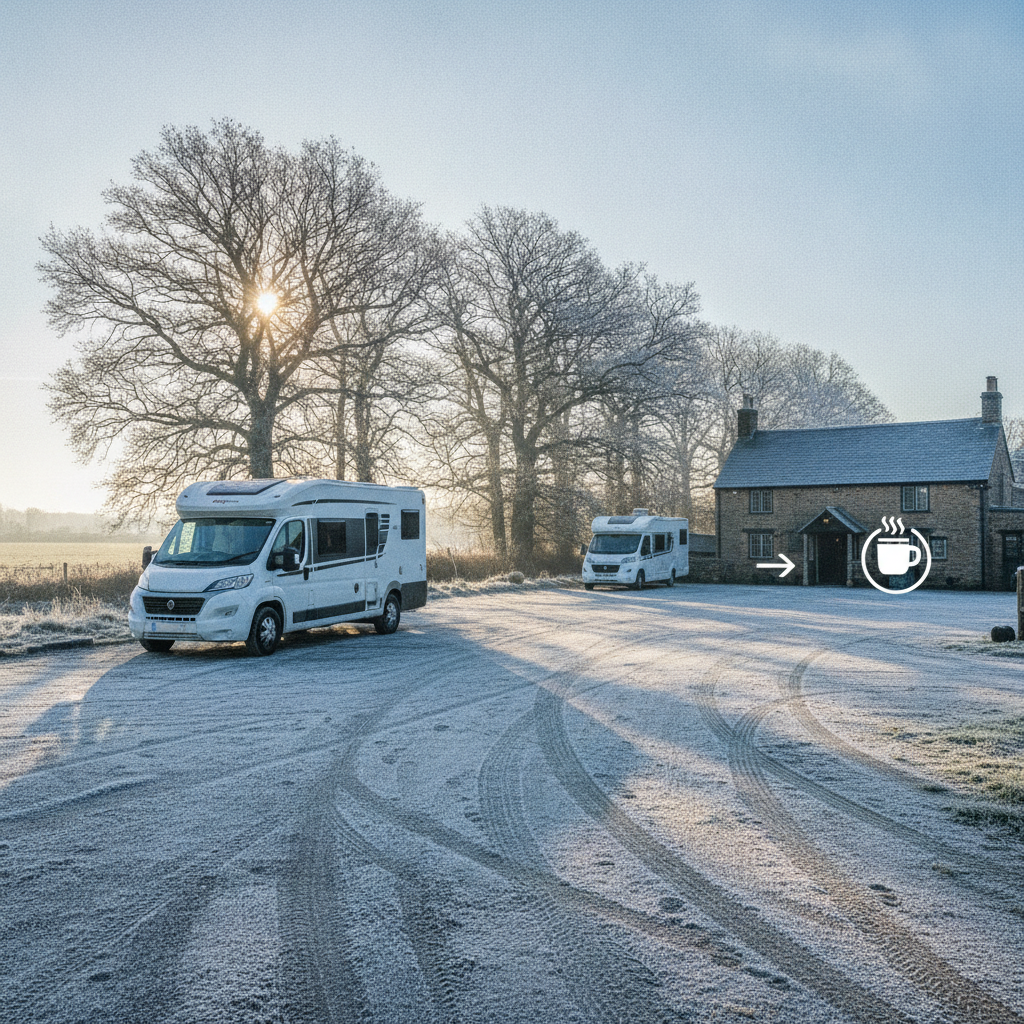
Many motorhome stopovers stay open year-round in the UK, including most pub stopovers, overnight parking spots, and aire-style facilities, though some privately-run sites reduce capacity or close between November and February. Campercation lists 19,350+ stopovers across the UK and Europe on a searchable map, and you can filter by type to find those open in winter. Preparing your van for cold-weather touring covers winterising the water system, insulating pipes, keeping your leisure battery charged, and carrying extra kit for warmth and safety.
Quick facts
- Most pub stopovers and public overnight parking spots have no seasonal closure date
- Some dedicated motorhome service points close or reduce hours November to February
- Campercation lists 19,350+ stopovers as at 20 September 2026, searchable by type and location
- Freshwater tanks and waste pipes can freeze below 0°C, insulate or drain when not in use
- A leisure battery loses up to 30% of its effective capacity in temperatures below 5°C
- Many UK pubs actively welcome motorhomes in winter to boost off-season trade
Which types of motorhome stopover stay open in winter?
The good news is that the majority of stopovers used by motorhome owners in the UK don't operate a seasonal calendar at all. Pub stopovers are the stand-out example. A pub car park doesn't close for winter, the pub is open, often busier than in summer, and landlords who welcome motorhomers year-round do so because your custom in their bar is exactly what they need in January. Most pub stopovers simply require you to eat or drink on site, and that trade is just as welcome in February as in July.
Public overnight parking, layby stops, motorhome-friendly car parks, and designated overnight areas run by local councils, also tends to be available year-round, though a handful of coastal and rural car parks do close gates in winter or restrict access after dark. It's always worth checking the specific listing before you rely on one.
Dedicated motorhome service points (waste disposal, fresh water, and chemical toilet emptying points) are more variable. Some are run by councils or community groups with limited maintenance budgets, and a water point left uninsulated can be turned off for the winter to prevent pipe damage. LPG and fuel stops follow their normal commercial hours regardless of season.
Campercation lists 19,350+ stopovers as at 20 September 2026, covering pub stopovers, overnight parking, waste disposal, water, LPG and fuel across the UK and Europe. Use the Campercation stopover map and filter by type before you set off, so you know which specific points near your route are open.
How do I find winter-open stopovers on my route?
Planning a winter tour is genuinely easier than many people expect, because the tools are the same as in summer. Start on the Campercation map and search along your intended route. Tap a listing to read the description and any recent reviews, if another driver visited in December or January and left a note, that's your most reliable guide to winter availability.
A few practical steps before you head out:
- Ring ahead to pub stopovers if you're arriving on a weekday in January, when some rural pubs reduce opening hours or close on quieter nights.
- Add a backup stopover for each night. In winter, you want a plan B within 20 to 30 miles of your first choice.
- Check council car park websites for any winter gate-closing times, especially at coastal resorts.
- Look for stopovers with electric hook-up if temperatures are forecast to drop below freezing, running a small electric heater overnight is far more economical than burning LPG all night.
How do I prepare my motorhome for winter overnight stops?
Cold-weather touring is perfectly doable, but your van needs a bit more attention than in August. Here's where to focus.
Water system
Water freezes at 0°C, and a burst pipe or cracked tank is an expensive repair. If overnight temperatures are forecast below zero, either drain your fresh tank and pipes completely before bed or add a food-safe antifreeze to the system (check your van's manual for the correct type). Leave a small trickle running from a tap overnight if you're at a hookup point, moving water is much slower to freeze than standing water. Disconnect and store any external hose inside the van.
Leisure battery
Cold temperatures hit leisure batteries hard. A standard AGM or wet-cell battery can lose a significant portion of its usable capacity when it's cold, which means your heating system, lighting and water pump may cut out sooner than expected. Keep the battery as warm as possible, top it up via hookup or solar before you sleep, and consider a lithium leisure battery if you tour regularly in winter, lithium chemistry handles cold far better than lead-acid.
Heating
Most motorhome space heaters run on LPG. Make sure you have at least one full spare cylinder before a multi-night trip in winter, because LPG demand climbs sharply when it's cold and rural forecourts don't always stock the fittings you need. Diesel-fired heaters (Webasto, Eberspächer and similar) are increasingly popular for winter touring because they run independently of LPG and don't produce moisture inside the van the way unflued gas heaters can.
Winter Motorhome Prep Checklist
Condensation and damp
A motorhome in winter is a condensation machine. Cooking, breathing and even talking adds moisture to the air, and that moisture hits cold windows and walls. Open a roof vent slightly while cooking, use a condensation-absorbing product inside cupboards, and wipe down surfaces each morning. Good insulation behind your furniture makes a real difference to how much condensation builds up.
Tyres, screen and security
Check tyre pressures in the morning, not just before you set off. Cold air contracts and pressures can drop overnight by 2 to 3 PSI. Keep a de-icer and a proper motorhome-sized scraper in the cab. And if you're leaving the van unattended at a stopover, use a steering wheel lock, a well-lit pub car park is safe but an isolated layby at night in winter is worth the extra security step.
Is winter motorhoming actually worth it?
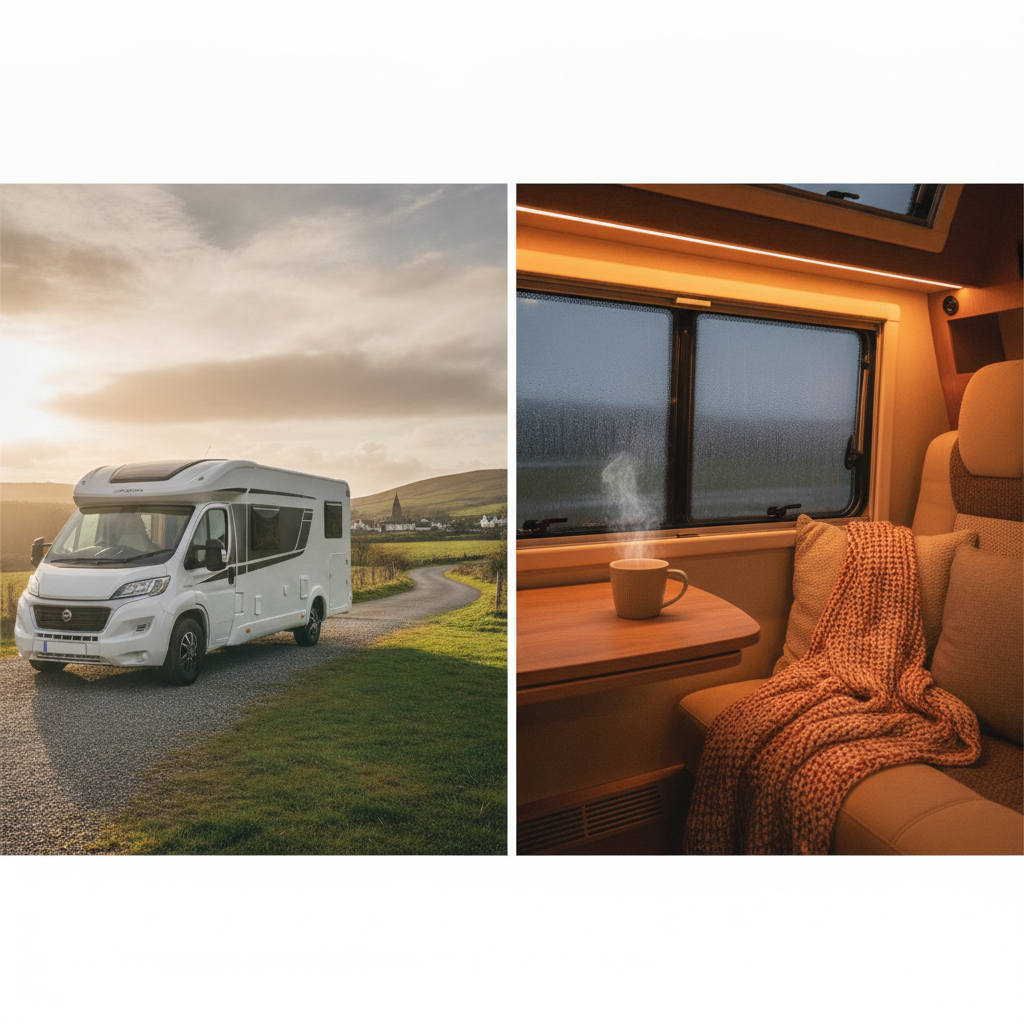
Honestly, yes. The crowds that make the NC500 or the Pembrokeshire coast feel like a motorway service area in August simply aren't there in November. You get your pick of the best spots, landlords at pub stopovers are genuinely pleased to see you, and the light in winter, low and golden in the afternoon, is something you don't get in July. The Scottish Highlands in the snow, the Northumberland coast in a January frost, the New Forest in mist, these are entirely different experiences from the same roads in summer.
The practical preparation is real but it's not complicated. Drain or protect your water, keep your battery charged, carry a spare LPG cylinder, and plan your stopovers in advance using the Campercation map. Do those things and winter touring is genuinely rewarding.
What kit should I carry for winter stopovers?
- Insulated pipe lagging for external water connections
- Food-safe antifreeze for the water system
- Extra LPG cylinder (or topped-up diesel tank if you have a diesel heater)
- Condensation-absorbing sachets or a small dehumidifier
- Snow chains or all-season tyres if heading to Scotland or high ground
- Thermal blackout blinds for windows (they keep heat in, not just light out)
- A battery-powered carbon monoxide alarm, especially important if using any gas appliance in a closed van
- A quality sleeping bag rated to at least -5°C, even if you have heating, as a backup
- High-visibility jacket and warning triangle for roadside stops in low-visibility conditions
Frequently asked questions
Do pub stopovers close in winter?
Most pub stopovers don't have a seasonal closure, the car park is there year-round and the pub is often busier in winter than in summer. A minority of rural pubs reduce their weekday opening hours in January and February, so it's worth ringing ahead if you're planning a midweek stop. Check the listing on the Campercation map for recent visitor reviews that mention winter visits.
How do I stop my motorhome water pipes freezing overnight?
Drain the fresh tank and pipework completely before bed if temperatures will drop below 0°C, or add food-safe antifreeze to the system. Disconnect and store any external hose inside the van. If you're on electric hook-up, leaving a very slight trickle from a tap overnight slows the freezing process because moving water takes longer to freeze than standing water.
Can I still find waste disposal points open in winter?
Many waste disposal points run year-round, but some council-operated or community-run points are turned off in winter to prevent pipe damage from freezing. Before you rely on a specific point, check the listing on Campercation for recent reviews or contact the operator. It's sensible to plan your route so you pass two or three options, giving you a fallback if one is closed.
Is LPG harder to find in winter?
LPG is available from the same forecourts and suppliers year-round, but rural areas can have limited stock of specific bottle sizes, and demand increases in colder months. Always carry at least one full spare cylinder before a multi-night winter trip. The Campercation map includes LPG stops, so you can identify fuelling points along your planned route before you leave home.
Do I need snow chains for winter motorhoming in the UK?
For most of lowland England and Wales, snow chains aren't legally required and are rarely needed in practice. If you're heading to Scotland, the Pennines, Dartmoor or Snowdonia between November and March, chains or all-season tyres are a sensible precaution. Some mountain passes in Scotland can close without warning after snowfall, so check road conditions via Traffic Scotland or the AA before setting off.
How many motorhome stopovers can I find on Campercation?
Campercation lists 19,350+ stopovers as at 20 September 2026, covering pub stopovers, overnight parking, waste disposal, water, LPG and fuel across the UK and Europe. All of them are searchable on a live map, so you can filter by type and plan a route that works whatever the season.