Last reviewed: 15 October 2026
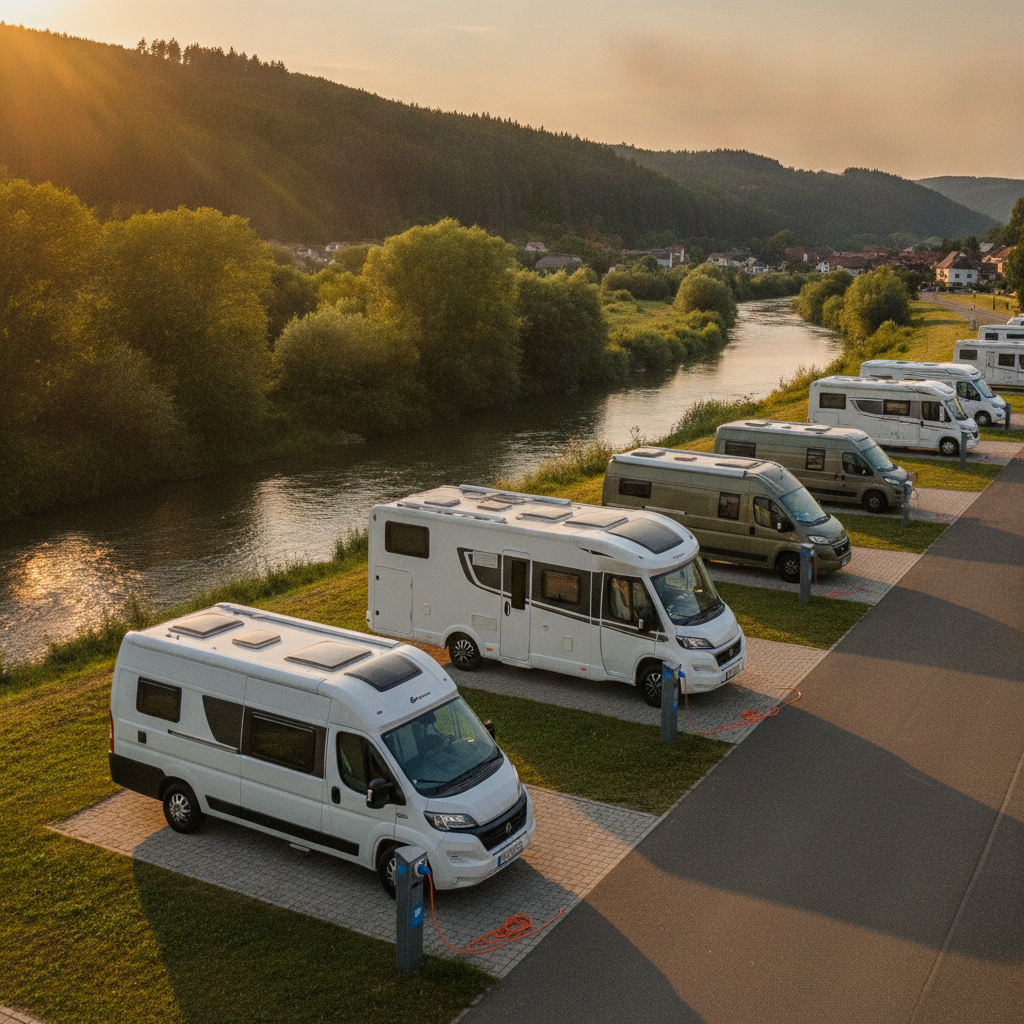
A Stellplatz (plural: Stellplätze) is a designated motorhome or campervan pitch in Germany, found at dedicated overnight parking areas rather than traditional campsites. They range from simple gravel bays beside a village car park to well-equipped sites with electric hook-up, fresh water, and waste disposal. Most cost between €5 and €20 per night, require no advance booking, and welcome arrivals at any time.
Quick facts
- Typical overnight fee: €5 to €20 per night, paid by machine, app or honesty box
- Services commonly on site: electric hook-up (CEE blue plug), fresh water, grey and black waste disposal
- No booking required at most Stellplätze, turn up, find a bay, pay and stay
- Motorhome-only rule applies at most sites; tents and caravans are usually not permitted
- Germany has thousands of Stellplätze; apps such as Park4Night, Stellplatz.info and ADAC Camping list them
- Wild camping (freies Wildcampen) is generally illegal in Germany, Stellplätze are the legal alternative
What does Stellplatz actually mean?
The word comes straight from German: Stell means to place or park, and Platz means place or pitch. Put together, a Stellplatz is simply a motorhome parking pitch. A Wohnmobil Stellplatz (Wohnmobil means motorhome) is the full formal name you'll see on road signs and app listings, though Germans use both terms interchangeably.
The concept sits between wild camping and a full campsite. You get a legal, designated place to sleep overnight with some basic services, but without the reception desk, site rules, entertainment programme, or campsite fees that come with a Campingplatz. That simplicity is exactly what most motorhome travellers want.
How is a Stellplatz different from a campsite?
A Campingplatz in Germany is a licensed campsite, open to tents, caravans and motorhomes alike, with permanent facilities and usually a warden or reception. A Stellplatz is motorhome-specific and far more informal. You won't find a shop, a pool, or organised pitches with numbered pegs. What you will find is a flat, legal place to park overnight with enough services to keep your tanks topped and your toilet sorted.
Some Stellplätze are run by local municipalities, others by farms, vineyards, hotels, breweries, or private landowners. The quality varies enormously. A Stellplatz beside a Bavarian lake might have immaculate facilities and stunning views for €10 a night. One on the edge of a motorway services might be functional and nothing more. That range is part of touring Germany in a motorhome.
What services can you expect at a Wohnmobil Stellplatz?
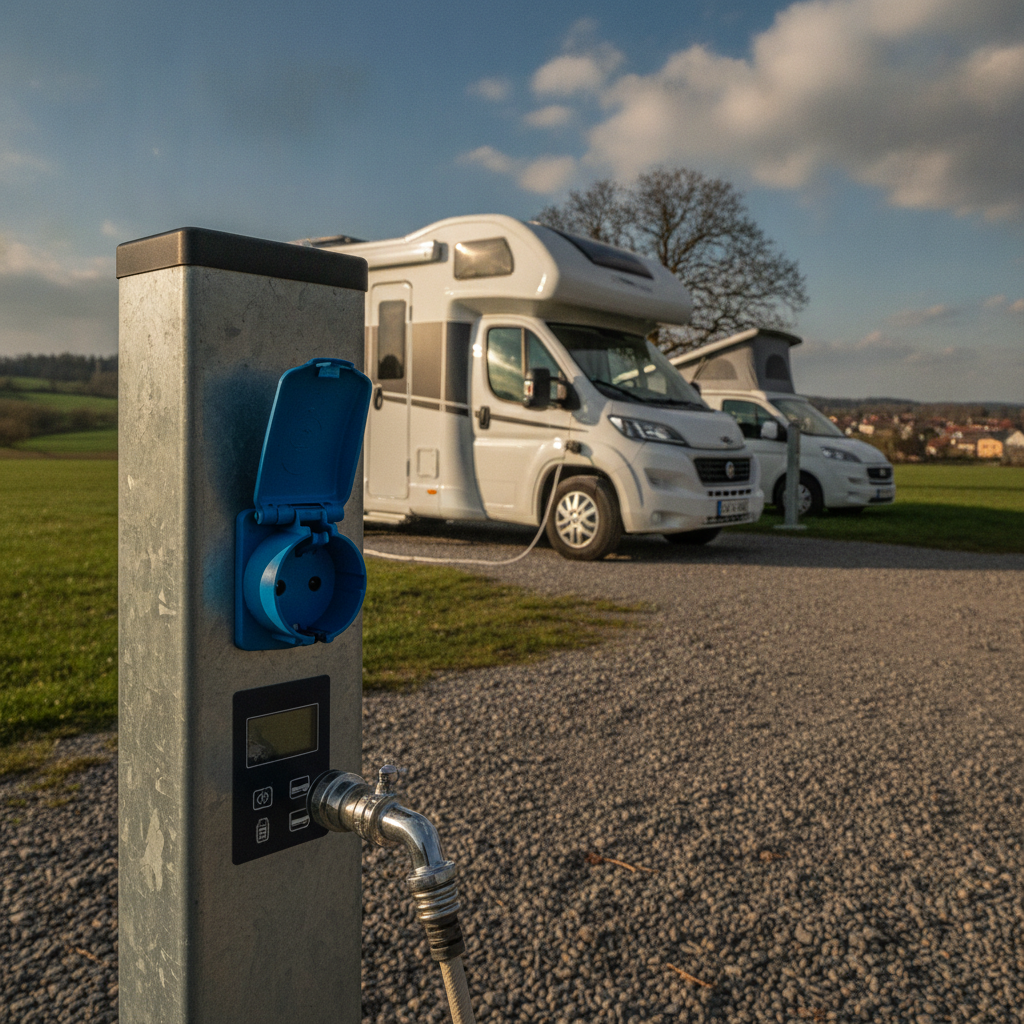
Services differ site by site, but the most common setup includes:
- Electric hook-up, usually 6A or 16A via a CEE blue plug (the standard European connector). Some older sites use coin meters; newer ones use an app or card reader.
- Fresh water, a standpipe or hose point to fill your onboard tank. Water is sometimes metered separately, sometimes included in the overnight fee.
- Grey waste disposal, a grated drain for emptying your kitchen and shower waste.
- Cassette toilet disposal, a dedicated point (called an Entsorgungsstation) for emptying chemical toilet cassettes.
- Rubbish bins, usually separated for recycling, in line with Germany's strict waste sorting rules.
Not every site offers all of these. A basic Stellplatz might be nothing more than a marked parking area with a single waste drain. Always check the listing before you arrive if certain services are essential to you.
How do you pay at a Stellplatz?
Payment methods vary and it's worth being prepared for any of them. The most common options are:
- Automated parking machines, enter your registration number, select your stay length, pay by card or coin. This is increasingly the norm at municipal sites.
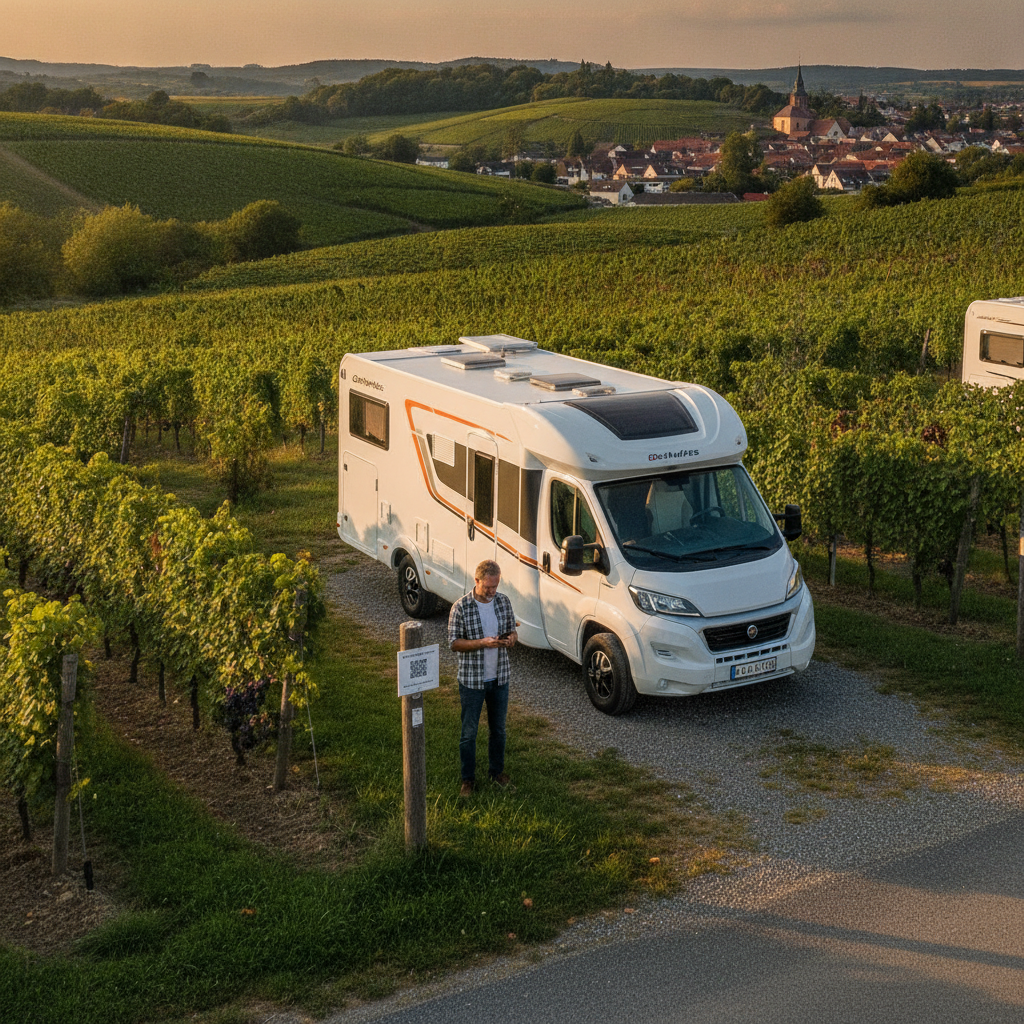
- QR code or app payment, scan a code on a sign and pay through an app such as PayByPhone or a German equivalent. Camperstop is common on privately run sites.
- Honesty box, an envelope system where you write your details and post cash. Still found at farm and vineyard sites, especially in rural areas.
- Key or token machine, pay, receive a token or key for the electric bollard.
Carry some euro coins and small notes even if you prefer card payments. Rural Stellplätze can be cash-only, and a flat battery is no fun when you can't access hook-up because the machine won't take your British debit card.
Is overnight parking at a Stellplatz legal?
Yes, completely. That's the point. Wild camping in Germany, parking overnight in a forest, layby, or field without permission, is generally prohibited under state-level nature protection and road traffic laws. The rules vary slightly between Germany's 16 federal states, but in practice, sleeping overnight in a motorhome outside a designated area carries a real risk of a fine or being moved on.
A Stellplatz solves that problem. It's a formally designated, legal place to sleep. Many are registered with local authorities or listed by the ADAC (Germany's equivalent of the AA), which means you have a clear paper trail if anyone questions your presence.
For a deeper look at how overnight parking rules work across Europe, the Campercation Stellplatz Germany guide covers the legal position in plain English alongside a searchable map of listed sites.
How do you find a Stellplatz in Germany?
Germany is exceptionally well served for Stellplatz listings. The main resources are:
- Campercation, Campercation lists 19,350+ stopovers across the UK and Europe as at 20 September 2026, including Stellplätze in Germany, on a single searchable map. You can filter by services, so if you need electric hook-up or LPG, you can find sites that offer it without scrolling through dozens of unsuitable listings.
- Park4Night, crowd-sourced app with user reviews. Useful for honest assessments of quietness, cleanliness and access.
- Stellplatz.info, a dedicated German-language directory of Wohnmobil Stellplätze, very thorough for rural areas.
- ADAC Camping app, lists ADAC-rated sites; useful if you want quality-assured stops.
- Reisemobil-Stellplätze signage on roads, the blue motorhome symbol on brown tourist signs is easy to spot from the road and often points to a Stellplatz in the next town.
In practice, most experienced motorhome tourers in Germany use a combination of these. Campercation's map is particularly useful for cross-border trips that mix UK and European stopovers in one search, so you don't need to switch between apps as you drive through France and into Germany.
What's the etiquette at a Stellplatz?
German Stellplätze have unwritten rules that most regulars follow without thinking. Respecting them keeps the sites open and means everyone has a good stay.
- Don't put out chairs and tables before you've paid, pay first, settle in second.
- Keep noise down after 10pm, Nachtruhe (quiet hours) are taken seriously. Generators in particular cause friction.
- Sort your rubbish, Germany's Pfand (deposit) system means plastic bottles and cans have value. Return them at a supermarket rather than binning them.
- Don't block access points, Stellplätze can be tight, and blocking the waste drain or water point while others are waiting is bad form.
- Leave the pitch as you found it, this includes not leaving grey water on the ground. Use the designated drain.
A little effort goes a long way. Landowners and local councils do close Stellplätze when they cause problems, and Germany's supply of well-located sites has only grown because most users treat them with respect.
Ready to plan your German motorhome tour? Browse Stellplätze in Germany on Campercation's live map and filter by the services you need, from electric hook-up to LPG and waste disposal, all in one place.
Frequently asked questions
What is a Stellplatz in Germany?
A Stellplatz is a designated motorhome or campervan overnight parking area in Germany. Unlike a full campsite, it's motorhome-specific, usually unmanned, and focuses on basic services: electric hook-up, fresh water, and waste disposal. Prices typically run from €5 to €20 a night. No advance booking is needed at most sites. The plural form is Stellplätze.
How much does a Stellplatz cost per night in Germany?
Most Stellplätze in Germany charge between €5 and €20 per night for the pitch. Electric hook-up and water are sometimes included, sometimes metered separately. Municipal sites at the cheaper end of that range are common in smaller towns. Stellplätze in popular tourist areas, such as Bavaria or the Rhine Valley, tend to sit at the upper end of the price range.
Do you need to book a Stellplatz in advance?
Most Stellplätze in Germany operate on a first-come, first-served basis with no advance booking required. You arrive, find a bay, pay at the machine or honesty box, and stay. A small number of premium or very popular sites have introduced booking systems, especially in peak summer months. Checking the specific listing before you travel is good practice in July and August.
Is wild camping legal in Germany if I can't find a Stellplatz?
Wild camping, sleeping overnight in a motorhome outside a designated area, is generally illegal in Germany. State-level nature protection laws and road traffic regulations prohibit it, and fines are a real possibility. Stellplätze exist precisely to give motorhome travellers a legal, convenient alternative. Germany has a dense network of them, so finding one within a reasonable drive is rarely a problem.
What does Wohnmobil Stellplatz mean?
Wohnmobil means motorhome in German (literally 'living vehicle'), so a Wohnmobil Stellplatz is a motorhome parking pitch. It's the full formal term you'll see on road signs and in official listings. Campervans are also welcome at the vast majority of these sites. The shortened term Stellplatz is used more commonly in everyday speech and in app listings.
What services do Stellplätze in Germany usually offer?
Most Stellplätze offer some combination of electric hook-up (CEE blue plug), fresh water, grey waste disposal, and cassette toilet emptying points. Better-equipped sites add rubbish separation bins, wi-fi, and sometimes a washing machine. Basic sites may offer only a parking bay and a single waste drain. Always check the listing for the specific services before arriving if any are essential to you.