Last reviewed: 5 October 2026
You cannot wild camp in a motorhome in Scotland as a legal right. Scotland's Land Reform (Scotland) Act 2003 gives walkers, cyclists and canoeists the right to access most land, but that right does not extend to motor vehicles. To park and sleep in a motorhome on private land in Scotland, you need the landowner's permission.
Quick facts
- Scotland's 2003 Land Reform Act covers non-motorised access only — motorhomes and campervans are excluded
- Parking a motorhome on private land overnight without permission can result in a request to move, or in some areas, a fixed penalty
- Some Highland Council car parks allow overnight motorhome stays under a permit scheme — check locally before you go
- Wild camping on foot is legal in Scotland; sleeping in a vehicle is a separate matter governed by land ownership and parking law
- Campercation lists 19,350+ stopovers across the UK and Europe, including legal overnight spots in Scotland, as at 20 September 2026
What does Scotland's right to roam actually cover?
Scotland has some of the most progressive access legislation in Europe. The Land Reform (Scotland) Act 2003 gives the public a statutory right to be on most land and inland water for recreational, educational and some commercial purposes. It's why you can wild camp in a tent almost anywhere in Scotland without asking permission.
But here's the part that catches a lot of motorhome owners out: the Act specifically excludes motor vehicles. Section 9 of the Act makes clear that access rights don't include the right to use a vehicle on land. So the freedom that applies to a walker pitching a tent in the Cairngorms simply doesn't carry over to a motorhome pulling off a track and staying the night. The two situations are legally distinct.
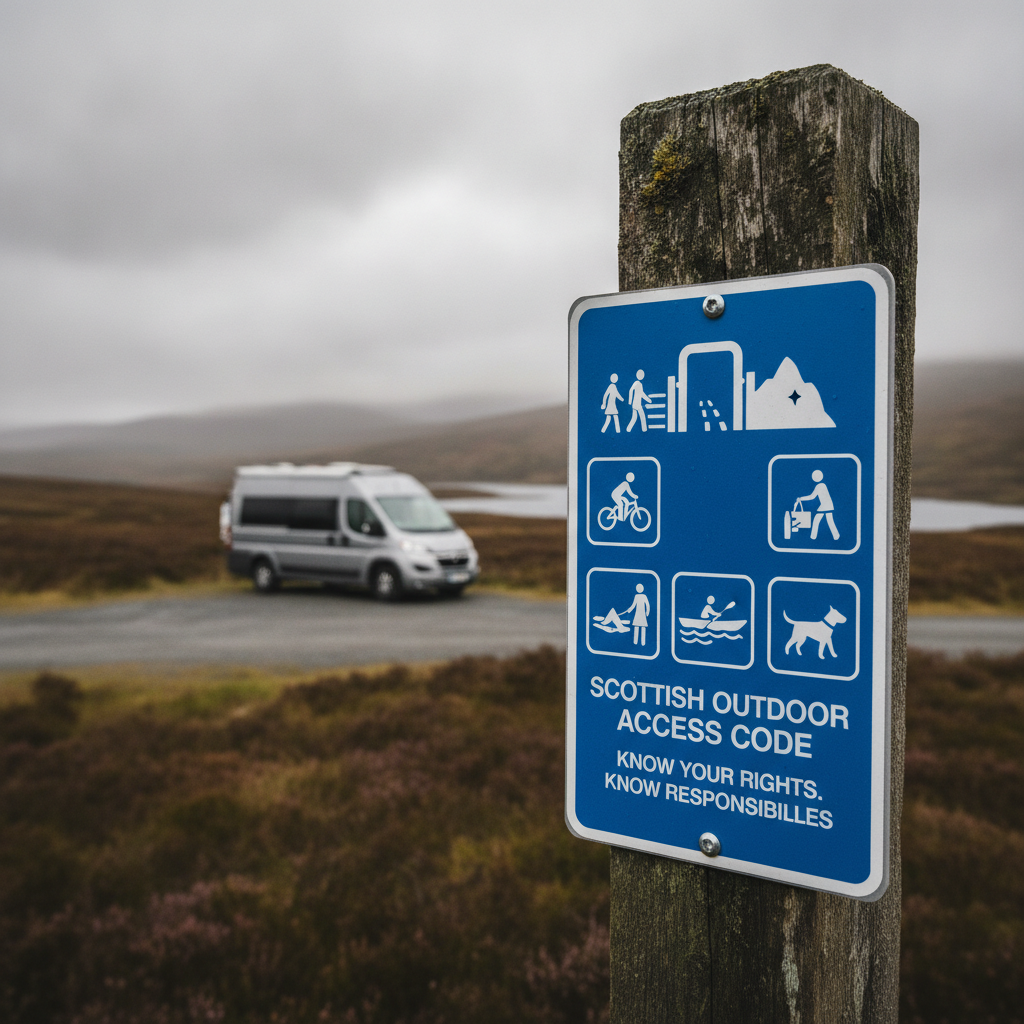
This isn't a grey area or a matter of interpretation. The Scottish Outdoor Access Code, which provides the practical guidance for the Act, confirms that motorised vehicles aren't covered. If you want to stop and sleep in your motorhome on private land in Scotland, you need the landowner's consent, full stop.
So where can you legally park a motorhome overnight in Scotland?
The good news is that Scotland has a genuinely good spread of legal overnight options for motorhome and campervan owners, and knowing where to look makes all the difference.
Designated motorhome areas and car parks. Highland Council and several other Scottish councils operate overnight parking areas that welcome motorhomes, sometimes with a small fee and sometimes free. These aren't campsites — there are often no facilities — but they're legal, often in spectacular locations, and increasingly well signed. Always check the specific terms posted on site, as some have time limits or height restrictions.
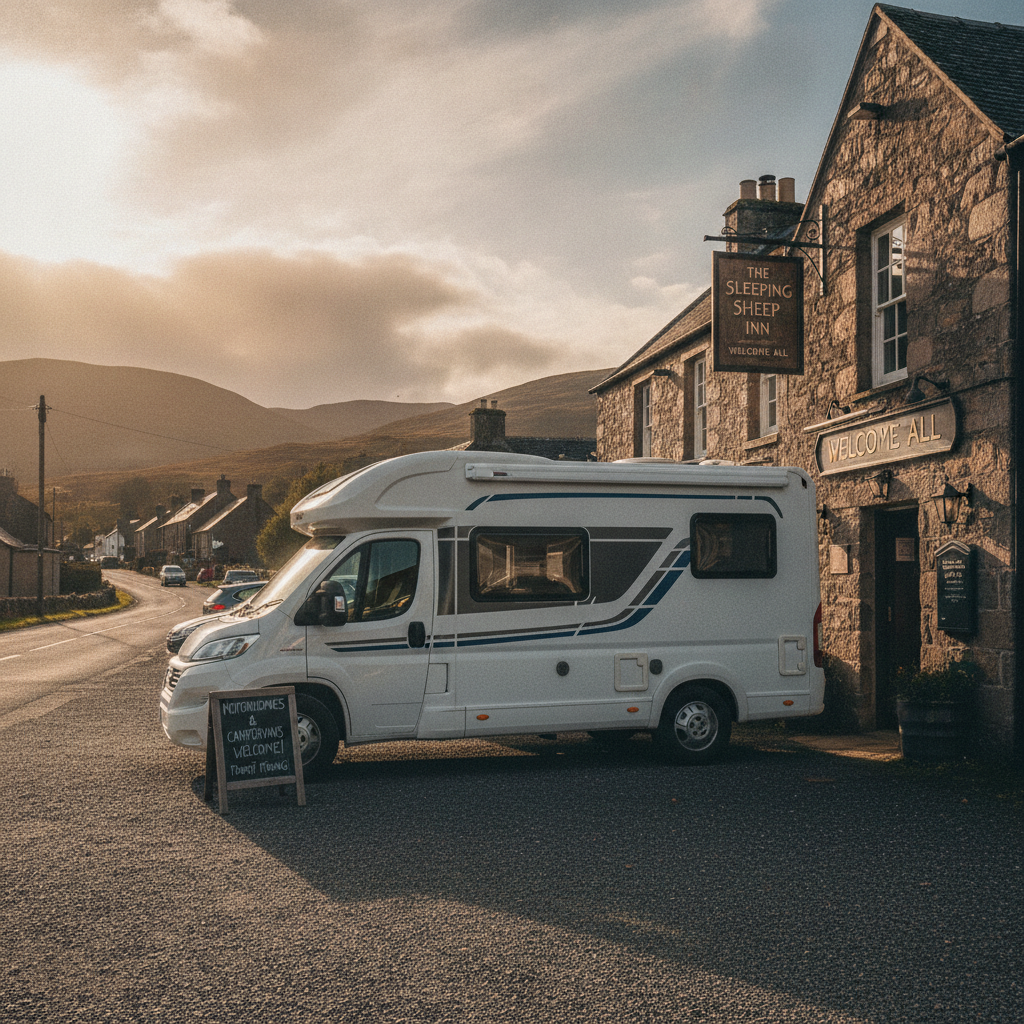
Pub stopovers. Pubs across Scotland allow motorhomes and campervans to stop overnight in their car parks, usually in exchange for eating or drinking on site. It's a brilliant arrangement: you get a safe, legal pitch, the pub gets custom, and you wake up with a proper Scottish breakfast on the menu. You can search legal pub stopovers in Scotland directly on the Campercation stopover map, which lists options across the Highlands, Argyll, Perthshire and beyond.
Forestry and estate land with permission. Some forestry operations and private estates actively welcome motorhomes and may charge a modest overnight fee. Contacting them directly is always worth it — many are not formally listed anywhere but are genuinely welcoming if you ask.
Aires and informal overnight spots. Across Scotland there are informal layby stops, community-run overnight areas and spots that have been used by the motorhome community for years. These are not always legally sanctioned, so it pays to use a platform with up-to-date, verified listings. Campercation's searchable map covers 19,350+ stopovers across the UK and Europe as at 20 September 2026, including a growing number of verified Scottish overnight spots.
What happens if you park up without permission?
The consequences depend on where you've stopped and who owns the land.
On private land, a landowner can ask you to move. If you refuse, they can apply to have the vehicle removed. In practice, most landowners will simply knock on the door and ask you to leave — confrontation is rarely anyone's goal — but you have no right to stay, and a polite request to move is legally valid.
On public roads and in public car parks, overnight parking is generally not illegal in itself, but local authorities can introduce Traffic Regulation Orders that prohibit it in specific locations. Some areas of the Highlands and popular tourist spots have introduced overnight restrictions after issues with visitor numbers and waste. Always check for signs before settling in for the night.
Scotland also introduced the Visitor Levy (Scotland) Act 2024, which gives local authorities the power to charge overnight visitors a small levy. While this is primarily aimed at accommodation providers, it's worth watching how implementation develops in areas you plan to visit.
Is the NC500 a good route for motorhome stopovers?
The North Coast 500 is one of the most popular motorhome routes in the UK, and it's brilliant. But it has also seen real pressure from the volume of visitors in recent years, and some landowners and communities along the route have become less tolerant of unofficial overnight stops — particularly at well-known laybys that were once used freely.
The practical answer for NC500 touring is to plan your stopovers in advance. Book ahead for busier sections, especially between June and September. Use verified listings rather than assuming a layby you've seen on social media is still usable. And take a responsible approach to waste — carrying a cassette toilet and using proper waste disposal points listed on the Campercation map goes a long way to maintaining goodwill with local communities.
Pubs and hotels along the NC500 route can be excellent overnight hosts, and some specifically advertise motorhome parking. Arriving as a customer, eating well and leaving the spot clean keeps those options open for everyone.
What's the responsible approach to overnighting in Scotland?
Even where overnight parking is technically permitted or tolerated, your behaviour matters. Scotland's motorhome community has a strong interest in keeping access routes open and maintaining good relations with local communities.
- Never leave waste — grey water, black water or rubbish — at a stopover. Use designated disposal points.
- Don't block farm tracks, passing places or access roads. Scotland's single-track roads need to stay clear for residents and emergency vehicles.
- Ask before you stop on private land. Most landowners appreciate the courtesy, and many will say yes.
- Follow any posted rules about noise and generator use, especially near residential areas.
- If a spot is busy, move on. Concentrating too many vehicles in one place causes the damage that leads to restrictions.
The Scottish Outdoor Access Code, while written for walkers, includes useful principles about minimal impact that translate well to motorhome touring. Reading it before your trip is half an hour well spent.
How do I find legal overnight stops in Scotland?
The most reliable way is to use a platform built for motorhome owners rather than general camping apps. Campercation's searchable stopover map covers 19,350+ stopovers across the UK and Europe as at 20 September 2026, and you can filter by category — pub stopovers, overnight parking, waste disposal, water and more. For Scotland specifically, the map is searchable by region, so you can plan an NC500 route or a west coast loop with verified stops at each leg.
Frequently asked questions
Can you wild camp in a motorhome in Scotland legally?
No. Scotland's Land Reform (Scotland) Act 2003 gives access rights to walkers, cyclists and canoeists, but it explicitly excludes motor vehicles. To park and sleep in a motorhome on private land in Scotland, you need the landowner's permission. Without it, a landowner can lawfully ask you to move on.
Does Scotland's right to roam apply to motorhomes?
It does not. The right to roam under the 2003 Land Reform Act covers non-motorised recreational access. The Scottish Outdoor Access Code confirms that motorised vehicles are outside the scope of the legislation. Motorhome owners need explicit permission from a landowner, or must use a designated overnight parking area.
Where can motorhomes park overnight legally in Scotland?
Legal options include designated council-run motorhome areas (common in Highland Council areas), pub stopovers where the landlord has agreed, paid forestry or estate stops, and verified overnight parking sites. Campercation lists 19,350+ stopovers across the UK and Europe, including verified Scottish overnight spots, on its searchable map.
Is it illegal to sleep in a campervan in a Scottish layby?
Not automatically. Parking in a public layby is generally legal, but some local authorities have introduced restrictions at specific locations via Traffic Regulation Orders. Always check for signs at the layby. On private land adjacent to a road, you need landowner permission. The position varies by location, so check before you stop.
Can I wild camp in a motorhome on the NC500?
There's no legal right to wild camp in a motorhome anywhere on the NC500 route. Many laybys are on public roads where overnight parking may be tolerated but is not a right, and some have become restricted. Plan ahead using verified stopovers, book pub stopovers along the route, and always follow leave-no-trace principles.
What's the difference between wild camping on foot and sleeping in a motorhome in Scotland?
Wild camping on foot in a tent is a statutory right under Scotland's 2003 Land Reform Act, with no need for landowner permission on most land. Sleeping in a motorhome is not covered by the Act. The vehicle classification means you need permission from whoever owns or manages the land before you stop.