Last reviewed: 1 October 2026
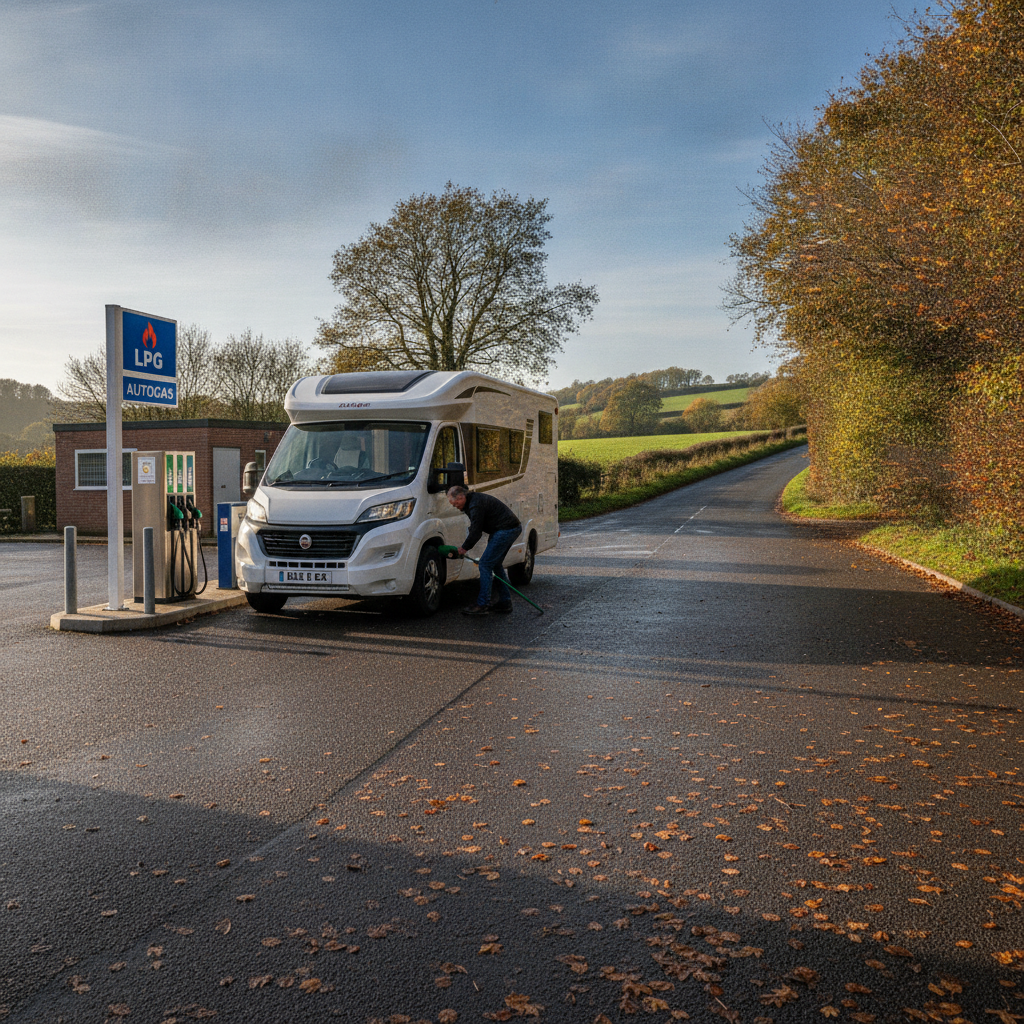
You can fill a motorhome's fixed LPG tank at autogas forecourts across the UK, including stations run by BP, Morrisons, Flogas, and many independent dealers. The easiest way to find one is to use a live map such as the Campercation platform, which lists LPG points alongside 19,350+ stopovers across the UK and Europe. Always check your motorhome has a fixed autogas tank rather than a refillable cylinder system before you pull up, as the filling procedure is different.
Quick facts
- LPG at UK forecourts is sold as autogas and dispensed through a standard bayonet nozzle (ACME connector in some cases — check your filler point).
- Fixed LPG tanks can be filled directly at autogas pumps; exchangeable cylinders cannot and must be swapped at a dealer.
- Autogas is typically cheaper per litre than petrol or diesel — prices vary by region and change monthly.
- You must stay with the vehicle while filling and most sites require you to turn off the engine and any appliances.
- Some supermarket forecourts (notably Morrisons and Tesco at selected sites) offer autogas; availability has reduced in recent years so always check before travelling.
- Campercation lists LPG filling points on its searchable map alongside overnight parking, pub stopovers, waste disposal and fuel across the UK and Europe.
What's the difference between a fixed LPG tank and gas cylinders?
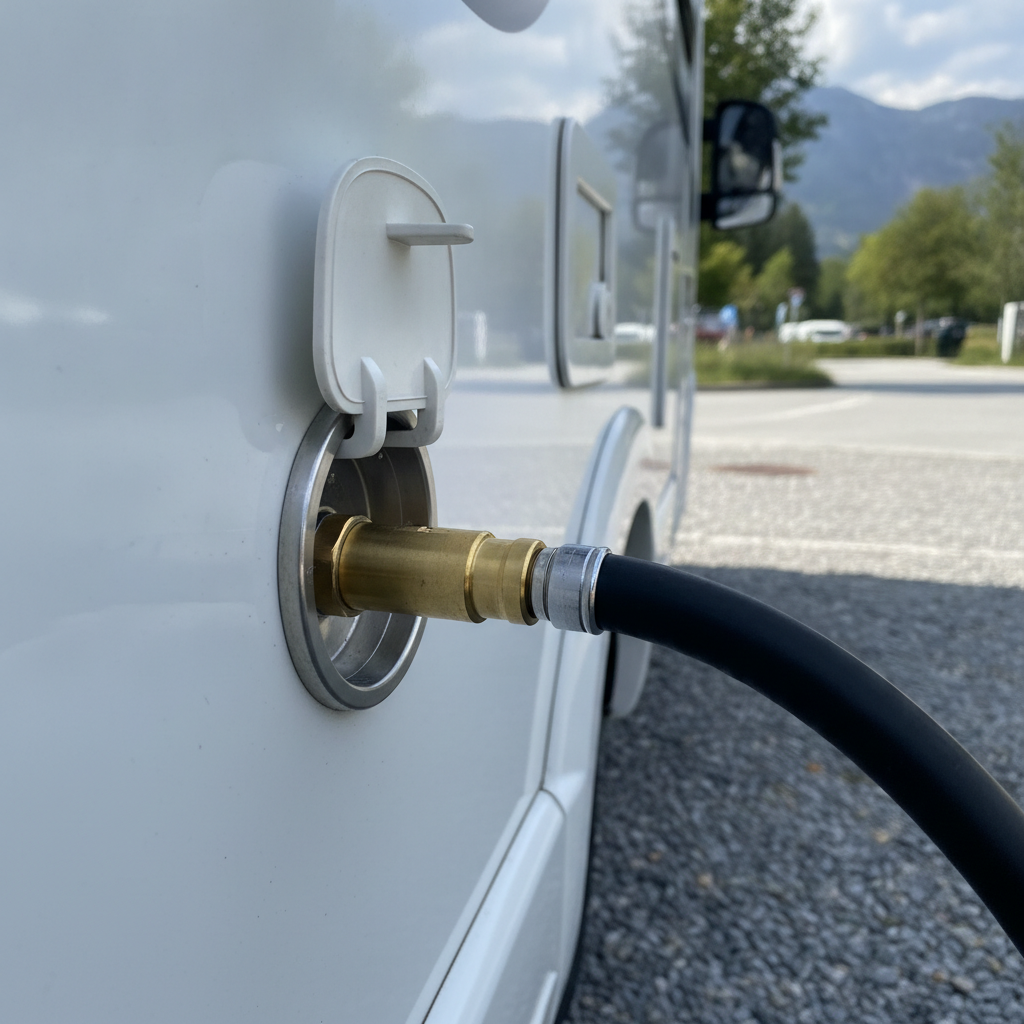
This is the most important question to answer before you go anywhere near a forecourt pump. Most motorhomes built in the last decade or so have a fixed, permanently plumbed LPG tank — sometimes called an onboard autogas tank or a DESO tank. These sit under the vehicle or in a dedicated locker and are filled exactly like a car's LPG system: you plug a nozzle into a filler point, usually located behind a small flap on the outside of the motorhome, and pump the gas in.
Older motorhomes, camper conversions and many campervans use exchangeable gas cylinders — Calor, Campingaz or similar. These cannot be filled at autogas pumps. You swap an empty cylinder for a full one at a Calor dealer, a motorhome accessory shop, or some campsites. The two systems are entirely separate, so knowing which yours is will save you a frustrating trip.
Not sure which system you have? Check your motorhome's handbook or look for an external filler cap on the bodywork. If there isn't one, you almost certainly have cylinders.
Where can I actually find motorhome LPG filling stations near me?
The honest answer is that autogas availability in the UK has quietly contracted over the last few years. A number of supermarket forecourts and smaller independents have stopped offering it. That makes a reliable, up-to-date map essential rather than optional.
Campercation lists LPG filling points as part of its searchable map, which covers 19,350+ stopovers across the UK and Europe as at 20 September 2026, including overnight parking, pub stopovers, waste disposal, water, and fuel. Because the map includes LPG points alongside places to stay, you can plan a route that lines up a fill with an overnight stop, which is far more efficient than a separate detour.
Beyond the Campercation map, the main places to look for autogas in the UK are:
- Morrisons forecourts — historically one of the most consistent autogas suppliers in the UK supermarket sector, though not every store carries it.
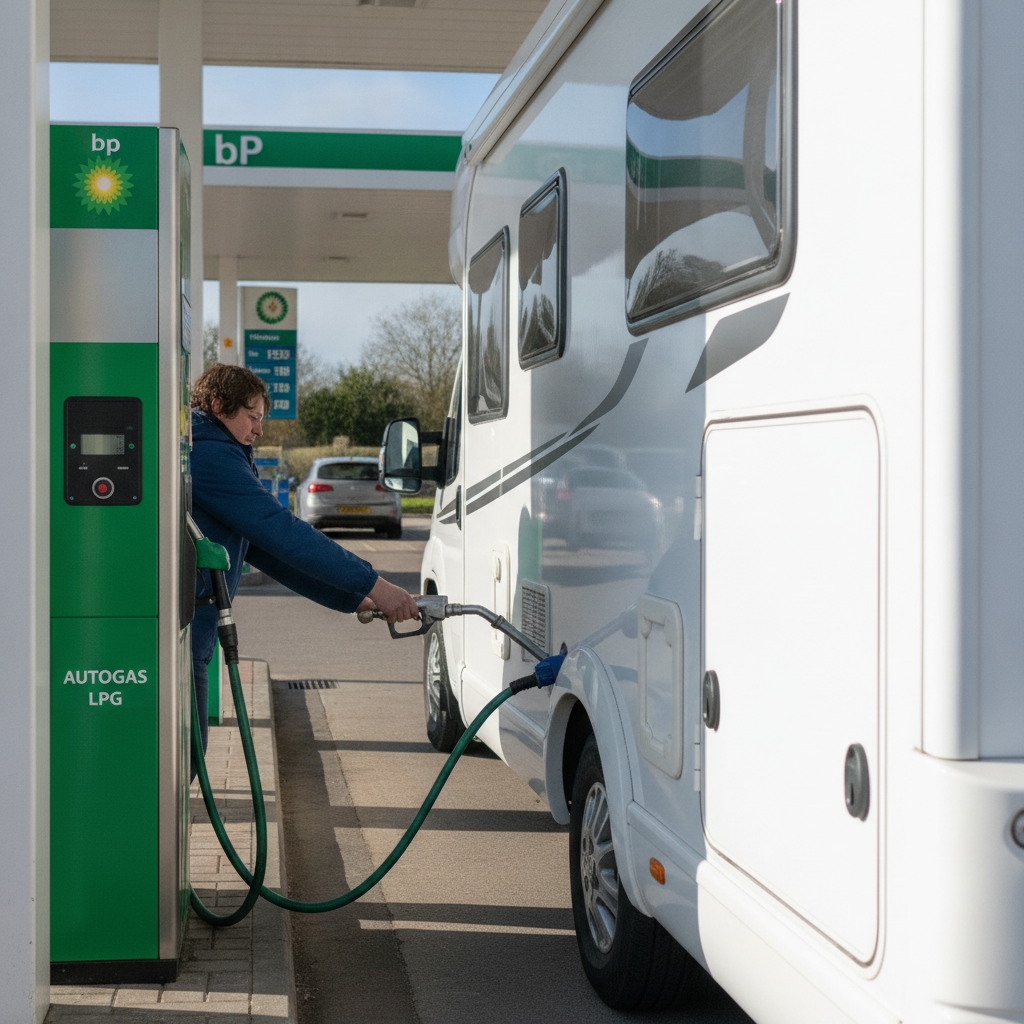
- BP stations — a number of BP-branded sites offer autogas, particularly on major A-roads and motorway service areas.
- Flogas and Calor dealers — both networks have sites that can fill fixed tanks, though they're more geared towards commercial vehicles and agricultural users. Worth knowing as a backup.
- Independent forecourts — particularly in rural areas, some independent sites still run an autogas pump as a differentiator. These can be brilliant finds.
- Motorhome dealers and service centres — many will fill your tank, especially if you're having any work done.
Apps like Zap-Map and the PlugShare community also catalogue LPG points, and the GasItUp website maintains a UK autogas station finder that's worth bookmarking. But always ring ahead if a station is out of your way — autogas pumps do break down, and smaller sites sometimes decommission them without updating directories immediately.
How do I fill my motorhome's LPG tank at a forecourt?
The process is straightforward once you've done it once. Here's how a typical UK autogas fill works:
- Pull up to the autogas pump. These are usually clearly signposted with a green or blue LPG marker. Make sure your filler flap is accessible from the pump side.
- Turn off the engine and all gas appliances inside the vehicle — fridge, hob, everything. This is a legal and safety requirement, not optional.
- Pay or set up the pump. Most sites require you to prepay or authorise with a card, the same as petrol.
- Connect the nozzle. UK autogas pumps use a bayonet-style ACME connector. You push the nozzle onto your filler point and turn it to lock. Some older motorhome filler points use a different fitting — if yours does, you may need an adaptor. Carry one in your kit locker.
- Fill to 80%. Fixed LPG tanks have an automatic shut-off at 80% capacity. This is a safety feature — LPG expands with heat and the headspace prevents pressure build-up. The pump will click off when it's done.
- Disconnect, replace the cap and pay. Always re-check that the filler cap is secure before driving off.
The fill itself usually takes two or three minutes. Don't be tempted to re-squeeze the trigger after the shut-off clicks — the 80% limit is there for a reason.
How much does LPG cost in the UK and how does it compare to diesel?
Autogas prices in the UK vary considerably between regions and between different forecourt operators. As a rule, LPG runs cheaper per litre than diesel — sometimes significantly so — but because LPG has a lower energy density, you'll use more of it per mile, which closes the gap somewhat. The net saving still tends to favour LPG for high-mileage drivers.
Campercation publishes a monthly motorhome fuel price league that tracks autogas and diesel prices across the UK, so you can see which regions are currently cheapest and plan your fill-ups accordingly. Checking it before a longer tour can genuinely save you money, especially if you have flexibility about where you stop.
Prices shift month to month, so always use current data rather than anything more than a few weeks old. The Campercation fuel price league is updated monthly specifically for this reason.
What if my motorhome has a different LPG connector or adapter?
This catches people out. While the UK standard for autogas is the ACME bayonet connector, some motorhomes — particularly continental imports from Germany, France or Italy — are fitted with a different filler connection designed for European nozzles. Common alternatives include the Dutch DISH connector and the Italian/Italian-thread connector.
If you've imported a motorhome or bought one that was previously used on the continent, check the filler point before your first LPG stop. A set of universal LPG adaptor connectors (available for around £15 to £25 from motorhome accessory retailers) is worth keeping in your kit permanently. They're small, weigh almost nothing, and could save you a long detour.
Planning to tour France or Germany? LPG infrastructure is generally better there than in the UK. France has an extensive autogas (GPL) network, and Germany's Autogas system is widespread. Campercation covers LPG and fuel points across Europe alongside its fuel price data, making cross-channel planning much simpler.
Is it safe to fill an LPG motorhome yourself?
Yes, entirely. Autogas filling at a public forecourt is a self-service process and has been legal and routine in the UK for decades. The safety features built into the system — the automatic 80% shut-off, the lockable ACME nozzle, the external filler point located away from the living space — are designed specifically for public use.
The main rules to remember are: engine off, appliances off, don't smoke, don't re-trigger after the auto-cut-off, and never fill to more than 80% capacity. Follow those and you'll have no issues. If you're genuinely nervous the first time, pull up at a quieter forecourt and ask a member of staff to show you how the pump works. Most are happy to help.
Ready to plan your next trip? Campercation's searchable map lists LPG filling points, fuel prices, pub stopovers, waste disposal and overnight parking all in one place, covering 19,350+ locations across the UK and Europe. Check the latest motorhome fuel prices before you set off and find your nearest LPG stop on the map.
Frequently asked questions
Where can I find motorhome LPG filling stations near me?
Use Campercation's searchable map, which lists LPG points alongside overnight parking and fuel across the UK and Europe. Morrisons forecourts, BP stations and some independent sites also offer autogas. The GasItUp website maintains a UK autogas finder worth bookmarking. Always ring ahead if a site is out of your way, as availability can change without notice.
How do I fill my motorhome with LPG at a forecourt?
Turn off the engine and all gas appliances first. Connect the ACME bayonet nozzle to your motorhome's external filler point, turn to lock, then dispense. The pump will auto-cut at 80% capacity — that's a safety feature, not a fault. The fill takes two to three minutes. Replace the filler cap securely before driving off.
Can I fill exchangeable gas cylinders at an autogas pump?
No. Autogas forecourt pumps are only for fixed, permanently plumbed LPG tanks. Exchangeable cylinders such as Calor or Campingaz must be swapped at an authorised dealer or stockist, not filled at a pump. Check which system your motorhome uses before heading to a forecourt — look for an external filler cap on the bodywork.
What connector do I need to fill LPG on a continental motorhome in the UK?
UK autogas pumps use an ACME bayonet connector. Continental motorhomes from Germany, France or Italy are often fitted with different connectors such as the Dutch DISH type. Carry a set of universal LPG adaptor connectors, available from motorhome accessory retailers for around £15 to £25. This is especially important if you tour both the UK and mainland Europe.
Is autogas cheaper than diesel for motorhomes?
LPG is typically cheaper per litre than diesel, but because it has a lower energy density your motorhome will use more litres per mile, which reduces the saving somewhat. Net cost still tends to favour autogas for regular drivers. Campercation publishes a monthly motorhome fuel price league at /fuel-prices so you can compare current autogas and diesel prices by region.
Can I fill my motorhome's LPG tank on the continent?
Yes. France has an extensive autogas (GPL) network, and Germany's Autogas infrastructure is widespread. You may need an adaptor for continental nozzle types. Always carry a universal adaptor set. Campercation lists LPG and fuel points across Europe alongside UK locations, making it straightforward to plan fill-ups as part of a broader touring route.