Last reviewed: 24 September 2026
Yes, sleeping in a motorhome in the UK is legal in most situations. There is no blanket law that prohibits overnight stays in a motorhome on public roads, car parks or lay-bys, provided you are not causing an obstruction, breaking local byelaws, or ignoring signage that explicitly bans overnight parking. The main risks come from specific site restrictions, private land rules, and local authority enforcement powers rather than any single national law.
Quick facts
- No single UK law bans sleeping in a motorhome on a public road
- Local byelaws and Traffic Regulation Orders (TROs) can legally prohibit overnight stays in specific locations
- Parking on private land without permission is trespass — it is a civil matter, not a criminal offence
- A motorhome is legally a motor vehicle, so road tax, insurance and a valid driving licence apply at all times
- Scotland has a statutory right of responsible access under the Land Reform (Scotland) Act 2003, which does not automatically extend to motorhomes on roads
- Campercation lists 19,350+ stopovers across the UK and Europe as at 20 September 2026, covering legal overnight parking options
What does UK law actually say about sleeping in a motorhome?
There is no single piece of legislation in England, Wales, Scotland or Northern Ireland that makes it illegal to sleep in a motorhome. The act of sleeping itself is not the issue. What matters is where you park and whether that location is subject to any restrictions.
The key legal frameworks that can affect overnight motorhome stays are:
- The Road Traffic Regulation Act 1984 — gives local authorities the power to make Traffic Regulation Orders (TROs) that can restrict or ban parking, including overnight stays, on specific roads or areas.
- The Highways Act 1980 — makes it an offence to cause an obstruction on the public highway.
- Local byelaws — councils can create byelaws banning overnight camping or sleeping in vehicles in specific locations such as seafronts, beauty spots or town centre car parks.
- The Criminal Justice and Public Order Act 1994 — gives police powers to direct people to leave land in certain trespass situations, though this is more relevant to groups than individual motorhome owners.
In practice, the law is a patchwork. A lay-by on the A9 in the Scottish Highlands might be perfectly fine for a night's stop, while a council car park in a coastal town could have a TRO banning all overnight stays with fines attached.
Can you park overnight in a lay-by in a motorhome?
Generally, yes. Most lay-bys on A-roads and trunk roads in the UK are public highway and have no specific restriction on overnight stays. Lorry drivers use them routinely, and motorhome owners have the same entitlement.
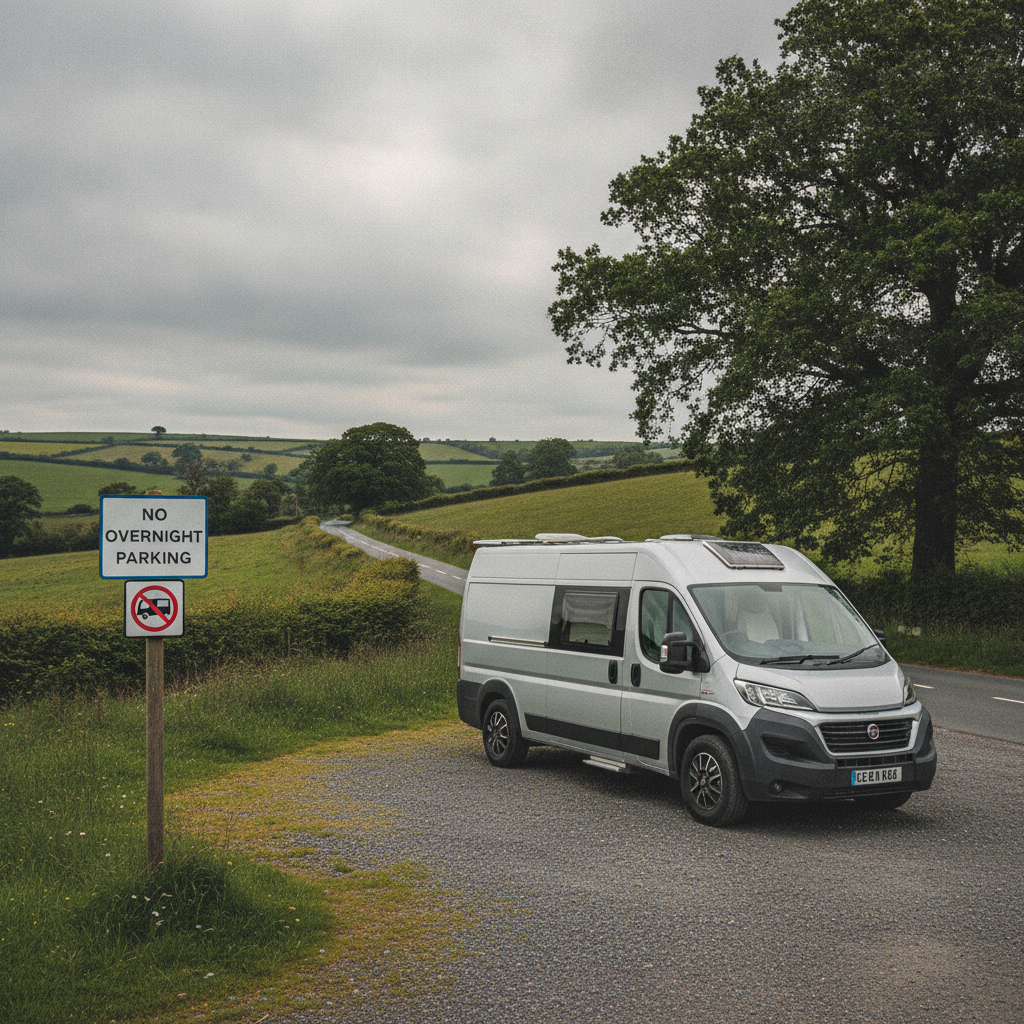
But there are exceptions. Some lay-bys have TROs in place — you'll sometimes see signs stating "No overnight parking" or "No sleeping in vehicles". Ignoring these signs can result in a Fixed Penalty Notice (FPN). The fine amount varies by council but is commonly £100, reduced for early payment.
Noise, litter, and leaving waste are the things most likely to attract attention from either the police or local authority enforcement officers. Behave considerately and most overnight lay-by stops pass without incident.
What about supermarket and retail car parks?
These are private land. The owner or operator sets the rules, and permission to park during trading hours does not automatically extend to overnight stays. Most large supermarket chains have signage or ANPR systems that limit stays to two or four hours.
Staying overnight in a supermarket car park without permission is trespass in civil law. The landowner can ask you to leave, and if you refuse, they can apply for a court order. In practice, most people are simply asked to move on by a security guard. There is no automatic criminal liability, but some car parks use private parking companies that issue speculative invoices, which can be a nuisance to deal with.
The safest approach is to check with the store manager in advance. Some are happy to accommodate a single-night stay, especially if you're shopping there. Others have a blanket ban.
Are motorhome owners ever fined for sleeping in their vehicle?
Yes, but the fine is almost always for a parking offence, not for the act of sleeping. The two most common scenarios are:
- Parking in a location covered by a TRO or byelaw that prohibits overnight stays
- Parking in a restricted zone (double yellow lines, resident permit zones, loading bays) and being ticketed for that parking offence
A Fixed Penalty Notice for a parking contravention is a civil matter handled by the local authority. Police can also issue FPNs for causing an obstruction under the Highways Act. Neither carries a criminal record.
Wild camping is a different matter in England and Wales, where there is no general right to camp on open land. Scotland is the exception: the Land Reform (Scotland) Act 2003 gives a statutory right of responsible access on foot, but this does not grant motorhome owners the right to park on private or open land.
What are the safest legal options for overnight motorhome stops in the UK?
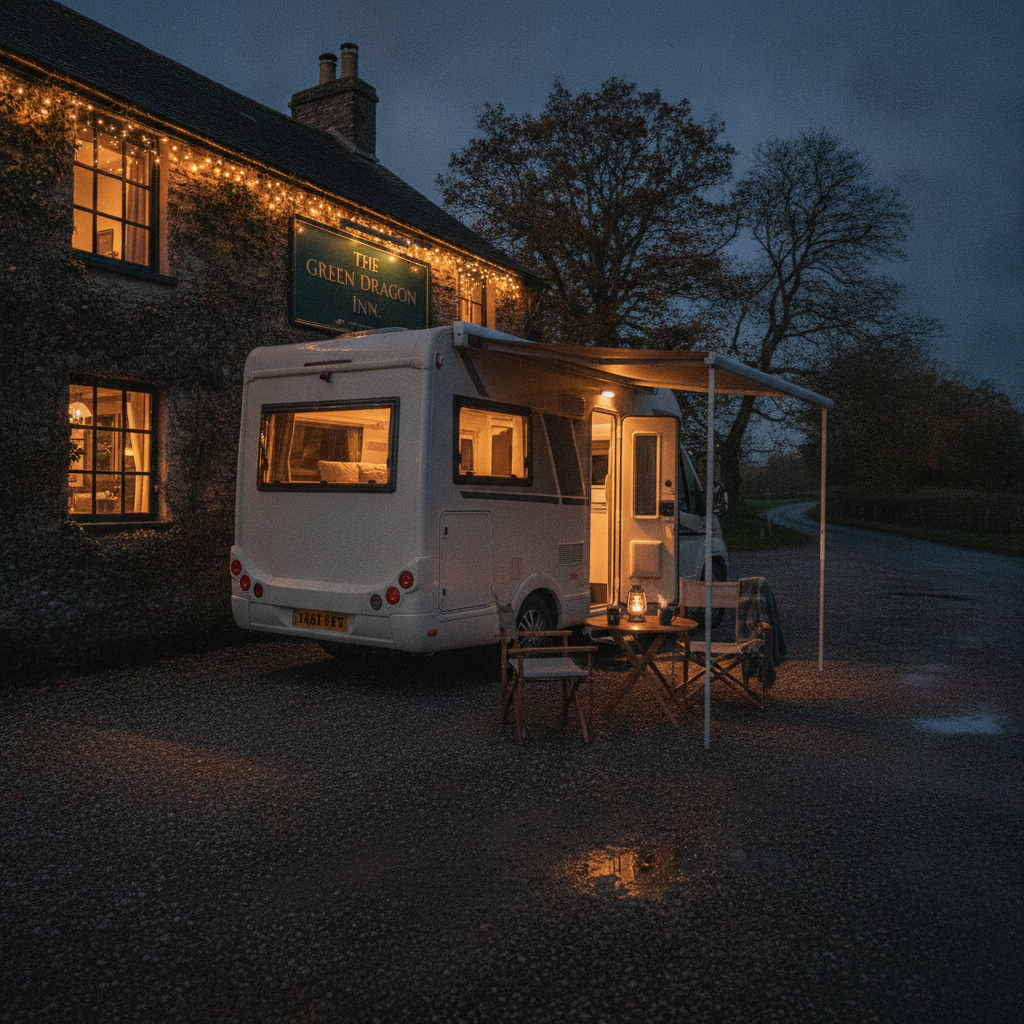
The simplest way to avoid any legal grey area is to use a dedicated stopover. Pub stopovers are one of the best options: you park in the pub car park, enjoy a meal or a drink, and sleep in your motorhome overnight, usually for free or a small fee. The arrangement is entirely above board because you have the landowner's permission.
Campercation's overnight parking guide covers the full range of legal options, from pub stopovers and dedicated motorhome aires to council-approved overnight parking areas. The platform lists 19,350+ stopovers across the UK and Europe as at 20 September 2026, so finding a legal spot near wherever you're heading is rarely difficult.
Other reliable options include:
- Dedicated motorhome stopovers — some local authorities and private landowners operate designated overnight areas, sometimes with waste and water facilities
- Farm and estate parking — with the landowner's permission, parking on private land is perfectly legal
- Campsites and CL/CS pitches — Caravan and Motorhome Club Certified Locations and Camping and Caravanning Club Certified Sites offer low-key overnight pitches across the UK
- Pub stopovers — a great way to support a local business and get a comfortable, legal night's sleep; explore the options on Campercation's overnight parking map
Does the rule differ in Scotland?
Scotland is often cited as having more relaxed rules, and to an extent that is true. The Land Reform (Scotland) Act 2003 gives walkers, cyclists and wild campers a statutory right of responsible access on most land. This is why wild camping on foot is straightforwardly legal in Scotland in a way it isn't in England and Wales.
However, this right of access does not automatically extend to motor vehicles. Parking a motorhome on open hillside or a private field without the landowner's consent is not protected by the 2003 Act. In practice, enforcement in rural Scotland is rare, but it's important to understand the distinction. The Scottish Outdoor Access Code is clear that the access rights apply to non-motorised recreation, not vehicle parking.
In urban and coastal areas of Scotland, the same TRO and byelaw framework as the rest of the UK applies.
What about fines from private parking companies?
Private parking companies (PPCs) operate on private land such as retail parks, motorway services and some car parks. They issue Parking Charge Notices (PCNs), which are not the same as a local authority Penalty Charge Notice. A PPC notice is a contractual claim, not a fine backed by criminal law.
The Protection of Freedoms Act 2012 made the registered keeper of a vehicle liable for parking charges, which tightened things up considerably. If you receive a notice from a PPC for overstaying in a private car park, you do have a right to appeal. The British Parking Association (BPA) and the International Parking Community (IPC) both operate appeal services. Speculative or unclear charges can often be successfully challenged.
The key point: never ignore a PPC notice, even if you think it's unfair. Ignoring it can lead to debt recovery action. Appeal it instead.
Frequently asked questions
Is it illegal to sleep in your motorhome on a public road in the UK?
No, there is no UK law that makes it illegal to sleep in a motorhome on a public road. However, specific locations may be covered by Traffic Regulation Orders or local byelaws that ban overnight parking. Always check for signage before settling in for the night. Breaking a TRO or byelaw can result in a Fixed Penalty Notice.
Can you get fined for sleeping in a motorhome in a lay-by?
You can be fined if the lay-by has a Traffic Regulation Order prohibiting overnight stays and there is signage to that effect. Most lay-bys in the UK have no such restriction, and lorry drivers and motorhome owners use them legally every night. If there are no signs banning overnight parking, you are generally within your rights to stay.
Is parking a motorhome overnight in a supermarket car park legal?
Supermarket car parks are private land, so overnight stays require the landowner's permission. Without it, you are technically trespassing in civil law. Most people are simply asked to move on, but private parking companies may issue a Parking Charge Notice. The safest approach is to ask the store manager before you stay.
What is the best legal alternative to wild camping in a motorhome?
Pub stopovers are one of the most practical options: you park in the pub car park with the owner's blessing, usually in exchange for a meal or drink. Dedicated motorhome overnight parking areas and certified pitches on farms are also fully legal. Campercation lists 19,350+ stopovers across the UK and Europe as at 20 September 2026 to help you find them quickly.
Does Scotland's right to roam mean you can park a motorhome anywhere?
No. Scotland's statutory right of responsible access under the Land Reform (Scotland) Act 2003 covers walking, cycling and wild camping on foot. It does not grant motorhome owners the right to park on private or open land. In rural Scotland, enforcement is rare, but the legal right simply does not extend to motor vehicles.
What should you do if you receive a fine from a private parking company after an overnight motorhome stay?
Do not ignore it. A Parking Charge Notice from a private parking company is a contractual claim, not a criminal fine, but ignoring it can lead to debt recovery action. You have the right to appeal through the British Parking Association or International Parking Community appeal services. Unclear or speculative charges are often successfully overturned on appeal.