Last reviewed: 21 September 2026
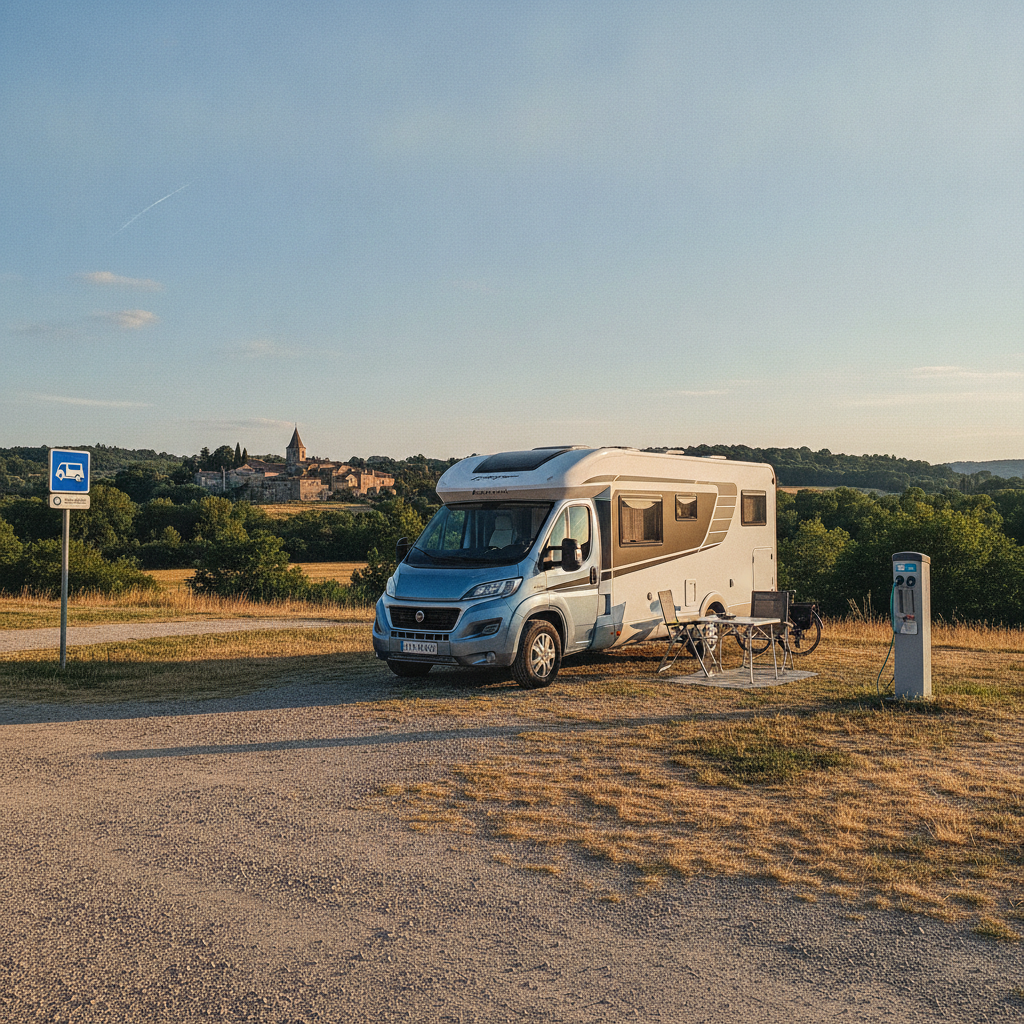
An aire (short for aire de service or aire de camping-car) is a designated stopping place for motorhomes and campervans, most commonly found in France but used across Europe. They range from a simple roadside parking area to a fully serviced pitch with electric hook-up, water and waste disposal. You simply drive in, pay any fee required (usually via a machine or app), use the facilities, and move on — no booking needed in most cases.
Quick facts
- Aires are found across France, Spain, Germany (called Stellplatz), Italy (aree di sosta) and beyond
- Most French aires are free or cost between €5 and €15 per night
- Services typically include fresh water (eau potable), grey waste drain, cassette emptying and sometimes electric hook-up
- No booking is usually required — they operate on a first-come, first-served basis
- Stays are normally limited to 24 or 48 hours; overstaying can result in a fine
- Campercation lists 19,350+ stopovers across the UK and Europe, including aires, on a live searchable map (as at 20 September 2026)
What does "aire" actually mean?
The word aire is French for "area" or "stopping place". In the motorhome world it refers specifically to an aire de camping-car: a place set aside by a town, village or private landowner where motorhomes and campervans can park overnight and, in many cases, access services. France has more of them than anywhere else in Europe, with several thousand spread from Brittany to the Côte d'Azur, but the concept has spread widely. Germany calls them Stellplatz, Italy uses aree di sosta, and Spain has áreas de autocaravanas.
An aire is not a campsite. You won't find shower blocks, shop kiosks or entertainment programmes. The point is simplicity: park legally, empty and refill as needed, then carry on. That freedom is exactly what most motorhomers are looking for.
What facilities can you expect at an aire de service?
This varies enormously, which is why checking ahead matters. At the most basic level, an aire is just a flat, legal area of tarmac or gravel where overnight stays are permitted. At the better-equipped end you'll find:
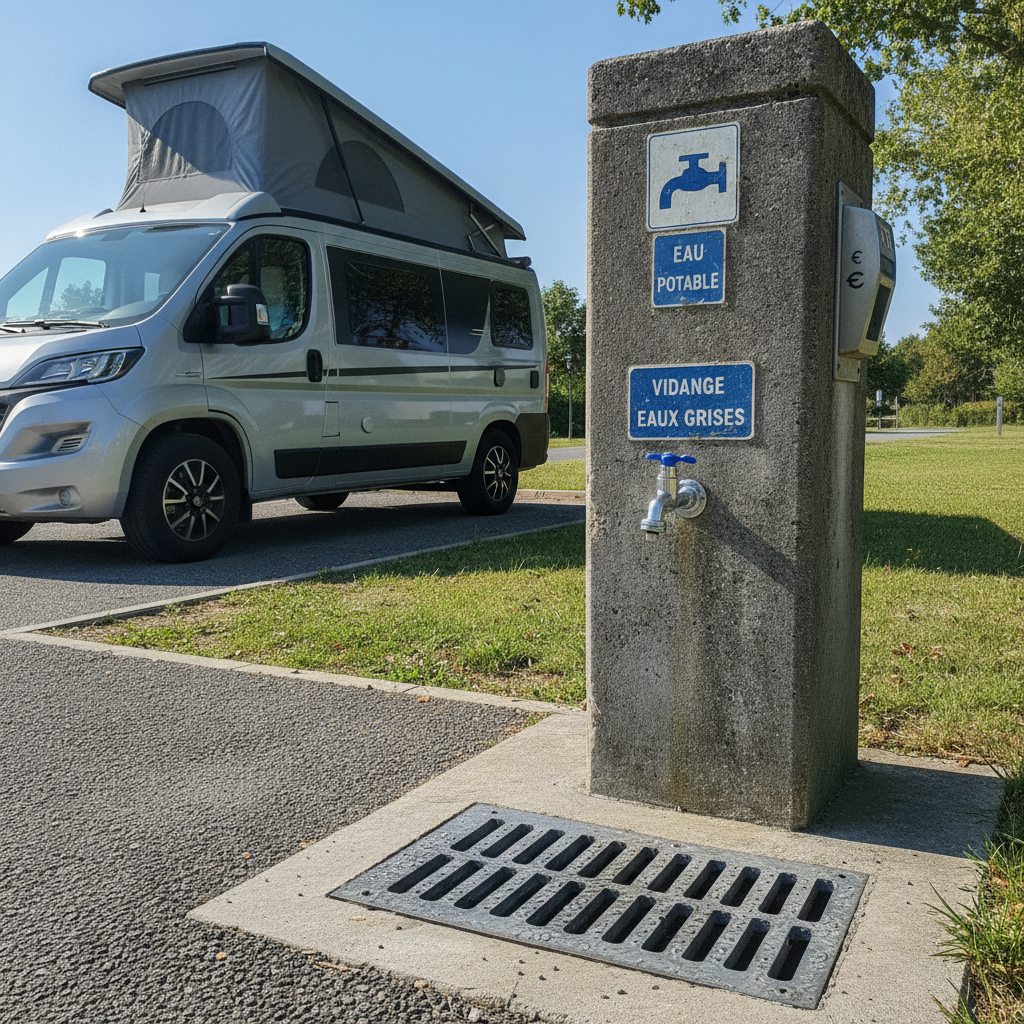
- Eau potable (drinking water): a fresh water tap, often coin or token operated
- Vidange eaux grises: a drain for grey waste water from your sink and shower
- Vidange WC: a cassette emptying point (also called a borne sanitaire)
- Electric hook-up: available at more modern or municipal aires, usually 6 or 10 amp
- Wi-Fi: increasingly common at urban aires
The service point itself is often called a borne. It's a sturdy pillar-style unit that dispenses water and takes waste, usually coin-operated or activated by a token bought from the local tourist office or nearby shop. Some newer ones accept bank cards or work via an app such as Flot Bleu or Camping Car Park.
How much do aires cost in France?
Many aires are completely free, particularly in smaller villages that simply want motorhome visitors spending money in local cafés and boulangeries. Others charge a modest overnight fee. A typical range is €5 to €10 per night for parking, with water and waste services costing an extra €2 to €4 via the borne.
Urban aires in popular tourist cities — think Bordeaux, Annecy or Avignon — tend to charge more, sometimes €12 to €20 per night, reflecting their prime locations. Electric hook-up adds to the cost but remains cheaper than a campsite pitch. Always carry a mix of coins and a rechargeable Camping Car Park card if you're touring extensively, because not every borne accepts the same payment method.
How do you find aires in France and across Europe?
There are several ways to locate aires before and during your trip. Dedicated apps such as Park4Night and Camping Car Park hold large user-contributed databases, though coverage and accuracy vary. Printed guides like the ACSI Motorhome Stopover guide are popular with longer-distance tourers who don't want to rely on a signal. Tom Tom and Garmin motorhome sat navs include some aire data, though it can lag behind reality.
For a single searchable source covering aires in France alongside UK stopovers, overnight parking, waste disposal, water and fuel, Campercation lists 19,350+ stopovers across the UK and Europe on one live map (as at 20 September 2026). That breadth is useful when you're crossing between countries on the same trip and don't want to juggle five separate apps.
On the road, the blue motorhome symbol on French road signs points to an aire. Many communes also put directional signs in town centres. Once you've found one you like, write it down or save it: good aires in well-located villages fill up fast in July and August.
Are there motorhome aires in the UK?
The UK doesn't have a formal aire network like France, but the equivalent exists under different names. Pub stopovers, overnight parking areas, motorhome parking bays and council-designated overnight stops all serve a similar purpose. Some UK locations do use the "aire" label, particularly in Scotland where the concept has gained traction, and a handful of rural towns have invested in proper service points with water and waste facilities modelled on the French system.
If you're used to French aires and returning to UK touring, the Campercation stopover map is the closest equivalent to an aire-finder for the UK: it covers pub stopovers, waste disposal, water, LPG and overnight parking in one place, so you're not hunting across multiple sites.
What are the rules for using an aire?
Rules differ by location, but some principles apply almost everywhere in France and beyond:
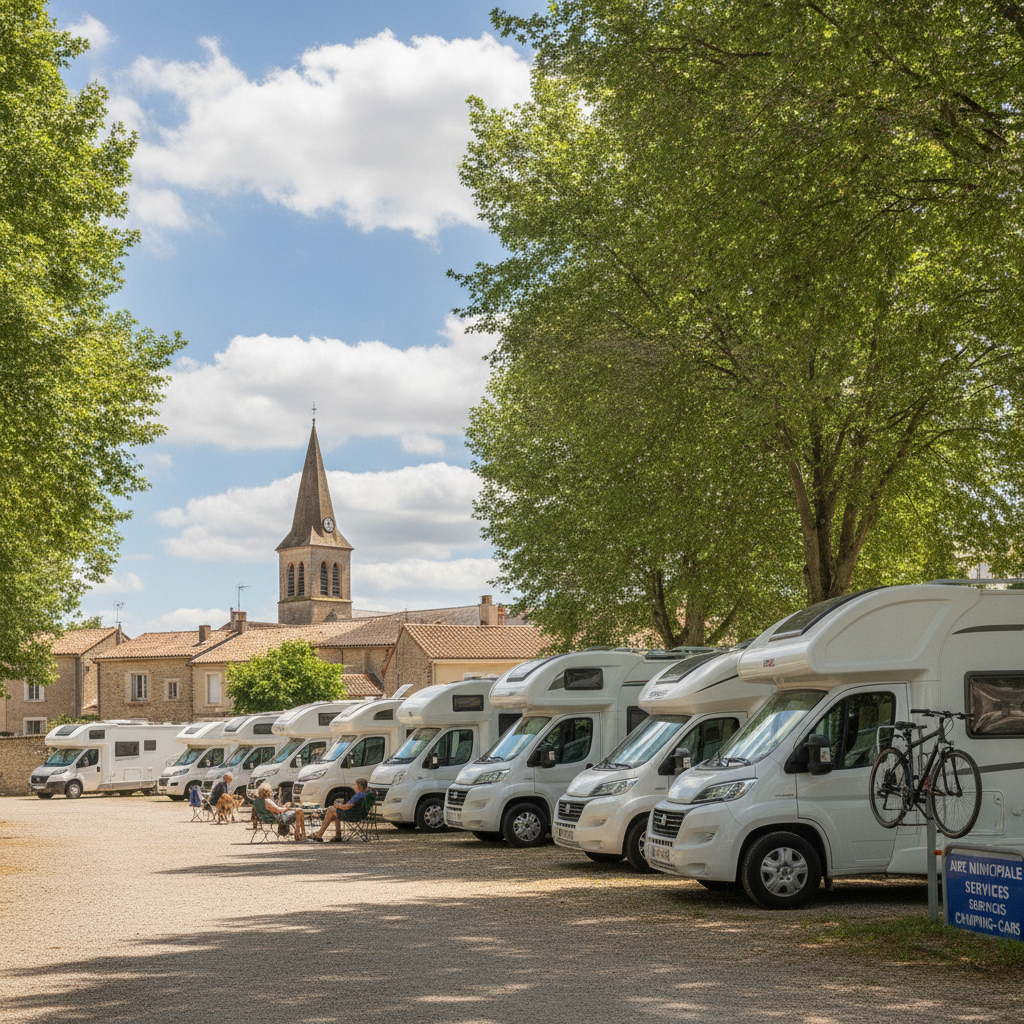
- Stay limits: Most aires post a maximum stay of 24 or 48 hours. Respect these; local police do check, and fines can follow. Some popular coastal aires tighten limits to 12 hours in peak summer.
- No awnings or chairs outside in some locations: Certain aires explicitly prohibit setting out furniture or using awnings to prevent the space becoming an informal campsite. Look for signage on arrival.
- Dogs: Allowed at virtually all aires, but keep them on a lead and clean up. French villages take this seriously.
- Generators: Usually banned or restricted to daytime hours only. Electric hook-up is the cleaner alternative.
- Grey water: Never empty grey waste onto the ground. Use the borne. It's the fastest way to get aires closed and ruins the reputation of motorhomers generally.
- Quiet hours: Typically 10pm to 7am. These aren't suggestions.
Common sense and courtesy go a long way. Leave the borne as clean as you found it, don't hog the water point, and leave space for late arrivals. The aire network survives because communities trust motorhomers to behave well.
How do aires compare to campsites?
Aires win on spontaneity and cost. You don't book ahead, you don't pay site fees for facilities you won't use, and you're usually right in a village or town rather than on the outskirts. Waking up next to a French canal or a mountain village square is an experience a campsite field rarely matches.
Campsites win on comfort and security. Hot showers, swimming pools, children's play areas and a proper reception are not things an aire offers. For a couple or solo traveller in a well-equipped van, that's a fair trade-off for most nights. For a longer static stay in one place, or if you want laundry facilities and a bar on site, a campsite makes more sense.
The practical approach most experienced motorhomers take: use aires for transit nights and spontaneous stops, use campsites when you want to stay put for a few days and recharge (literally and figuratively).
Frequently asked questions
What are aires in France?
Aires (short for aires de camping-car) are designated parking and service areas for motorhomes and campervans. Set up by local councils, they offer overnight parking and typically include water, waste disposal and sometimes electric hook-up at little or no cost.
How do I find aires in France?
You can use apps such as Park4Night or Camping Car Park, printed guides like the ACSI Motorhome Stopover book, or Campercation's searchable map which covers aires in France alongside UK stopovers. On the road, the blue motorhome symbol on French road signs points you to the nearest aire.
Are motorhome aires free?
Many are, especially in smaller French villages. Others charge between €5 and €15 per night for parking, with water and waste services costing an extra €2 to €4. Urban aires in busy tourist cities can charge up to €20 per night.
What is an aire de service?
An aire de service is a service-point version of an aire, focused on the practical facilities: water, grey waste drain, cassette emptying and sometimes electric hook-up. Some are standalone service points without overnight parking; others are part of a full overnight aire.
Can I use a French aire for one night without booking?
Yes. The vast majority of French aires operate on a first-come, first-served basis with no advance reservation required. Simply drive in, check the posted rules and any payment machine, and stay up to the posted time limit.
Do aires exist outside France?
Yes. Germany has a well-developed network called Stellplatz, Italy uses aree di sosta, Spain has áreas de autocaravanas, and the UK has an emerging equivalent in the form of pub stopovers and designated overnight parking areas, several of which include service facilities modelled on the French system.