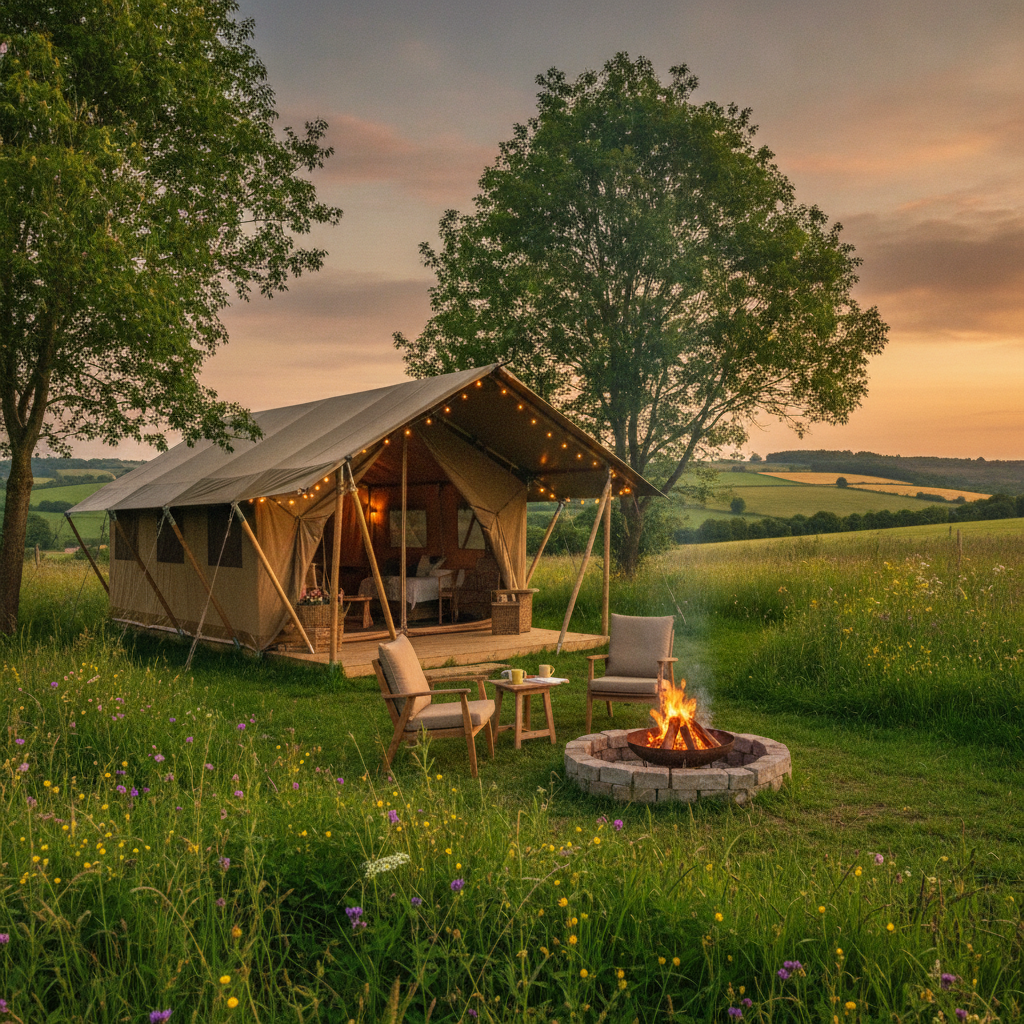
Glamping has come a long way from an air mattress in a bell tent. These days, a glamping holiday in the UK might mean waking up in a hand-crafted shepherd hut in the Cotswolds, sipping coffee on a treehouse deck in the Scottish Highlands, or falling asleep to the sound of owls from inside a heated safari tent in Devon. It's proper camping comfort, and it's absolutely brilliant.
The UK glamping scene has exploded over the last decade. There are now hundreds of sites offering something genuinely special, and the choice can feel overwhelming. So we've pulled together everything you need to know, whether you're planning your very first glamping trip or you've already slept in a yurt and fancy something new.
What Is Glamping, Really?
The word is a mashup of "glamorous" and "camping", and it covers a huge range of accommodation types. The common thread is that someone has already done the hard work for you. The structure is up, the bed is made (often with proper bedding), and there's usually a wood-burning stove, a private outdoor space, and at least some kitchen facilities.
You still get that connection to the outdoors. The birdsong in the morning, the stars at night, the campfire smell on your jacket. But you're not sleeping on the floor or rummaging for a torch at 2am. That's the appeal. It sits right in the sweet spot between a hotel and a traditional camping trip.
Who Is Glamping For?
Honestly? Everyone. Couples who want a romantic weekend away without the faff. Families with young children who don't want to wrestle with tent poles in the rain. Retirees who love the outdoors but want a comfortable night's sleep. Even seasoned campers who just fancy a treat.
It's also brilliant for first-timers. If you've always been curious about camping but a little nervous, a glamping stay is the perfect introduction. You get the experience without the steep learning curve.
Types of Glamping Accommodation Worth Knowing About
Not all glamping stays are created equal. Here's a quick rundown of the most popular types you'll find across the UK, so you can match the experience to what you're actually looking for.
Safari Tents
These are big, canvas structures, usually with proper wooden floors, real beds, and decent-sized living areas. Many have en-suite bathrooms. The canvas walls mean you still feel connected to the outside, but the space inside can rival a self-catering cottage. Sites in Somerset, Dorset, and East Sussex have some particularly good examples.
They're ideal for families. There's usually enough room for parents and kids without everyone tripping over each other, and many come with outdoor kitchens or fire pits included. Prices typically start around £100 per night and can reach £250 or more during peak summer weeks.
Shepherd Huts
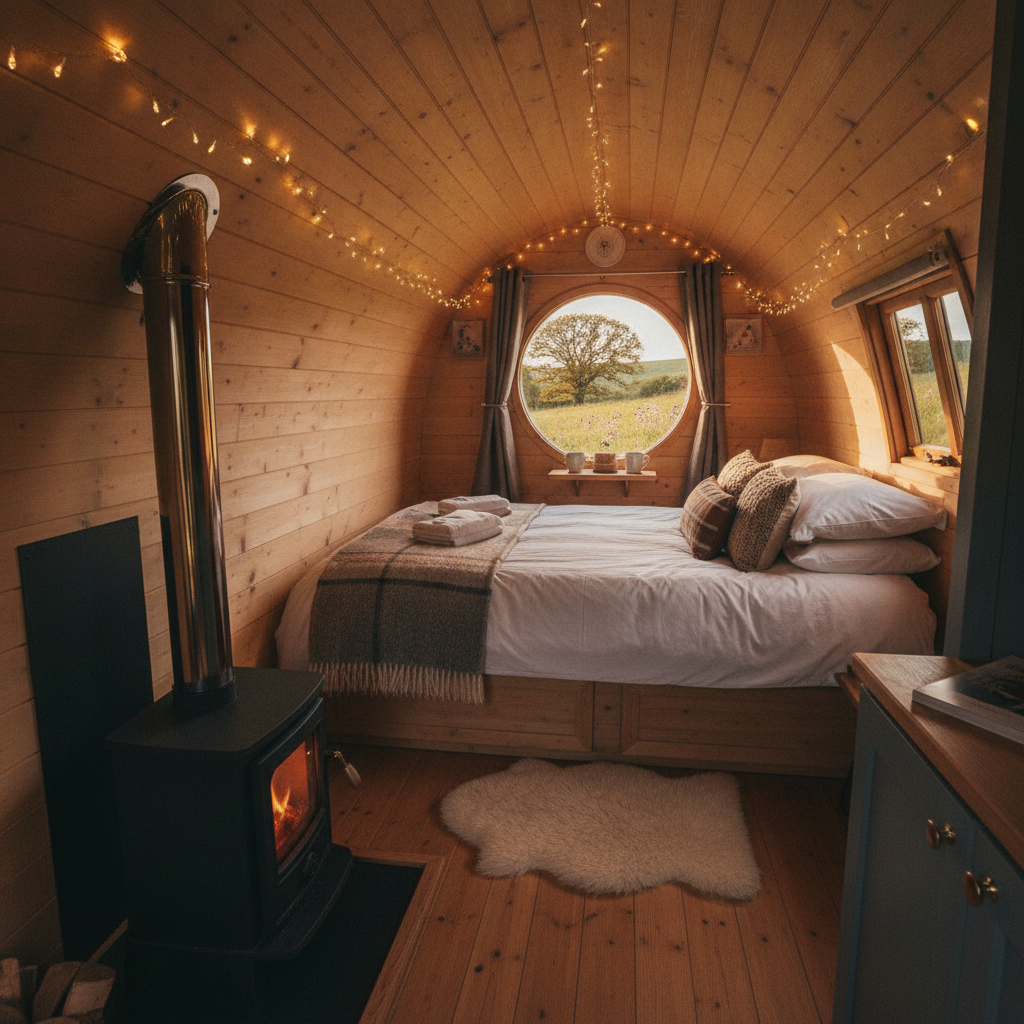
These are cosy, compact, and utterly charming. Traditionally used by shepherds during lambing season, the modern version has been completely reimagined as a romantic retreat. Think a double bed at one end, a wood-burning stove in the middle, and a tiny kitchen and shower room. All on wheels, usually tucked into a quiet corner of a farm or woodland.
The Cotswolds and the Welsh borders are particularly good hunting grounds for shepherd huts. Many are positioned with private views across fields or valleys, and the seclusion is a big part of the appeal. Best suited to couples or solo travellers; they're snug rather than spacious.
Treehouses
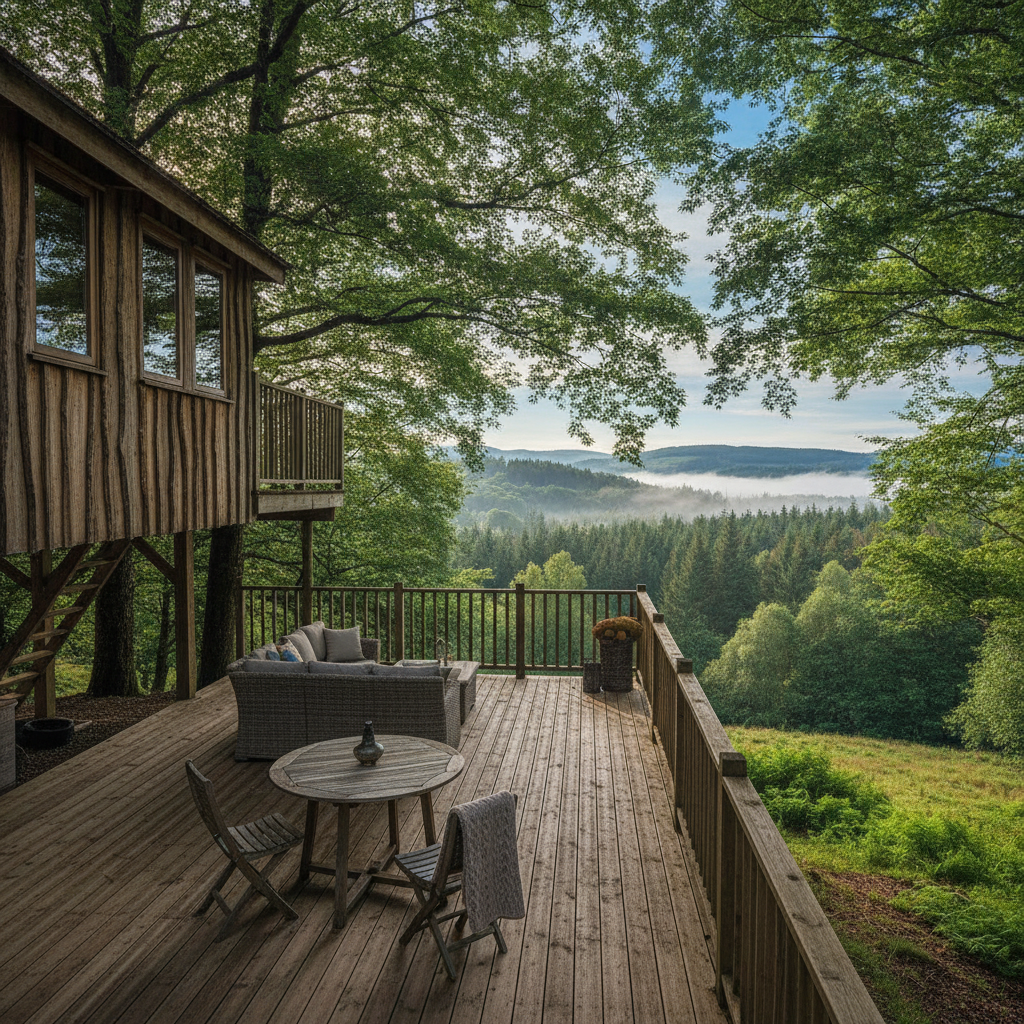
A proper treehouse stay is one of those experiences that feels a bit magical, no matter how old you are. The best ones are built high into the canopy with full bedrooms, sometimes a hot tub on the deck, and views that are genuinely hard to forget. Scotland has some exceptional examples, particularly in Perthshire and Argyll.
They book up fast. If you've got a particular treehouse in mind, checking availability six months ahead isn't excessive for summer dates. And yes, some of them do have ladders rather than staircases, which is worth considering if you've got very young children or mobility concerns.
Yurts, Bell Tents and Geodesic Domes
Yurts are circular canvas structures with a wooden lattice frame and a central skylight. They're warm, atmospheric, and usually furnished to a high standard. Bell tents are the more affordable sibling, simpler in structure but still a big step up from a regular camping tent when furnished properly.
Geodesic domes are a more recent addition to the scene. Their transparent or semi-transparent panels can give you stargazing views from your bed, which sounds gimmicky but is genuinely wonderful on a clear night. You'll find them dotted across the UK, from Cornwall to the Cairngorms.
The Best Regions in the UK for a Glamping Break
The UK is full of brilliant glamping spots, but some regions stand out for the quality and variety of what's on offer. Here are a few areas worth putting on your radar.
Devon and Cornwall
The South West has one of the highest concentrations of glamping sites in England. You're close to the coast, the food scene is excellent, and the scenery does a lot of the work for you. Devon in particular is strong on safari tents and bell tent fields on working farms. Expect to pay a premium in July and August, but shoulder season rates are often very reasonable.
The Scottish Highlands
For sheer drama and remoteness, the Highlands are hard to beat. Sites here tend to be more spread out, with real privacy and some serious wilderness on your doorstep. Loch Lomond and The Trossachs National Park has seen significant growth in glamping options over the past five years. The weather can be unpredictable, but that's half the adventure.
The Cotswolds
A favourite for couples and weekend escapes from London. The rolling hills, honey-coloured villages, and good pubs make it a classic English countryside experience. Glamping here tends to lean towards the luxurious end of the spectrum, with shepherd huts and boutique safari tents commanding strong prices. But for a special occasion, it's hard to beat.
Wales
Wales is genuinely underrated for glamping. Pembrokeshire and the Brecon Beacons both offer stunning landscapes, and the sites tend to be smaller and more personal than some of the bigger English operations. Prices are often more competitive too. And the beaches in Pembrokeshire are world-class. Full stop.
What to Look For When Booking a Glamping Stay
Not every site that uses the word "glamping" delivers on the promise. A few things worth checking before you book.
First, read the reviews. Not just the star rating; actually read what people say. Look for mentions of cleanliness, the condition of the wood-burning stove, and whether the site felt private or cramped. A 4.2-star site with detailed, recent reviews often beats a 5-star listing with just three comments.
Second, check what's actually included. Some glamping packages come with welcome hampers, fire pits, outdoor kitchens, and hot tubs. Others are more stripped back. Neither is necessarily better, but it affects how much you need to bring and how much you'll spend when you get there.
Third, think about proximity to facilities. Some sites are beautifully remote but require a 20-minute drive for a pint of milk. Others are a short walk from a village. Decide which matters to you before you commit.
Questions Worth Asking Before You Book
- Is bedding and towels included, or do you need to bring your own?
- Is there a private bathroom, or are facilities shared?
- Is there electricity and Wi-Fi? (Important for families and those working remotely)
- What's the minimum stay? Many glamping sites require two or three nights minimum.
- Are pets allowed? Policies vary enormously.
- What's the cancellation policy? Worth knowing given the UK's reliably unreliable weather.
Tips for Getting the Most Out of Your Glamping Holiday
A glamping break requires less kit than traditional camping, but a little preparation still goes a long way.
Pack layers regardless of the season. Even a warm summer night in a canvas tent can cool down quickly once the fire dies. A good fleece and a warm pair of socks take up almost no space and save a lot of discomfort. And bring a proper torch, even if the site has lighting. You'll thank yourself.
If you're staying somewhere with a fire pit or wood-burning stove, check whether firewood is provided or available on site. Many sites sell it, but some expect you to bring your own. Running out on a cold evening is a particular kind of disappointment.
Don't overschedule the trip. That's a common mistake. Glamping works best when you allow time to just sit. Read a book, eat a slow breakfast, watch the light change on the hills. The temptation to pack in activities can undermine the very thing you paid for: proper rest.
What to Bring That People Often Forget
- A good book (or two)
- A corkscrew and a decent bottle of wine
- Wellies, even in summer
- A small portable speaker for evening atmosphere
- Insect repellent, particularly in woodland settings
- Cash, as some rural sites don't take card payments for extras
How to Find the Best Glamping Sites on Campercation
Finding a great glamping site doesn't have to involve hours of scrolling through search results. At Campercation, we've pulled together listings from across the UK, covering everything from budget-friendly bell tent fields to high-end treehouse retreats with hot tubs. You can filter by region, accommodation type, and what's included.
We update our listings regularly and include genuine reviews from people who've actually stayed there. No fluff. Just honest information to help you book with confidence.
Whether you're planning a romantic weekend in the Cotswolds, a family summer break in Devon, or something completely different in the Scottish Highlands, there's a glamping experience that fits. It's just a matter of finding the right one for you.
Head over to campercation.com to browse our full range of glamping and camping listings across the UK. Your next adventure is already out there.