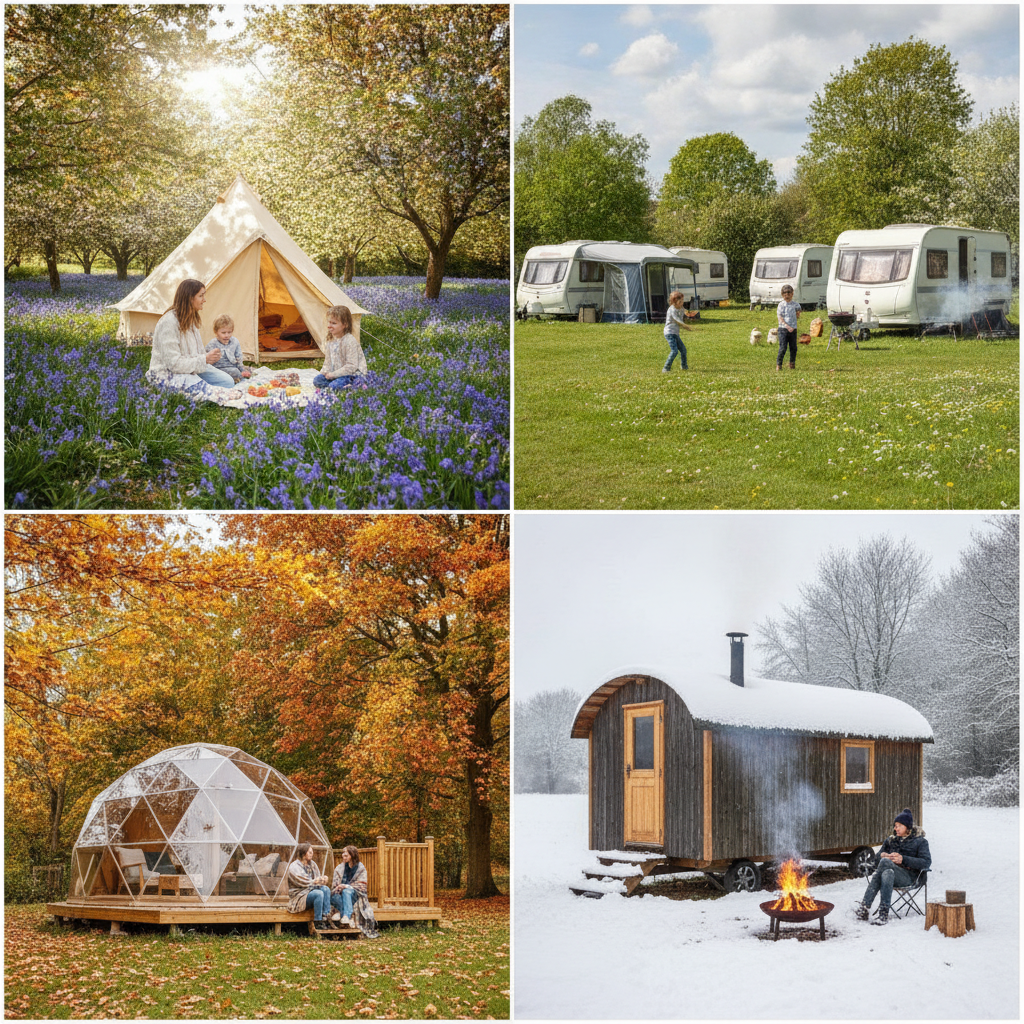
Planning a seasonal camping holiday in the UK is one of those things that sounds simple until you're staring at a blank calendar wondering where to start. Easter, summer half-term, the school holidays, a cheeky long weekend in October — each season brings something completely different, and getting the timing right can make or break the trip. We've pulled together everything you need to know about camping across the year, so you can stop guessing and start booking.
Why the Season You Choose Matters More Than You Think
Most people default to August. It's school holidays, it's (hopefully) warm, and it feels like the obvious choice. But peak summer also means packed campsites, higher prices, and a queue for every shower block. The truth is, some of the best camping experiences we've had came from picking the right site at the right time of year — not just the most popular one.
Each season has its own rhythm. Spring camping means bluebell woods and birdsong. Autumn brings golden light and almost empty fields. Summer gets the best weather but the biggest crowds. And winter? Winter camping is its own thing entirely — not for everyone, but genuinely magical if you're prepared.
Let's break it all down.
Easter Camping: Getting the Season Off to a Good Start
Easter is the great reawakening of the camping calendar. After a long winter, people are desperate to get outside, and the Easter school holidays typically stretch across two weeks in late March or April. It's busy — but not summer-busy. You've still got room to breathe.
The key thing with Easter camping is managing expectations around the weather. Some years it's genuinely lovely. Others you'll be battening down the tent in sideways rain by Saturday morning. Packing layers and a decent windproof is non-negotiable. A groundsheet, too.
What Works Well at Easter
Holiday parks in Devon, Cornwall, and the Lake District tend to fill up fast over the Easter break, especially those with indoor facilities. If you've got young children and the weather turns, having a soft play area or a heated pool nearby changes everything. Sites like these get booked months in advance, so if you're eyeing up a specific park, don't wait until February to look.
Self-catering glamping pods are brilliant for Easter. They're warmer than a tent, more affordable than a holiday cottage, and they give kids that sense of adventure without the risk of a soggy sleeping bag. Lots of farms across Yorkshire, Wales, and Scotland now offer them year-round.
One more thing: many campsites only open for the season at Easter. So you'll often find newly mown pitches, freshly stocked shop shelves, and staff who are genuinely pleased to see you. The vibe is great.
Half-Term Breaks: May and October Are the Hidden Gems
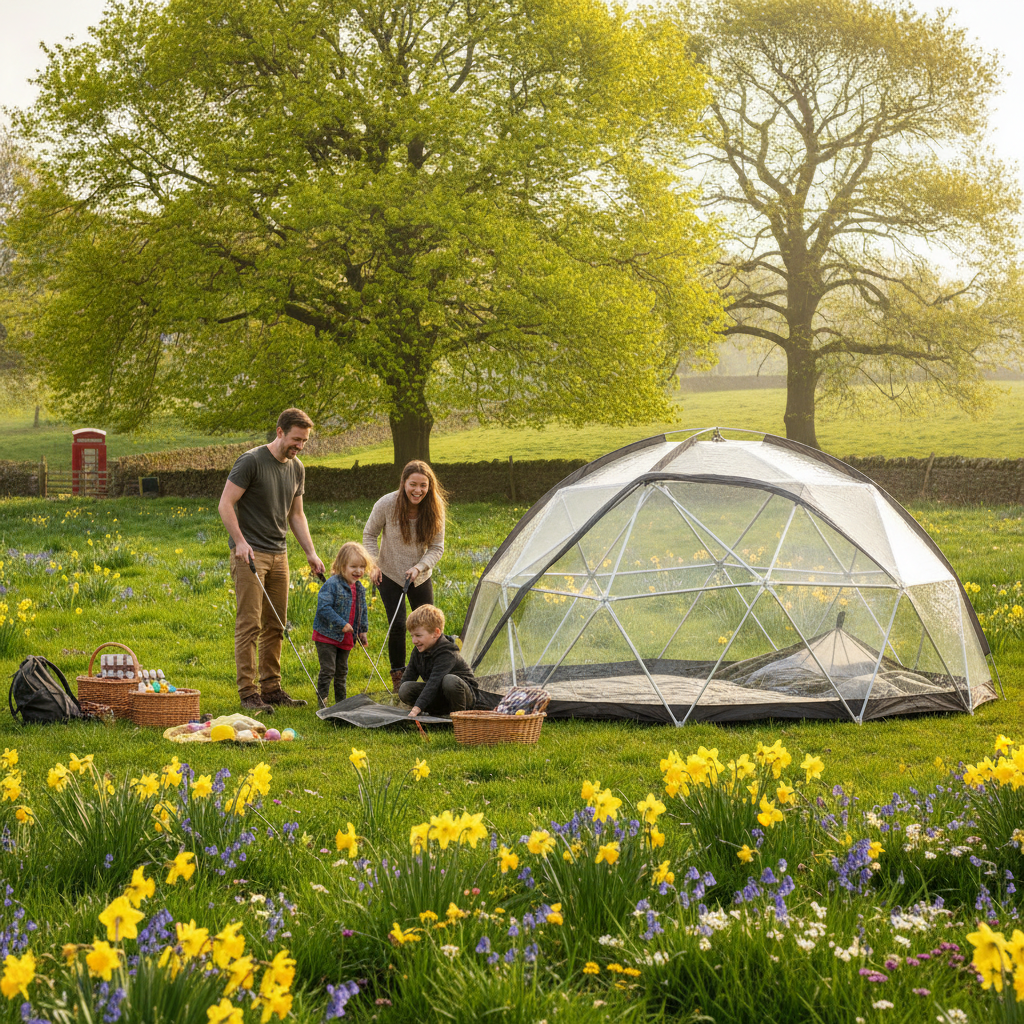
The May half-term is arguably the most underrated week in the camping calendar. School's out for a week, the days are getting noticeably longer, and you're in that sweet spot between cool spring evenings and genuinely warm afternoons. Wildflowers are everywhere. Footpaths aren't yet worn down by summer traffic. It's lovely.
Campsites are busy but not rammed. Prices haven't yet tipped into peak summer rates at most independents. And if you pick somewhere in the Cotswolds, the Peak District, or the North York Moors, you'll find the landscape is absolutely at its best right now.
May Half-Term Tips for Families
Book at least 6 to 8 weeks ahead for popular sites — don't leave it until the last minute thinking you'll find space. A lot of family campers have worked out the May half-term secret, so availability goes quicker than you'd expect.
Evenings can still dip to single figures in northern England and Scotland. Bring a sleeping bag rated to at least 0°C for adults, and something warmer for younger kids. A hot water bottle in the tent is one of those things that sounds old-fashioned until 11pm on a cold night.
The October half-term is a different kind of magic. It's cooler, obviously, but the colours are extraordinary. Sites in the New Forest, the Brecon Beacons, and Perthshire in Scotland are spectacular in mid-October. You'll need proper gear, but the trade-off is that many sites are running at half capacity and the peace is something else.
Summer Camping: How to Make the Most of the Busiest Season
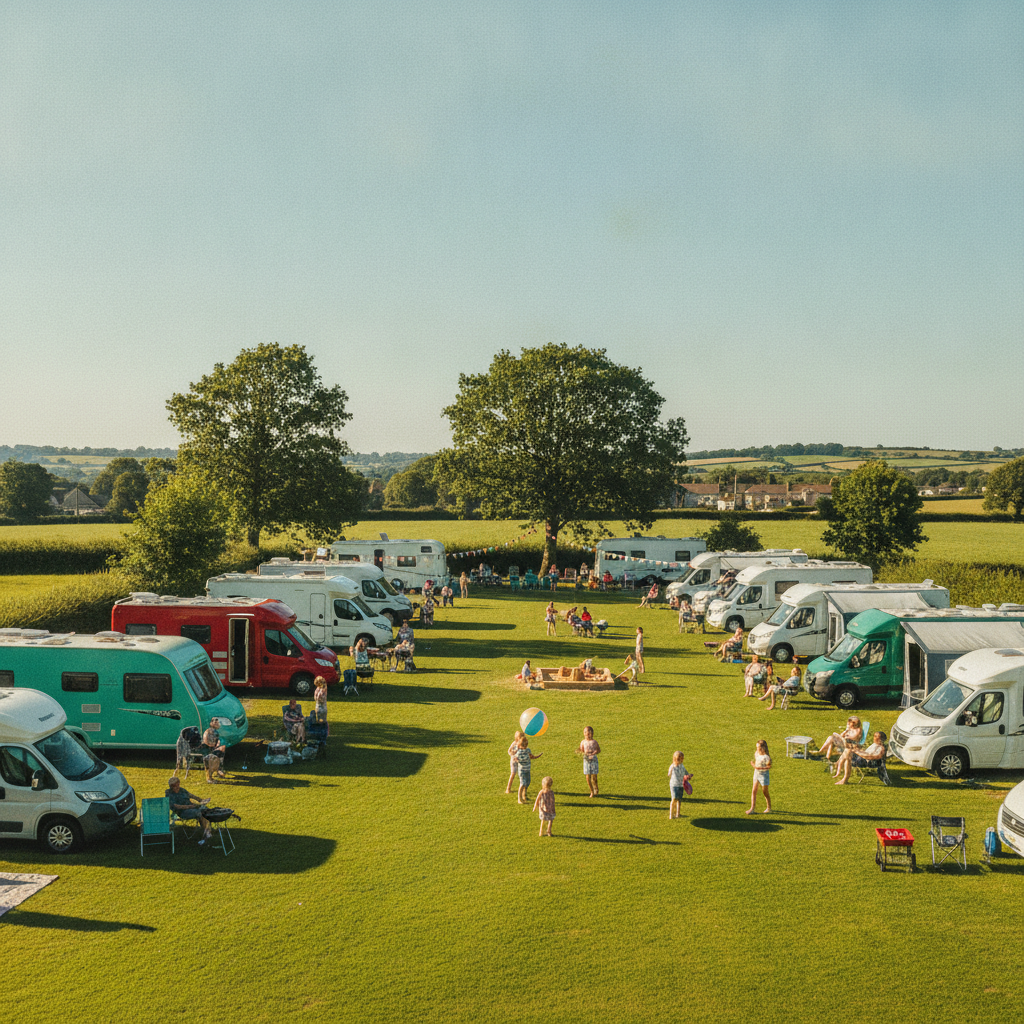
Right. Summer. Six weeks of school holidays, longer evenings, the best chance of actual sunshine, and campsites that are genuinely buzzing with energy. It's the peak of everything — including prices and demand.
The first thing to say is: book early. Not sort-of-early. Properly early. For August school holidays at a popular holiday park in Cornwall or Pembrokeshire, you should ideally be booking in January or February, sometimes even the previous autumn. That's not an exaggeration. The best pitches and pods go fast.
Picking the Right Kind of Site for Summer
Summer is when the difference between a holiday park and a quiet campsite really matters. Holiday parks with entertainment, swimming pools, and organised activities are brilliant if you've got kids between 4 and 12. They'll be exhausted and happy every single evening. Parks run by operators like Haven or Park Holidays UK offer this kind of setup, and they're worth it if the entertainment side matters to you.
But if you're after a quieter experience — a couple's trip, or teenagers who'd rather hike than do a pub quiz — look at smaller independent sites. The Camping and Caravanning Club lists hundreds of certified locations across the UK, many of which have just a handful of pitches in genuinely beautiful spots.
Motorhome touring is particularly good in summer. You can chase the good weather around the country rather than being tied to one location. A week travelling the North Coast 500 in Scotland in July, for example, gives you flexibility, freedom, and some of the most dramatic scenery you'll find anywhere in Europe. Browse motorhome-friendly sites on Campercation to find stopovers that suit your route.
Beating the Summer Crowds
Go early in the school holidays if you can. The last two weeks of July before most English schools break up are noticeably calmer than August. Scotland and parts of Wales finish earlier too, so their peak hits differently.
Mid-week arrivals are your friend. Sunday to Thursday stays at most campsites are cheaper and quieter. If you can swing it with work, even a four-night mid-week break in August feels more relaxed than a weekend.
Autumn and Winter Camping: Cold Comfort and Quiet Pitches
Here's where camping gets genuinely adventurous. Once September arrives, the crowds thin out noticeably. By October, many holiday parks have wrapped up for the season, but plenty of independent sites and glamping spots stay open — and the experience is completely different.
Autumn camping rewards preparation. The right sleeping bag, a four-season tent or a solid glamping pod, and a good waterproof jacket are the basics. Get those right and you'll wonder why you ever avoided it.
The Case for Winter Glamping
Winter camping in a traditional tent is a niche pursuit. Comfortable, yes — if you've got the kit. But it's not for everyone, and that's fine. What has absolutely exploded in recent years is winter glamping. Shepherd's huts with log burners, yurts with underfloor heating, insulated pods with hot tubs. These aren't roughing it — they're genuinely cosy, and they're often available at very reasonable prices between November and March.
The Cotswolds, the Yorkshire Dales, and Snowdonia all have brilliant glamping operators who stay open through winter. A long weekend in a well-heated shepherd's hut in November, with a fire pit outside and a good book inside, is genuinely one of the better ways to spend a weekend in the UK. Trust us on this.
Caravan owners have this nailed, by the way. A modern static caravan or even a touring van with good heating is perfectly comfortable in winter. Sites that cater to year-round visitors — particularly in Cornwall and North Wales — are set up for it, with heated facilities and reliable electricity hook-ups.
How to Plan Across the Seasons: A Practical Framework
The best camping families and couples we know plan their year in advance. Not obsessively, but with a rough map: one Easter trip, a summer fortnight, and something quieter in autumn or winter. That way, you're not scrambling for availability in May when everyone else had the same idea.
Budgeting Across the Year
Peak season pricing varies significantly. A pitch that costs £18 a night in October might be £40 in August at the same site. Glamping pods show similar patterns. If budget matters (and for most families it does), mixing a peak summer stay with an off-season glamping break gives you the best of both worlds without the full-price hit every time.
Holiday parks often do early-bird discounts for the following summer if you book before October. Worth checking the websites of your favourite parks in autumn to see what deals are on offer.
Flexibility Is Your Biggest Asset
The more flexible your travel dates, the better the deals and availability you'll find. Even shifting from a Saturday arrival to a Sunday, or from a two-week booking to 10 nights, can open up pitches that weren't visible on a standard search. Most booking platforms let you fiddle with dates easily enough.
If you're a motorhome or caravan owner, your flexibility is even greater. Certifed Locations and CLs (small privately-run sites affiliated with the Camping and Caravanning Club) are often bookable at short notice and offer a far more intimate experience than a big holiday park.
Ready to Plan Your Next Camping Trip?
Whether you're mapping out an Easter break in Wales, counting down to a summer fortnight in Cornwall, or looking for a cosy glamping pod this November, there's a perfect UK site waiting for you. The key is knowing what each season offers and playing to its strengths rather than fighting against them.
Start browsing holiday parks, campsites, and glamping spots across the UK at campercation.com. Filter by region, pitch type, and time of year to find exactly what you're after. Your next adventure is closer than you think.