Glamping has gone from a niche novelty to one of the most searched holiday types in Britain, and honestly, it's easy to see why. Unique glamping stays give you the romance of sleeping under the stars without sacrificing a proper bed, a hot shower, or (let's be honest) a decent coffee machine. Whether you're booking a shepherd hut in the Cotswolds or a treehouse perched above a Scottish glen, these experiences have a way of staying with you long after you've unpacked your bags. This guide covers the best types of glamping accommodation available across the UK, what to expect, and how to find the perfect spot for your next break.
What Actually Counts as Glamping?
It's a fair question. The word is a portmanteau of "glamorous" and "camping", but that definition stretches pretty wide in practice. Some people think glamping means a posh bell tent with fairy lights. Others are talking about a fully kitted-out lodge with underfloor heating and a hot tub on the decking.
The honest answer is that glamping sits anywhere between a traditional tent and a self-catering cottage. The common thread is that the accommodation is already set up for you, usually in a rural or natural setting, and comes with more comfort than a standard camping pitch. You're not wrestling with guy ropes at 10pm in the dark. That's the point.
Here's a rough breakdown of what you'll typically find:
- Bell tents and canvas glamping tents — the gateway glamping option. Furnished with proper beds, rugs, and lighting.
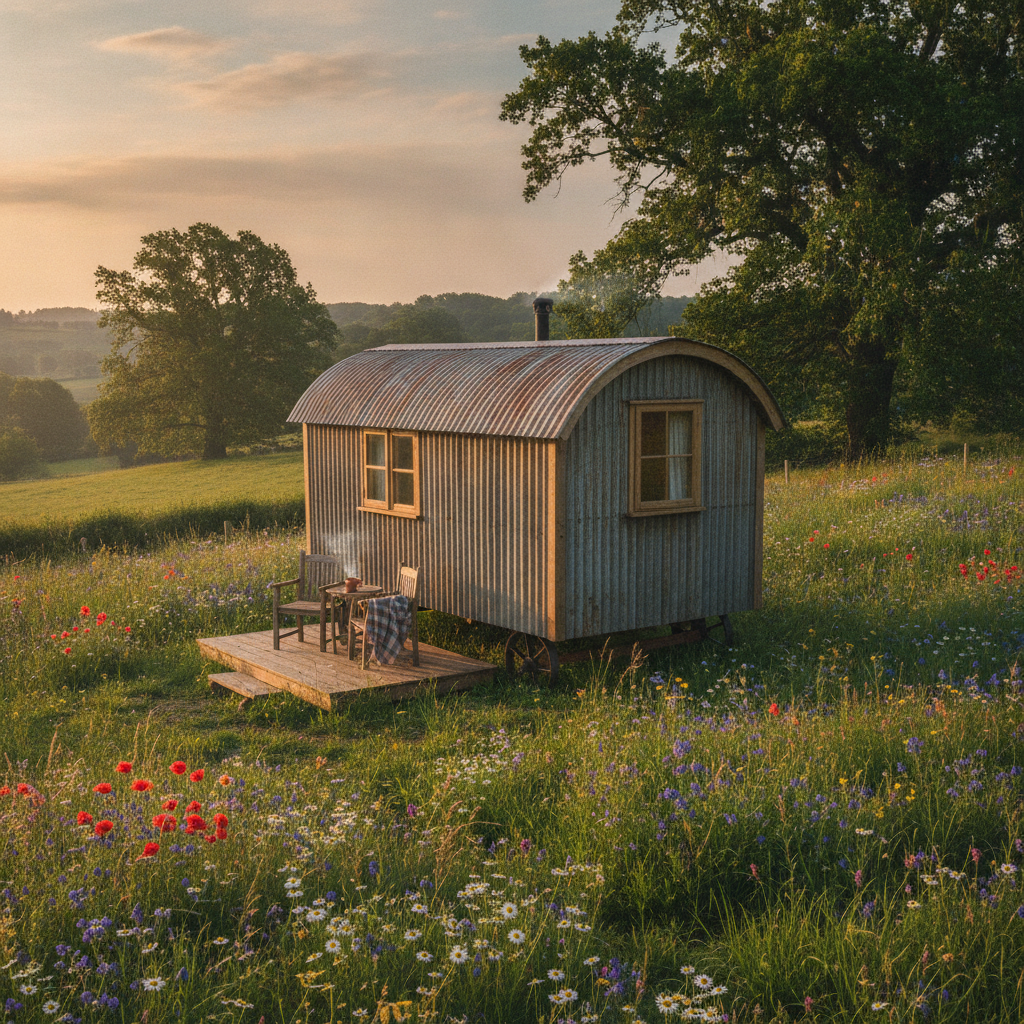
- Shepherd huts — small, cosy wagons on wheels. Traditional looking, often very well appointed inside.
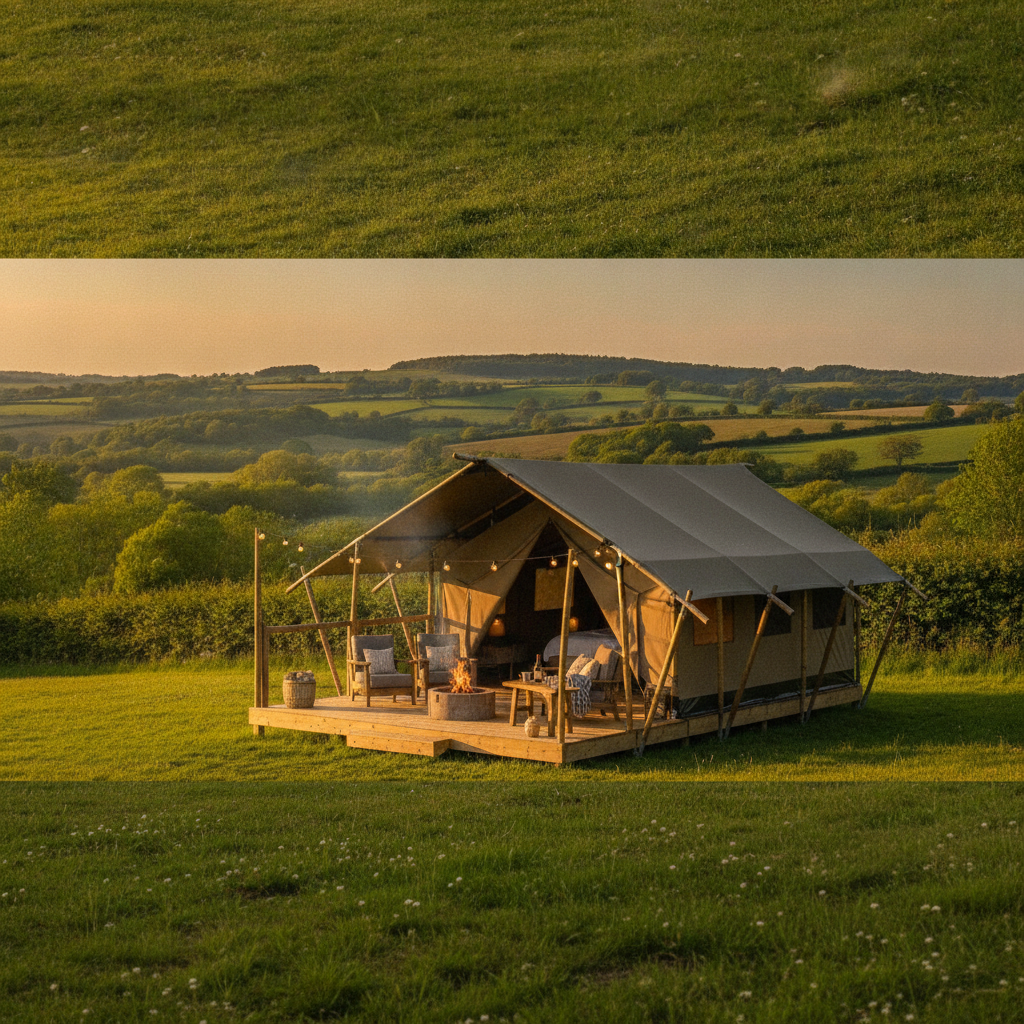
- Safari tents — large, solid-framed canvas tents inspired by African game reserves. Often sleep a whole family comfortably.
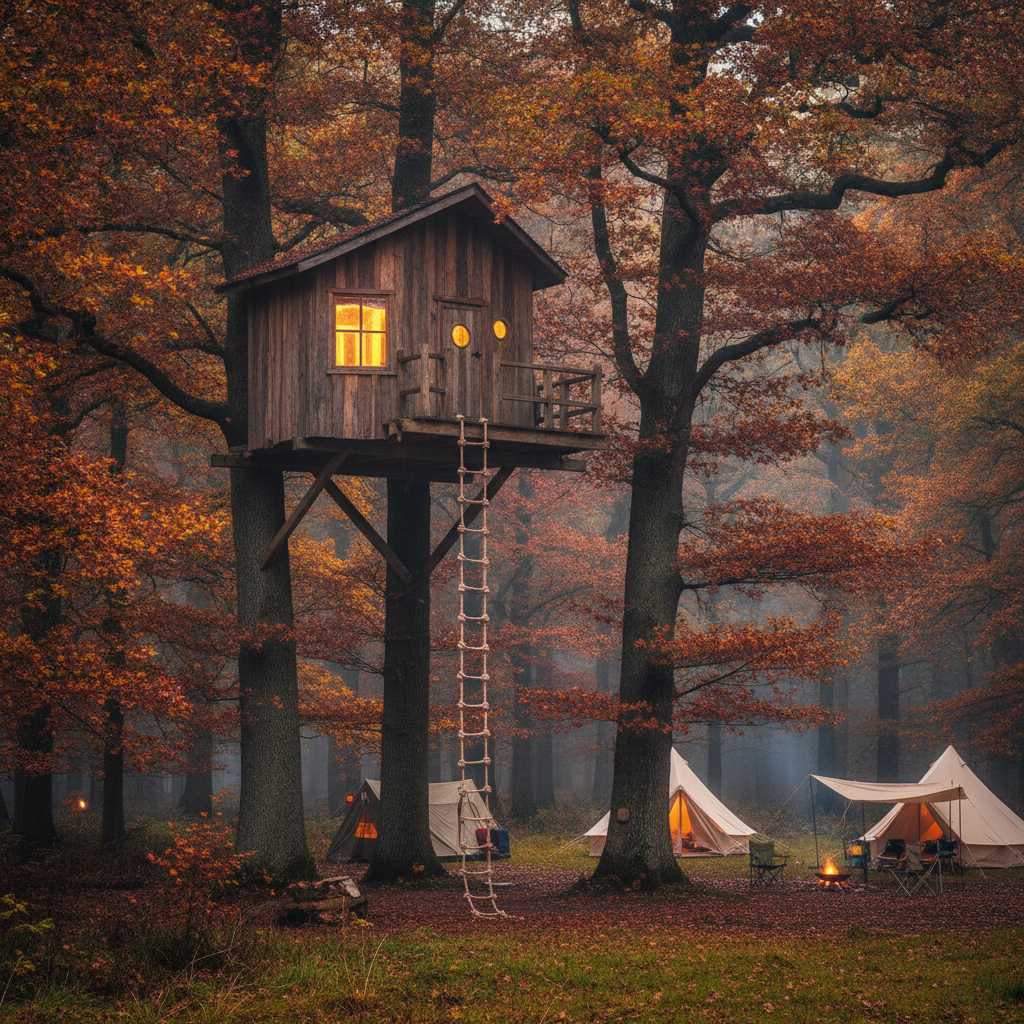
- Treehouses — exactly what they sound like, and they never get old.
- Yurts — circular, Mongolian-inspired structures. Surprisingly spacious and usually very warm.
- Pods and cabins — everything from basic wooden pods to fully insulated cabins with kitchenettes and en-suite bathrooms.
Prices vary enormously, from around £80 per night for a basic bell tent to upwards of £400 for a premium treehouse or lodge. Most falls in the £120 to £250 range for a couple or small family.
Shepherd Huts: Small Spaces, Big Charm
If you've scrolled through Instagram in the last few years, you've almost certainly seen a shepherd hut. And yes, they really do look that good in real life too.
These compact, corrugated-roof wagons were originally used by farmers to stay close to their flocks during lambing season. Today, they've been lovingly restored and redesigned as intimate retreats for couples, mostly, though some can sleep a small family.
What to expect inside a shepherd hut
Most shepherd huts sleep two adults in a fixed double bed. Interiors tend to be beautifully crafted, with wood panelling, a wood-burning stove, and clever storage built into every corner. Higher-end versions include a proper shower room, a kitchenette, and outside decking with a fire pit.
They're not huge. That's part of the appeal. There's something genuinely restful about having less space to fill with noise and distraction.
Where to find shepherd huts in the UK
You'll find shepherd huts scattered across rural England, Wales, and Scotland. Some of the most popular areas include the Cotswolds, Exmoor, the Yorkshire Dales, Pembrokeshire, and the Scottish Borders. Many are on working farms, which adds to the experience, especially if you're travelling with children who'll love meeting the animals.
Sites like Campercation list shepherd hut stays alongside more traditional camping and caravan pitches, so you can compare options across the same region easily.
Safari Tents: Glamping for the Whole Family
Safari tents are the family workhorse of the glamping world. They're big, they're surprisingly comfortable, and they give everyone enough room to breathe, which matters a lot after a long drive and three rounds of "are we there yet".
A good safari tent will typically sleep four to six people across separate bedroom areas. Expect a proper lounge space, a kitchen area stocked with basic equipment, and often an outdoor veranda with garden furniture. Some higher-end sites include en-suite bathrooms. Others have dedicated shower and toilet blocks nearby.
What makes safari tents work so well for families
Space is the obvious one. But it's also the setup — you arrive to find the beds already made, the kitchen stocked with the basics, and the outdoor area ready to use. No erecting tents in a drizzle. No hunting for the pegs you definitely packed.
Kids absolutely love them too. There's something about a big canvas tent that feels like a proper adventure without being remotely uncomfortable. It hits a sweet spot that's genuinely hard to find with other accommodation types.
Top regions for safari tent glamping
Cornwall and Devon are probably the most popular counties for safari tent sites, particularly for families. The combination of beaches, reliable sites, and a reasonable summer climate makes the South West a natural choice. That said, don't overlook places like Herefordshire, the Lake District fringes, or Perthshire in Scotland, where you'll find quieter sites with equally stunning surroundings.
Explore a wide range of family-friendly glamping sites across the UK at campercation.com.
Treehouses: The Glamping Experience Everyone Dreams About
There's a reason treehouse bookings sell out months in advance. They tap into something almost everyone felt as a child, that pull of being up high, hidden, looking out over the world from your own private perch. Grown-up treehouses just come with better mattresses and a bottle of something cold in the fridge.
UK treehouses range from rustic wooden platforms with a bed and not much else, to genuinely spectacular structures with full kitchens, hot tubs, and floor-to-ceiling windows looking out over ancient woodland. The best ones are designed by proper architects and feel like a proper luxury stay.
Things to consider before booking a treehouse
Access matters more than you'd think. Most treehouses involve a ladder or steep staircase, which can be tricky for very young children or guests with mobility issues. Check this before you book.
Also worth knowing: treehouses in the UK are often available year-round. Some are at their most magical in autumn when the surrounding woodland turns. Winter bookings, especially over Christmas and New Year, disappear very fast indeed.
Where to find UK treehouses
Scotland has some extraordinary options, particularly in Perthshire and Argyll. England's best treehouses tend to cluster in the West Country, Herefordshire, and the New Forest area. Wales punches above its weight too, with some beautiful treehouse sites in Carmarthenshire and Gwynedd.
The key is knowing where to look. Browsing Campercation listings for your chosen region is a good place to start, particularly if you want to compare different types of glamping in the same area before committing.
Yurts, Pods, and Everything Else: Expanding Your Options
Shepherd huts, safari tents, and treehouses get most of the attention, but the glamping world is broader than that. Yurts have been quietly winning people over for years. They're circular, traditionally decorated, and brilliantly well-insulated — warmer than you'd expect, even in October.
Wooden pods are another option that's grown hugely. Basic pods are essentially a waterproof shell with a bed inside, accessed from a campsite with shared facilities. More upmarket versions are fully self-contained cabins with proper bathrooms and kitchens. The gap between a luxury pod and a budget holiday cottage has become very small.
Geodesic domes and other novelty stays
Geodesic domes have become something of a design icon in the glamping world. Usually transparent or semi-transparent, they're designed to give you the feeling of sleeping under an open sky without any of the actual exposure. Stargazing from your bed is genuinely as good as it sounds.
You'll also find converted vehicles (old buses, railway carriages, Airstream trailers), floating cabins on rivers and lakes, and even underground cave stays if you're feeling adventurous. The UK glamping market has become wonderfully inventive.
Practical Tips for Booking a Glamping Stay
A few things are worth knowing before you hand over your card details.
- Book early. The best sites for peak summer weeks fill up by February or March. Easter and half-term breaks go even faster. If you've got fixed dates, don't wait.
- Check what's included. Some glamping sites are beautifully comprehensive; others leave you to bring your own bedding, towels, and kitchen supplies. Read the listing carefully.
- Look at the minimum stay. Many glamping sites have a two or three night minimum, especially at weekends. A Monday-to-Friday break is often better value and gives you a quieter experience.
- Think about the season. Some glamping accommodation is genuinely year-round. Others are canvas-only and close between October and March. Know what you're booking.
- Ask about dogs. Pet policies vary wildly. Some sites are dog-friendly throughout; others restrict pets to certain units. Always check before assuming.
- Check the reviews. Not just the star ratings. Read what people actually say about the site, specifically the cleanliness of facilities, the quality of the host communication, and how accurate the photos are.
It's also worth thinking about what's nearby. A beautiful shepherd hut in a remote location is dreamy for a couple wanting to switch off. It's potentially very long two nights if you've got a five-year-old who needs something to do every morning.
Is Glamping Worth the Price?
It's a question people ask all the time, and the honest answer is: it depends what you're comparing it to.
Against a standard camping pitch, glamping is significantly more expensive. Against a hotel or self-catering cottage, it's often surprisingly competitive, particularly if you're booking a safari tent or lodge that sleeps four to six. Split across a family, the nightly cost can come out well under what you'd pay for equivalent hotel rooms.
The thing glamping offers that neither hotels nor traditional camping quite matches is that sense of occasion. There's something about sleeping in a shepherd hut on a farm in the Dales, or waking up in a treehouse above a Scottish loch, that just feels different. Special. Worth the splurge.
And increasingly, that's what people are looking for from their holidays. Not just somewhere to sleep, but somewhere that actually makes a memory.
Ready to Find Your Perfect Glamping Stay?
There are thousands of glamping sites across the UK, from simple canvas pitches in Cornwall to architect-designed treehouses in the Scottish Highlands. The tricky part isn't finding options; it's narrowing them down to the one that's right for your group, your dates, and your budget.
That's exactly what Campercation is built for. Browse our curated listings of glamping sites, caravan parks, and camping holidays across the UK and find somewhere genuinely worth looking forward to. Head to campercation.com to start planning your stay today.