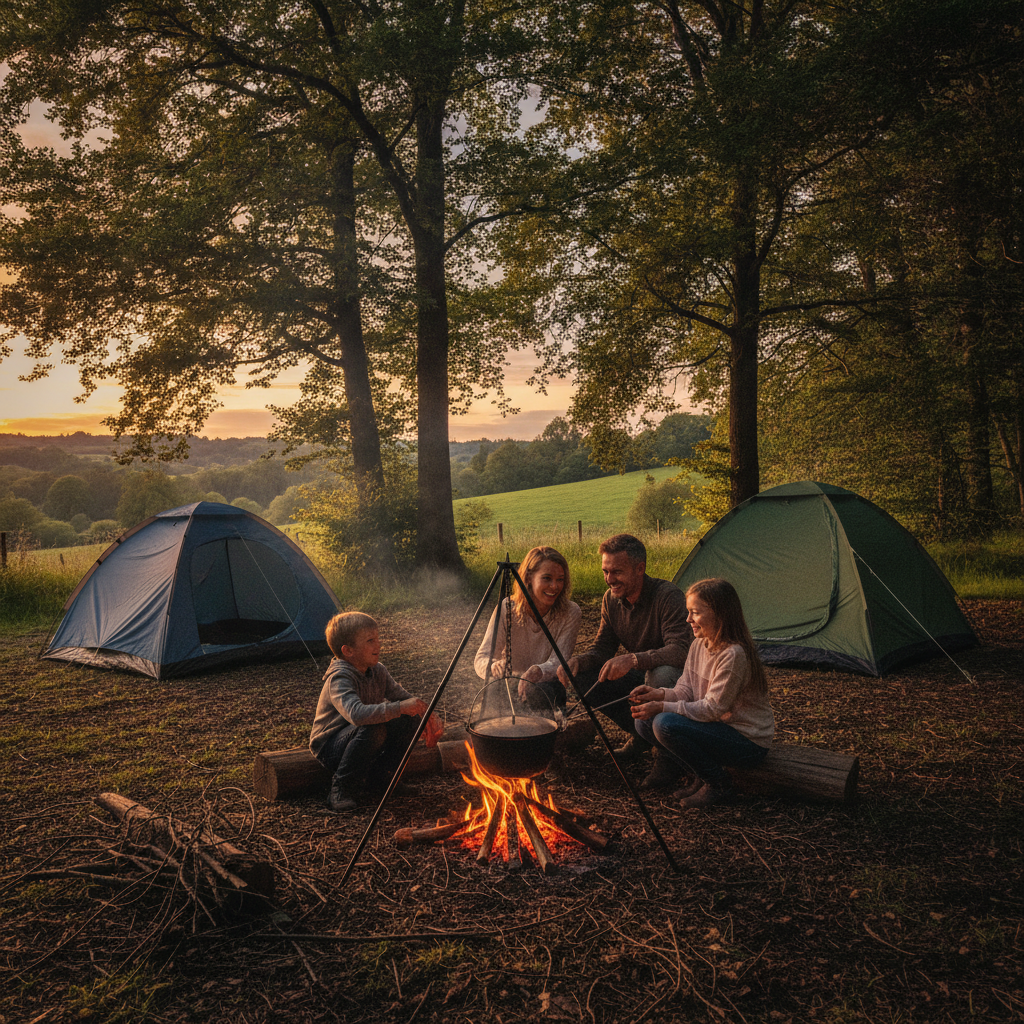
Ask any seasoned camper what makes or breaks a trip, and they'll tell you the same thing: the food. Camping food ideas might not be the first thing you research when planning a holiday, but they absolutely should be. Good meals keep everyone happy, energy levels up, and arguments around the campfire to a minimum. Get it wrong and you're staring at a soggy packet of crackers wondering why you didn't just go to a hotel.
The good news? Cooking outdoors doesn't have to be complicated. You don't need a full kitchen kit or chef-level skills. With a bit of planning, a decent cool box, and a few trusty recipes, you can eat really well whether you're on a caravan site in the Cotswolds or wild camping in Scotland.
This guide covers everything you need, from stocking up before you leave home to cooking proper meals on a single-burner camp stove. Let's get into it.
Planning Your Camping Food Before You Leave Home
The biggest mistake most first-timers make is leaving food planning to the last minute. You rock up at a campsite, realise you've forgotten half the essentials, and end up spending twice as much at a nearby farm shop or petrol station. Not ideal.
A proper food plan doesn't need to be elaborate. Write out your meals for each day, including breakfasts, lunches, dinners, and snacks. Then work backwards to build your shopping list. Simple.
How Many Days Are You Going?
For a weekend trip, you're looking at two breakfasts, two lunches, one or two dinners, and plenty of snacks. For a week-long motorhome holiday or a longer caravan park stay, you'll want more variety so that you don't burn out on pasta by day four.
Plan for one slightly more ambitious meal per trip, something that feels like a treat. A proper campfire curry, a foil-baked salmon, or even a full English cooked on a camp stove. It becomes a highlight of the trip.
What to Prep at Home
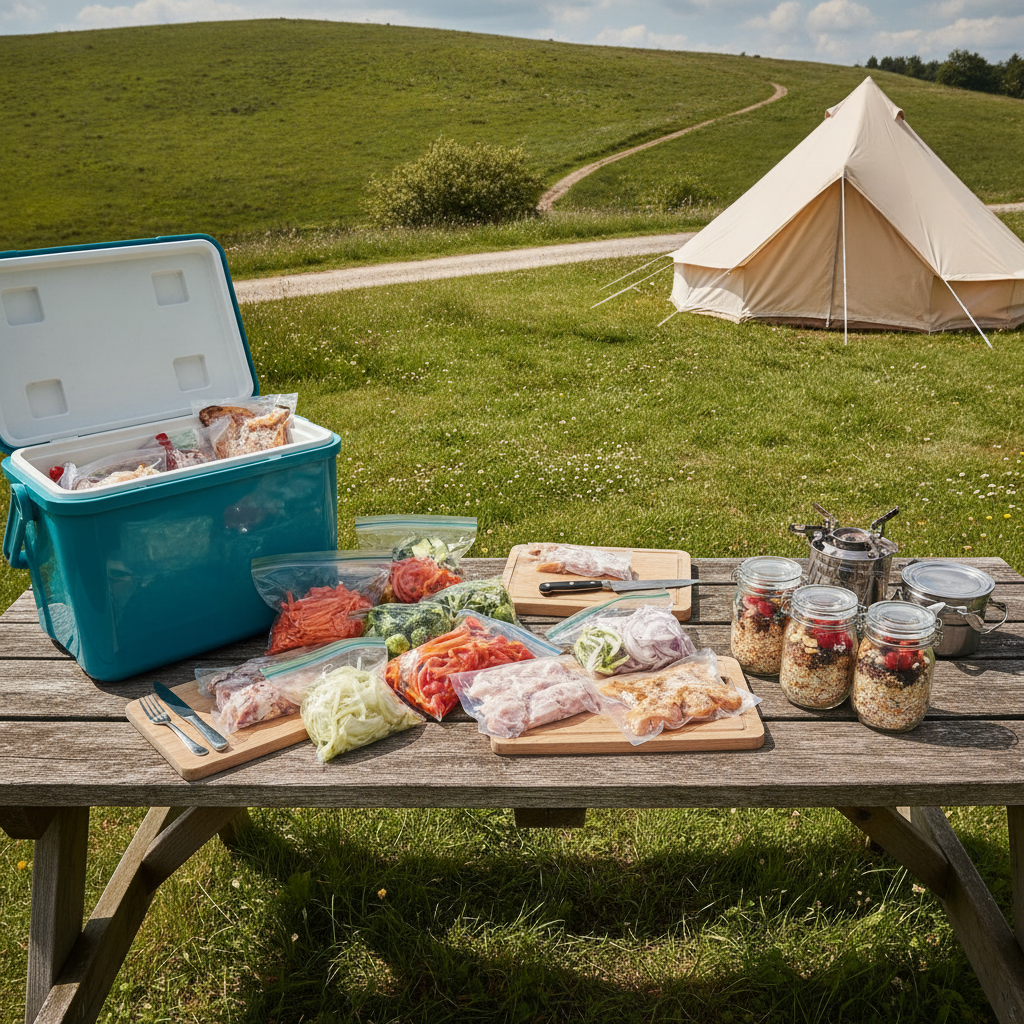
Prepping food before you leave saves time and washing up at the campsite. Chop your onions, garlic, and peppers at home and store them in sealed bags or containers. Pre-marinate any meat the night before. If you're making a chilli or bolognese, you can even cook it at home, freeze it, and use the frozen portions as ice blocks in your cool box. Two jobs done at once.
Grate any cheese, portion out breakfast oats, and pre-make energy balls or flapjack for snacks. This kind of prep takes maybe an hour the evening before you leave and makes a massive difference once you're on site.
Camping Food Ideas for Breakfast
Breakfast is arguably the most important meal when you're camping. You're often up earlier than usual, the air is cold, and people need feeding before anyone has to deal with a grumpy child or a damp sleeping bag. Warm, filling, and quick is the goal.
The Classic Camp Stove Fry-Up
You don't need to overthink it. Bacon, eggs, sausages, and a tin of beans. A two-burner stove handles this easily enough, and if you've only got one, cook in batches and wrap the finished bits in foil to keep warm. Serve it in a wrap if you want to save on washing up plates.
Good quality sausages travel well in a cool box and a pack of smoked bacon lasts two or three days. Buy the proper stuff, not the cheap supermarket packs that shrink to nothing in the pan. It genuinely makes the meal.
Overnight Oats and No-Cook Options
For days when you want to get moving early, overnight oats are a brilliant option. Mix rolled oats with milk or yoghurt, add some fruit and honey, and leave them in a sealed container in the cool box overnight. Breakfast ready in zero minutes.
Bagels with peanut butter, granola bars, and fresh fruit also need no cooking at all. Keep a stock of these for mornings when it's raining and nobody wants to stand over a stove.
Quick and Easy Camping Lunches
Lunch on a camping trip often happens on the go, especially if you're out hiking or exploring a local village. The best camping food ideas for midday meals are ones you can eat without much kit, ideally just your hands or a simple wrap.
Wraps, Rolls, and Sandwiches
Wraps travel better than sliced bread, which tends to go soggy or squashed in a rucksack. Fill them with tinned tuna and sweetcorn, hummus and roasted veg (prepped at home), or leftover sausages from breakfast. A good wrap is filling, portable, and needs no cooking whatsoever.
Hard-boiled eggs are also worth making at home and bringing along. They're packed with protein, easy to eat on the move, and last a couple of days in a cool box. Pair them with some crackers and cheese and you've got a proper picnic lunch sorted.
Camp Stove Soups and Toasties
If you're back at the campsite for lunch, a tin of soup heated over the stove takes about four minutes. Pair it with crusty bread or crackers and it's genuinely satisfying. Invest in a good camping toastie maker that sits over a gas flame. Cheese toasties at a campsite are an unreasonably big crowd pleaser.
Camping Dinner Ideas That Actually Impress
This is where camping food gets fun. Dinner is the time to slow down, open something cold, and cook something that feels like a proper meal rather than a survival exercise. The campfire or camp stove becomes the centrepiece of the evening.
One-Pot Meals
One-pot cooking is the backbone of good campsite dinners. Less washing up, fewer things to forget, and the flavours tend to develop really well. Sausage and lentil stew, chicken and chorizo rice, vegetable curry with naan bread toasted over the flame. All of these take around 30 minutes and need nothing more than one pot and one source of heat.
A cast iron pot or a decent camping saucepan is worth investing in if you're going to camp regularly. They conduct heat evenly and last for years. Pack a wooden spoon and a ladle, and you're set.
Campfire Cooking
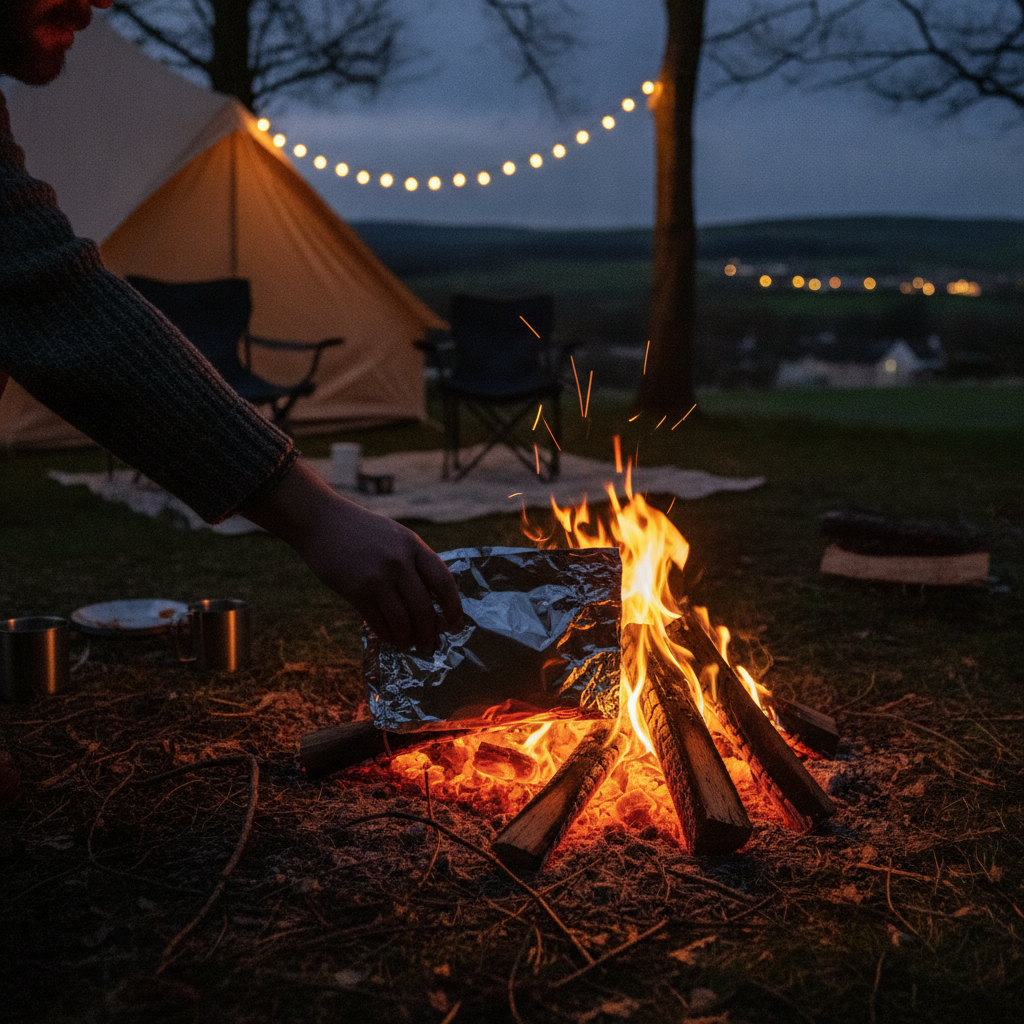
If your site permits campfires, use them. Campfire cooking is slower and less predictable than a gas stove, but it's one of the most satisfying parts of camping. Corn on the cob wrapped in foil and placed in the embers. Jacket potatoes buried at the edge of the fire. Marshmallows, obviously.
For something a bit more substantial, try foil packet dinners. A piece of salmon with lemon, butter, and some asparagus wrapped tightly in foil and left in the embers for 15 minutes is genuinely brilliant. So is chicken thighs with new potatoes and rosemary. The foil holds in all the steam and everything cooks evenly.
BBQ Nights
Most holiday parks and caravan sites allow disposable or portable BBQs. A BBQ evening feels like an occasion, especially if you've spent the day at the beach or out walking. Marinated chicken thighs, halloumi skewers, and corn on the cob. Keep it simple and let the fire do the work.
Bring a pair of long-handled tongs and a decent brush for basting. And always, always let a disposable BBQ cool completely before disposing of it safely. Check your site's rules before you fire anything up.
Smart Snacking on a Camping Trip
Snacks are easy to underestimate but they matter a lot, particularly on trips with children or if you're doing any walking or cycling. Having good snacks available keeps energy levels steady and prevents the kind of low-blood-sugar crankiness that can derail an otherwise great day.
Trail mix is a camping staple for good reason. A bag of mixed nuts, dried fruit, and a few chocolate chips travels perfectly, needs no refrigeration, and gives a quick energy hit. Make up a big batch at home rather than buying expensive pre-made bags.
Fresh fruit, cereal bars, rice cakes, and nut butter sachets are all solid options. If you've got cool box space, a tub of hummus with carrot sticks or cucumber slices works brilliantly for afternoon snacking. And don't forget something sweet for evenings around the fire. Chocolate, biscuits, or marshmallows for toasting. It's camping, not a detox retreat.
Keeping Food Safe at the Campsite
Food safety matters more outdoors, where temperatures can fluctuate and you don't have a fridge to fall back on. A good cool box is non-negotiable. Buy the best one you can afford. Cheap cool boxes struggle to hold temperature, especially in warm weather, and a warm cool box is essentially just a picnic basket.
Cool Box Tips
Pre-chill your cool box the night before by putting ice or frozen bottles in it. This gives it a head start before you even load the food. Pack raw meat at the bottom and anything ready to eat at the top. Use proper ice blocks rather than loose ice, which melts faster and leaves everything sitting in water.
Keep the cool box in the shade and avoid opening it repeatedly throughout the day. Every time you lift the lid, warm air rushes in and your ice melts faster. Designate one person to be in charge of cool box access. Sounds extreme, but it genuinely extends how long everything stays cold.
What Doesn't Need Refrigeration
Loads of great camping food doesn't need a cool box at all. Tinned goods are your best friend: chopped tomatoes, chickpeas, beans, coconut milk, tuna, sardines, and sweetcorn. They're cheap, they last forever, and they form the base of dozens of easy meals. Pasta, rice, couscous, and noodles are essential store-cupboard staples to pack.
Bread, bagels, crackers, peanut butter, jam, honey, dried fruit, nuts, and cereal all travel well without refrigeration. Oil, salt, pepper, and a small selection of spices take up barely any room and make a huge difference to how your food tastes.
Cooking Kit: What You Actually Need
You don't need to buy a complete camping kitchen set. Honestly, most of it ends up unused and just adds weight to the car. Start with the basics and see what you actually find yourself needing.
A two-burner gas stove covers most eventualities. A medium saucepan, a frying pan with a lid, a sharp knife, a chopping board, a tin opener, and a wooden spoon. That's your core kit. Add a camping kettle if you can't face the morning without a proper brew, and a French press or small cafetière if you're a coffee person.
For plates and cups, enamel or melamine is more durable than plastic and feels a bit more pleasant to eat from. Bring one extra set of everything, because someone always forgets to wash theirs up and nobody wants to eat porridge from a frying pan.
Ready to plan your next trip? Browse camping and holiday park listings at campercation.com and find the perfect site for your next outdoor food adventure. Whether you're after a fully serviced caravan pitch with electric hookup, a glamping pod with a fire pit, or a classic tent pitch in the middle of the countryside, there's something on there for every kind of outdoor holiday.