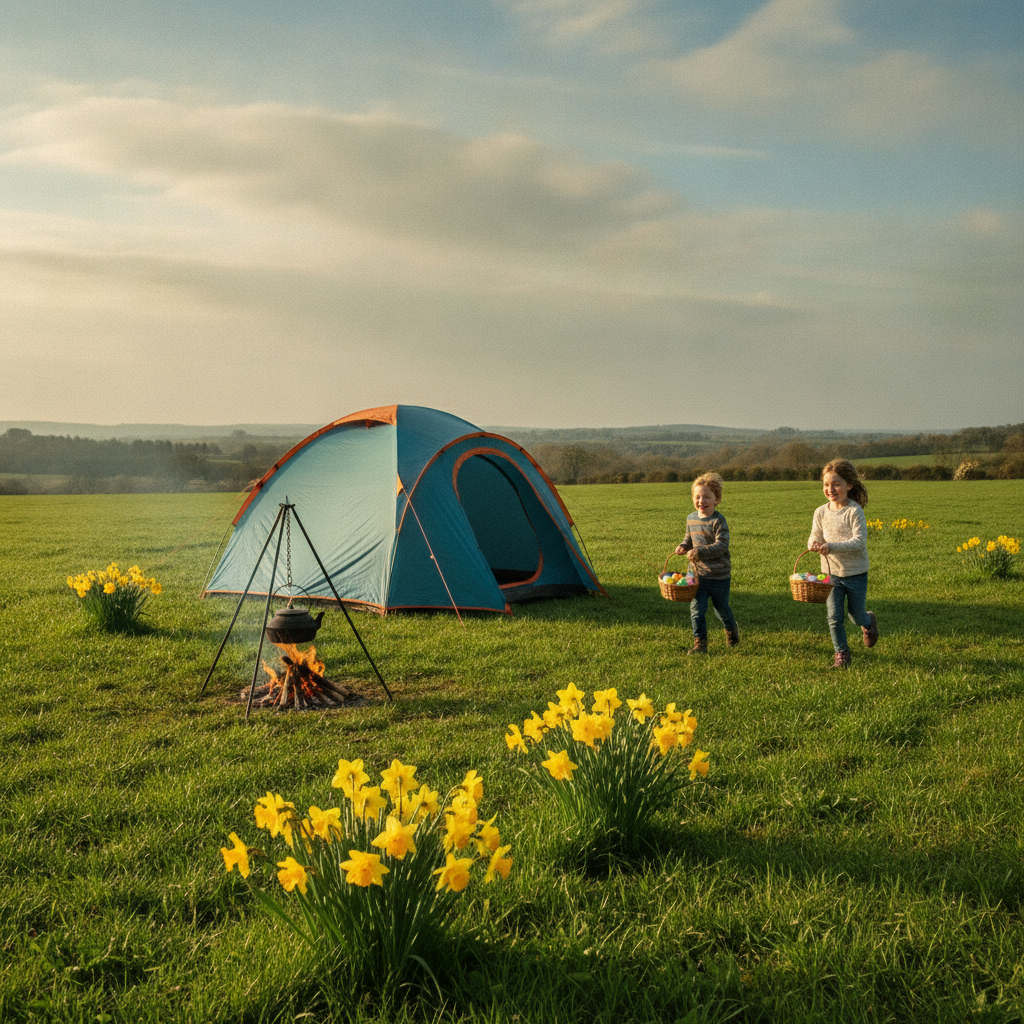
Easter camping in the UK is one of those things that sounds risky on paper — British spring weather being what it is — but tends to deliver some of the most memorable holidays you'll ever have. The countryside is waking up, the school holidays finally arrive, and there's something genuinely special about spending Easter weekend around a fire rather than stuck inside with an overflowing chocolate egg stash.
This guide covers everything you need to plan a brilliant Easter break outdoors. We're talking site tips, packing essentials, destination ideas, and how to make the most of half-term and summer trips too — because once the camping bug bites, you'll be planning your next trip before you've even packed up the tent.
Why Easter Is One of the Best Times to Go Camping in the UK
Easter falls between late March and late April, which means you're catching the UK at a genuinely lovely moment. Blossom is out, lambs are in the fields, and the days are getting longer. You'll often get golden evening light that stretches past 8pm — brilliant for campfire evenings without it feeling too cold.
Holiday parks and campsites are open but not yet rammed. That changes sharply by June. At Easter, you've got space to breathe, shorter queues for facilities, and staff who actually have time to chat. It's the sweet spot before peak season pricing kicks in too, so your budget goes further.
And yes, the weather can be unpredictable. But that's what layers are for.
What to Expect Temperature-Wise
Average daytime temperatures across most of England and Wales sit between 9°C and 14°C at Easter. Scotland tends to run a bit cooler. Nights can still drop to 4°C or below, especially if you're on high ground or near the coast. Pack accordingly and you'll be absolutely fine.
The good news is that Easter sunshine feels genuinely warm. A clear April day at a South West campsite can feel almost summery. Don't bank on it, but don't rule it out either.
Choosing the Right Easter Camping Setup for Your Family
Your accommodation choice makes a real difference at Easter. Let's be honest — not everyone wants to sleep in a tent when it's 5°C at night. And that's completely fine.
Tent Camping
If you're going down the tent route, invest in a decent sleeping bag rated to at least -5°C. A tent with good weatherproofing is essential — look for a hydrostatic head rating of 3,000mm or above. A family-sized inflatable tent makes setup quicker when the kids are buzzing with excitement and you just want to get the kettle on.
Glamping and Pods
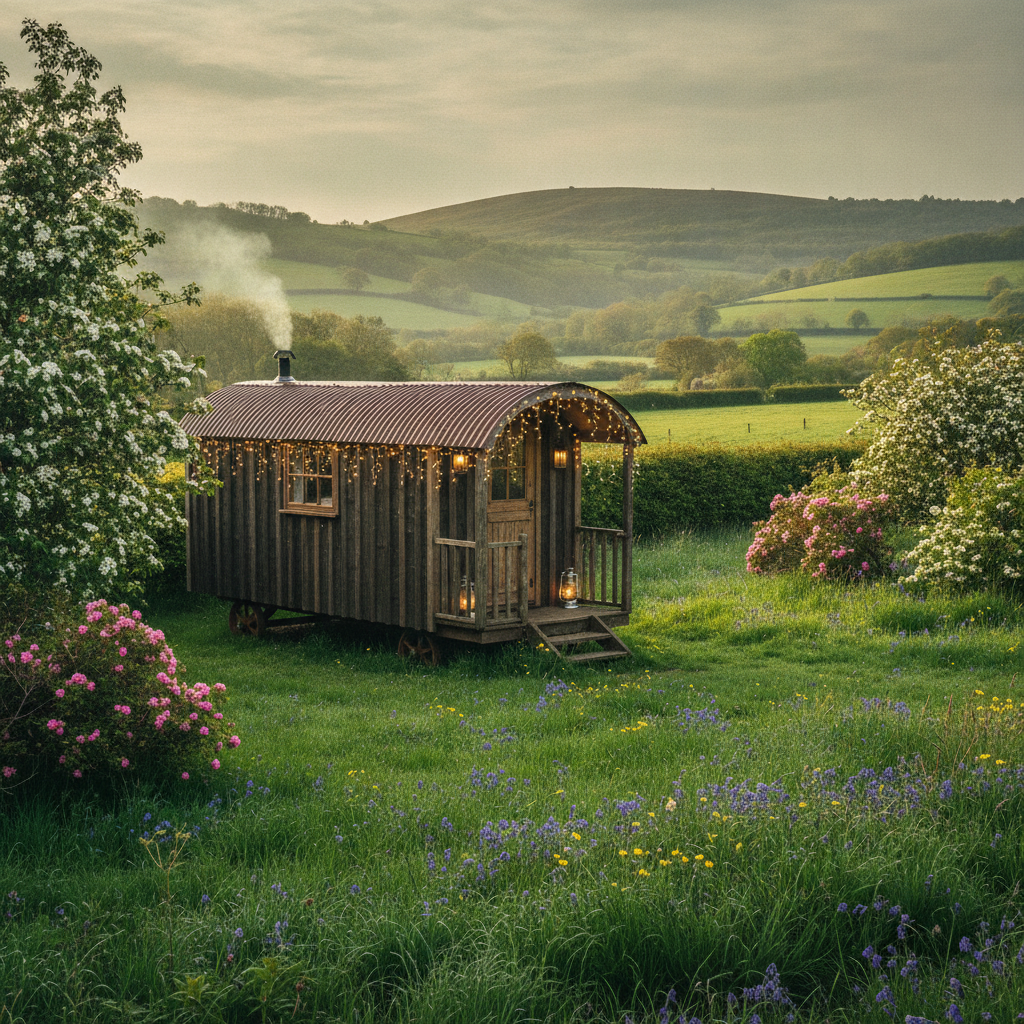
Glamping has genuinely changed the Easter camping conversation. Heated shepherd's huts, insulated bell tents, and wooden camping pods mean you can enjoy the outdoor experience without the cold-night anxiety. Many sites across the UK now offer glamping options that sleep four to six people comfortably, with proper beds and sometimes even an en-suite. Search for Easter glamping availability early — these book up by February most years.
Caravans and Motorhomes
For families or couples who've already got a caravan or motorhome, Easter is a dream. You've got your heating, your own kitchen, and the freedom to pitch up at a holiday park and genuinely relax. Caravan parks across the Lake District, Norfolk Broads, and the South West tend to open fully from Good Friday, and many run Easter-specific activities for kids. A motorhome holiday over Easter also gives you the flexibility to move if the weather turns — which is a nice card to have up your sleeve.
Browse Easter-friendly holiday parks and caravan sites at campercation.com and filter by your preferred region and accommodation type.
The Best Regions for an Easter Camping Holiday in the UK
You're spoilt for choice, honestly. But some regions consistently deliver a better Easter experience than others.
Cornwall and the South West
Cornwall gets more sunshine hours than almost anywhere else in the UK, and at Easter you'll find the coastal paths quiet compared to August. The Lizard Peninsula, Porthminster Beach near St Ives, and the Roseland Peninsula are all spectacular at this time of year. Sites like Trevella Park and Trethem Mill offer brilliant facilities and easy beach access.
The Peak District
If your family loves walking, the Peak District at Easter is hard to beat. The dark sky quality is excellent, and you're likely to catch some moody, dramatic skies over Stanage Edge or Mam Tor. Sites around Castleton and Bakewell are popular — book them early.
Norfolk and the Broads
Flat, wide, and surprisingly sunny for eastern England. The Norfolk Broads are lovely at Easter, particularly if you combine a camping or caravan pitch with a boat hire day on the waterways. Kids absolutely love it. The whole pace of the place slows right down and that's exactly what Easter should feel like.
The Scottish Borders
Quieter, wilder, and genuinely stunning. The Scottish Borders and Dumfries and Galloway region don't get nearly the attention they deserve. Easter here can be crisp and clear, especially in late April, and you'll have sites almost to yourself. Perfect for couples and families who want to get away from the Easter crowds.
Planning Half-Term and Summer Camping Trips After Easter
Once you've had a taste of camping at Easter, you'll want to plan ahead. The good news is that the UK camping season runs right through to October, with each school holiday offering something different.
May Half-Term
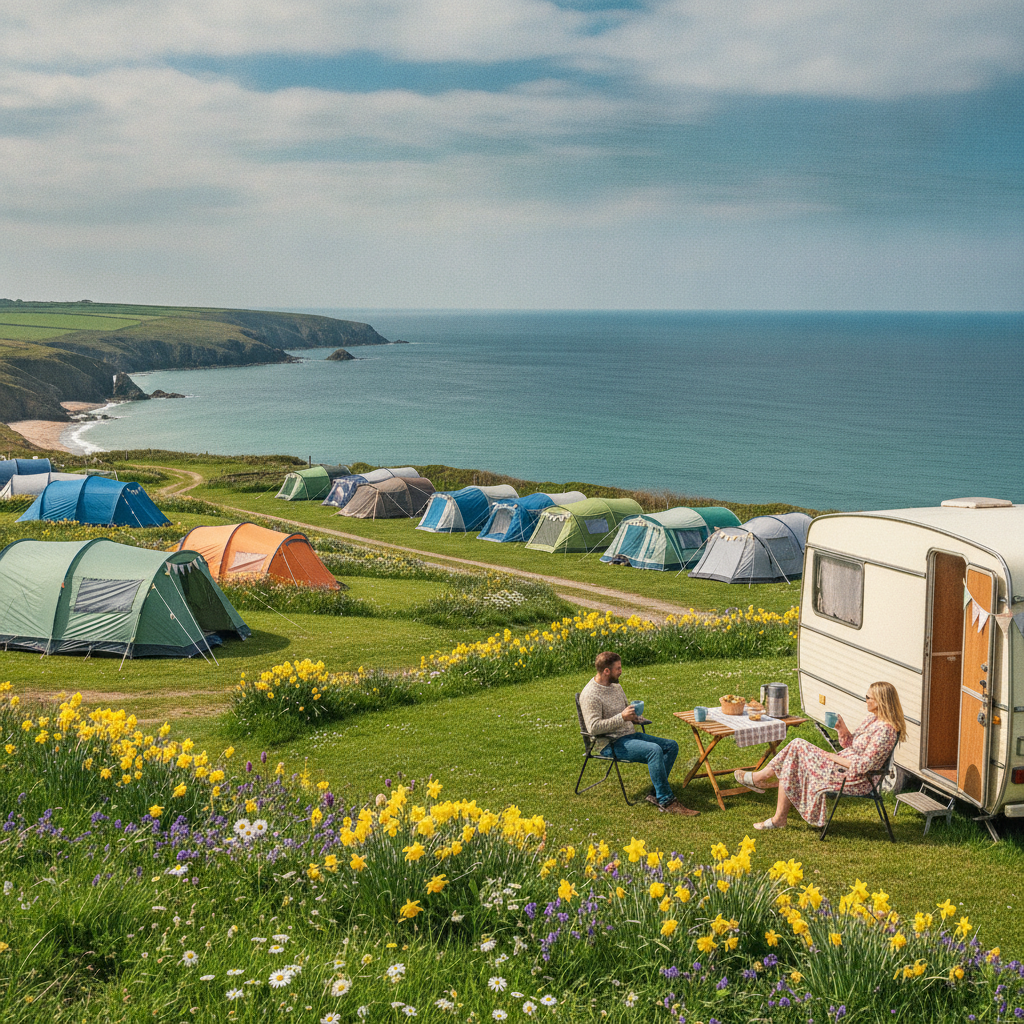
May half-term is probably the most underrated camping holiday window of the year. The weather is improving, wildflowers are everywhere, and the crowds haven't arrived yet. Campsites that were booked solid in August often still have availability in May. Aim for coastal sites in Pembrokeshire, Northumberland, or the Jurassic Coast and you're likely to strike gold.
Summer Holidays
Peak season runs from late July through August. Prices are higher, sites are busier, but the long warm evenings make it all worthwhile. If you're planning a summer camping holiday, booking in January or February is not an exaggeration. Popular holiday parks across Devon, Cornwall, and the Yorkshire coast fill up fast.
For families with younger children, look for sites with dedicated children's play areas, swimming pools, and organised evening entertainment. Haven parks, Parkdean Resorts, and Park Holidays UK all run full summer programmes. Independently run sites offer more of a traditional, quieter experience if that's more your style.
October Half-Term
October camping sounds scary. It's really not. With the right gear, an October half-term trip can be genuinely magical. Autumn colours, bonfire smells, and far fewer people on site. Many glamping providers stay open through October and it's one of their most popular booking windows. Pair it with a visit to a pumpkin farm or an autumn forest walk and you've got a proper adventure on your hands.
Essential Easter Camping Kit You Shouldn't Leave Home Without
Packing for Easter camping is different to packing for August. The temperature range across a single day can be 12 degrees, so you need layers, not just one set of clothes.
- Sleeping bag rated to -5°C — even if you think it'll be mild, you'll thank yourself at 3am.
- Thermal base layers — merino wool is brilliant if you can stretch the budget.
- A good waterproof jacket and waterproof trousers — for every member of the family, not just adults.
- Wellies or waterproof walking boots — fields get muddy at Easter, simple as that.
- A camping stove and a decent windshield — spring wind can make cooking outside tricky.
- Extra ground sheet or tarp — brilliant for creating a sheltered porch area in front of your tent.
- Hot water bottles — old fashioned but genuinely life-changing for cold nights.
- Easter eggs for a site-based egg hunt — keep a few back from the kids and hide them around the tent in the morning. It costs nothing and they'll talk about it for years.
Don't overpack. It's tempting, but you'll end up with a car boot you can't close and a tent full of stuff you never touch. Prioritise warmth, waterproofing, and a few comfort items and you'll be sorted.
Making the Most of Your Easter Camping Holiday with Kids
Kids and camping are a natural match, but a bit of pre-trip planning goes a long way. Here are a few things that genuinely work.
Give Everyone a Job
Even a four-year-old can carry their own sleeping bag roll or help collect sticks. Giving kids responsibility makes them feel part of the adventure rather than just passengers. It also means you're not doing everything yourself, which helps enormously by day two.
Plan One Big Activity Per Day
Don't try to cram in too much. Easter camping should feel relaxed. One beach trip, one forest walk, or one visit to a local farm per day is plenty. Evenings at the campsite with a fire and some toasted marshmallows are just as much a part of the holiday as any paid attraction.
Pack the Right Entertainment for Downtime
Rain happens. Having a pack of cards, a few travel games, or some colouring supplies for younger kids means a rainy afternoon doesn't become a disaster. You don't need a screen for every moment of boredom, and often kids surprise you with how creative they get when there's no Wi-Fi to fall back on.
Booking Your Easter Camping Holiday
If there's one piece of advice worth taking seriously, it's this: book early. Easter is one of the busiest camping windows of the year in the UK, and the best pitches and pods at popular sites sell out by January. A good rule of thumb is to start looking in November for the following Easter.
Check cancellation policies carefully too. Some sites offer flexible bookings, which is worth the slight premium given how changeable spring weather can be. Others are strict, so read the small print before you pay.
Ready to find your perfect Easter pitch? Head over to campercation.com and browse hundreds of holiday parks, caravan sites, and glamping spots across the UK. Filter by region, dates, and accommodation type to find somewhere that's right for your family or your couple's trip.
Easter camping in the UK is worth every layer you pack. Get out there and give it a go.