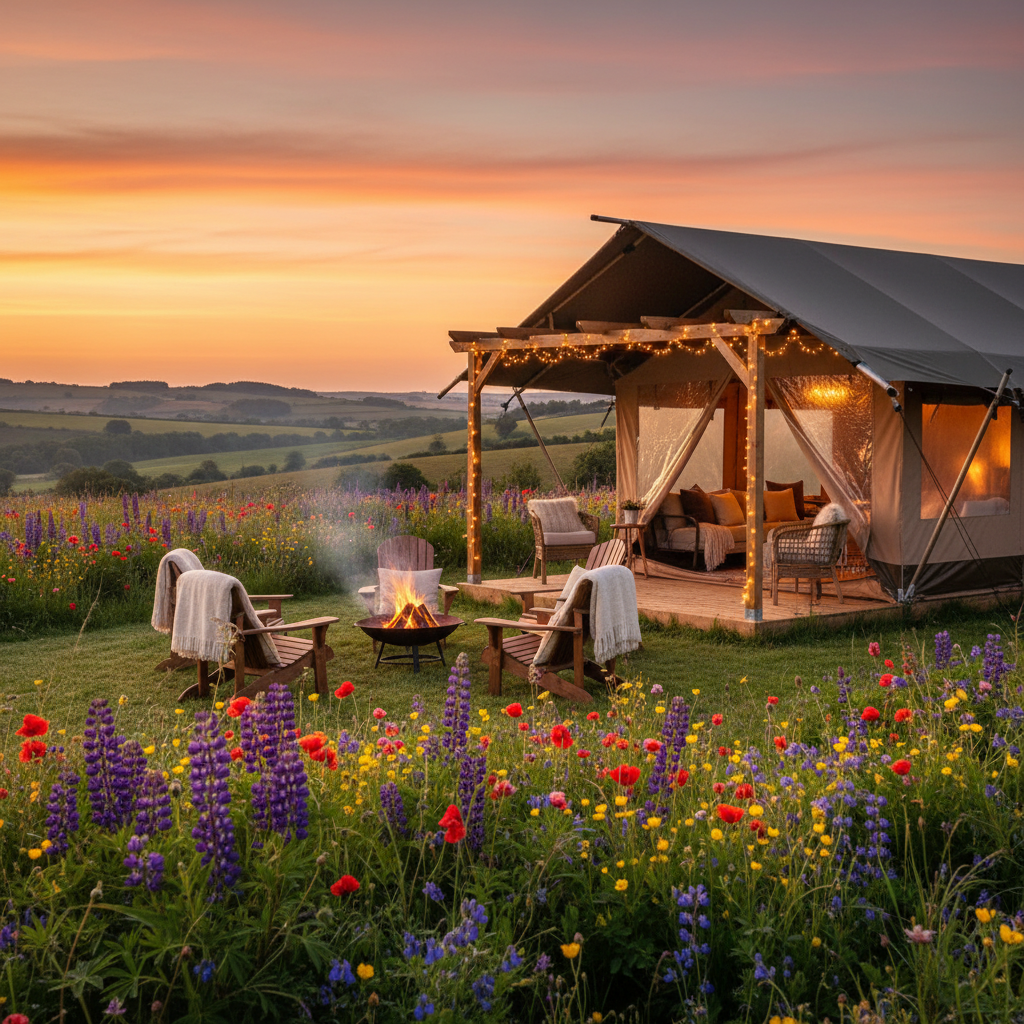
Glamping in the UK has gone from a niche novelty to one of the most popular ways to take a holiday. And honestly, it's not hard to see why. You get the fresh air, the countryside, the campfire smell and the sound of birdsong in the morning — without having to sleep on a two-inch roll mat or wrestle a flysheet in the rain. Safari tents with proper beds. Shepherd huts with wood-burning stoves. Treehouses with hot tubs. It's camping, but not as your dad knew it.
Whether you're planning a romantic weekend break or a first outdoor holiday with the kids, glamping offers something that traditional camping sometimes can't: comfort on demand. This guide covers everything you need to know about finding and booking the best glamping experiences across the UK, from the Scottish Highlands to the Cornish coast.
What Exactly Is Glamping (And Is It Worth It)?
Glamping is short for glamorous camping. But that description undersells it a bit. We're talking about properly kitted-out structures — think en-suite bathrooms, underfloor heating, kitchen facilities, and outdoor seating areas with fire pits. It's a holiday park experience combined with the intimacy of a smaller, more natural setting.
The cost tends to sit somewhere between a budget self-catering cottage and a mid-range hotel. You'll typically pay anywhere from £80 to £300 per night depending on the type of accommodation, location, and time of year. Peak summer weekends near popular destinations like the Lake District or the Jurassic Coast will always cost more. Book early if you're going for August.
Is it worth it? For most people, yes. Especially if you've tried regular camping and found it more stressful than relaxing. Glamping removes the faff without removing the magic.
The Most Popular Types of Glamping Stays in the UK
Not all glamping is the same. The type of structure you choose makes a big difference to the feel of your holiday, so it's worth knowing what's out there before you start searching.
Safari Tents and Bell Tents
These are probably the most common glamping option across UK sites. Safari tents are large, sturdy canvas structures that typically include a double bed, bunk beds for kids, furniture, and a private decked area. Bell tents are smaller and more romantic, usually suited to couples. Both feel genuinely immersive — you're surrounded by nature, but you've got a real mattress and somewhere to plug in your phone.
Shepherd Huts
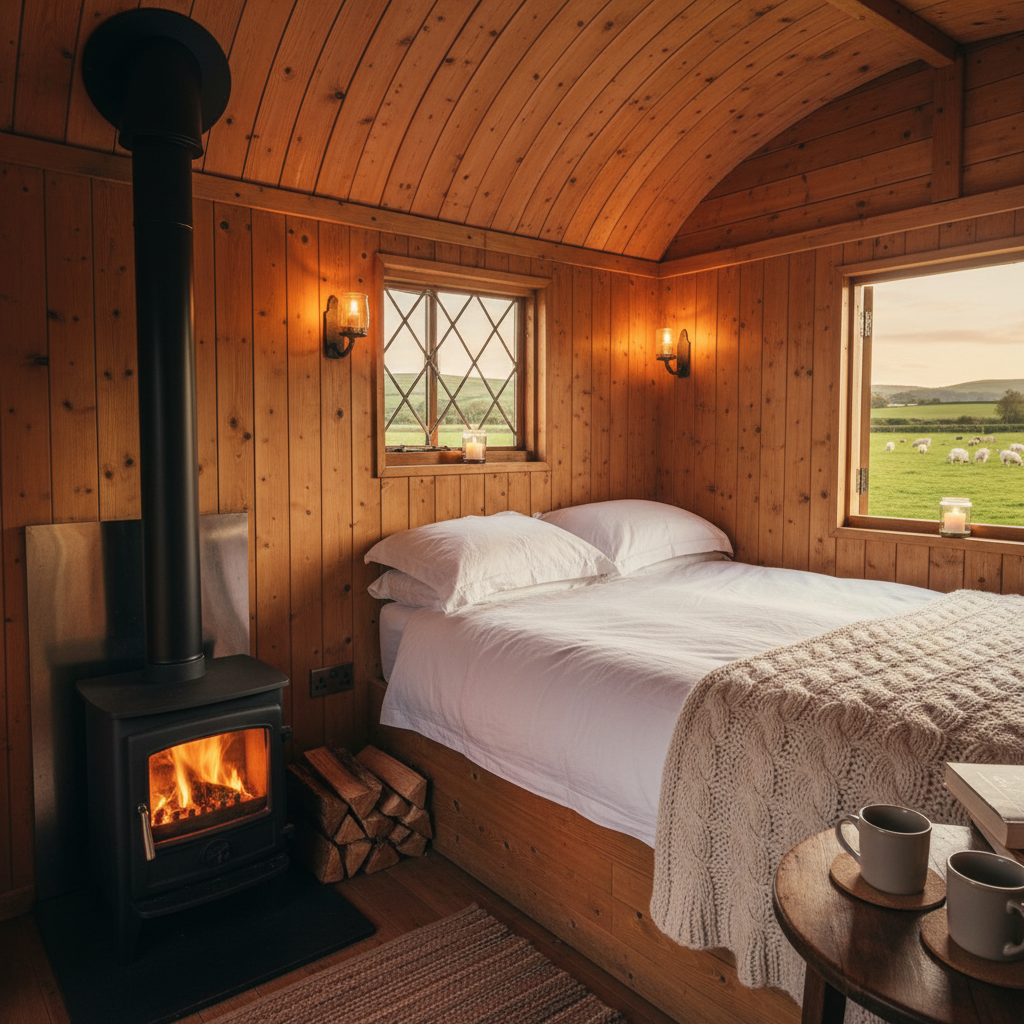
Shepherd huts have become incredibly popular over the last decade. They're the wheeled, corrugated iron huts you'll see dotted across countryside sites, usually tucked into a meadow or orchard. Inside, they're beautifully finished — wood panelling, a log burner, a kitchenette, and often a roll-top bath. Perfect for a cosy autumn or winter break. Many sites keep them open year-round, which makes them a great option outside peak season.
Treehouses
A treehouse stay is something genuinely special. Good ones are architect-designed, set among the tree canopy, and come with all the modern comforts. Some have rope bridges. Some have outdoor baths. Some have nothing but a wood stove and a view — and that's more than enough. Treehouses book up fast, often months in advance, so this is one where early planning really pays off.
Geodesic Domes and Pods
Pods and domes have exploded in popularity at UK caravan parks and holiday parks. They're often cheaper than shepherd huts or safari tents, and they're weatherproof year-round. A good wooden pod with heating, a proper bed, and a kettle is a perfectly decent base for a weekend exploring the local area. Some sites have added hot tubs to their pods, which pushes them firmly into luxury territory.
The Best Regions in the UK for Glamping
You can find glamping sites across the whole of the UK, from the Orkney Islands to Cornwall. But some areas have a higher concentration of excellent sites, and some locations are just better suited to the slow, outdoorsy nature of a glamping break.
Cornwall and Devon
The South West is probably the most popular glamping region in England. You've got dramatic coastline, great surf, excellent food, and a huge number of well-run sites. Many are clustered near the coast path or within a short drive of beaches. Sites near Padstow, St Ives, and the Jurassic Coast fill up quickly in summer — if you want a July or August booking here, aim to reserve by January or February.
The Yorkshire Dales and North York Moors
Yorkshire offers some of the best-value glamping in England. The scenery is stunning, the villages are charming, and there's none of the congestion you get in more tourist-heavy areas during peak season. Great for hiking, cycling, and pub lunches. Shepherd huts and safari tents in the Dales are particularly good for couples looking for a proper escape.
The Scottish Highlands
Scotland takes glamping to a different level. The scale of the scenery is extraordinary, the wildlife is incredible (red squirrels, ospreys, red deer), and the sense of remoteness is genuinely hard to find elsewhere in the UK. Sites near Loch Ness, Glencoe, or the Cairngorms National Park offer experiences you simply won't get in more crowded parts of the country. Worth noting: midges are real. Pack repellent and a midge net if you're going in summer.
Wales
Wales punches well above its weight for glamping. Pembrokeshire, Snowdonia (now Eryri), and the Brecon Beacons all have brilliant sites. Many are small, independent operations run by families who've converted their farms or woodland into glamping retreats. The quality is often exceptional and the prices are usually more competitive than equivalent English sites.
The Lake District
The Lake District is one of the most visited areas of the UK for a reason. The fells, the lakes, the villages — it's genuinely beautiful. Glamping here is popular and can be pricey, but there are some superb sites around Ullswater, Coniston, and Windermere. Book well in advance and accept that it will probably rain at some point. That's part of the charm, especially with a log burner to come home to.
How to Find the Right Glamping Site for You
With hundreds of sites across the UK, finding the right one takes a bit of thought. Here's how to narrow it down without spending hours going round in circles.
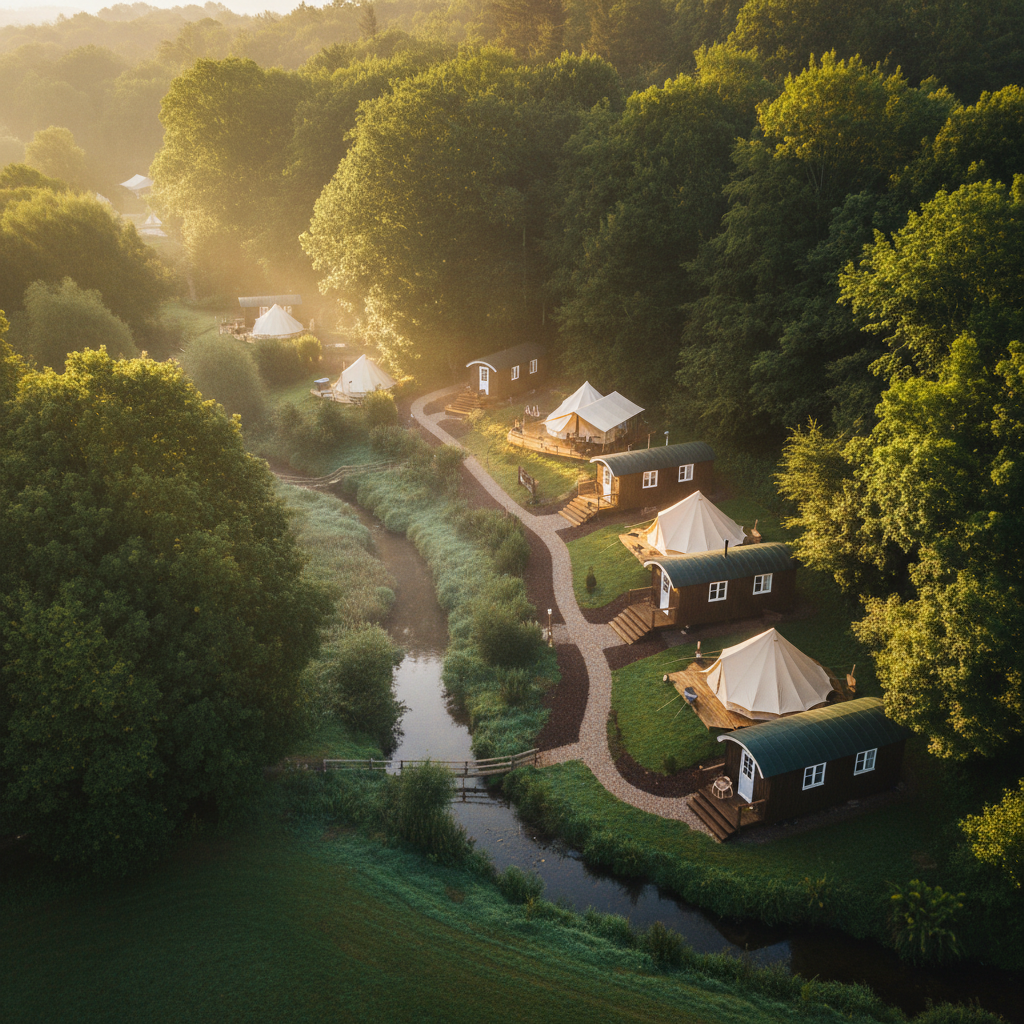
Start with your priorities. Do you want a private, secluded spot? Or are you happy to be near other guests and share facilities? Some sites are very boutique — just four or five units in a field. Others are attached to larger holiday parks with facilities like swimming pools, play areas, and restaurants. Neither is better than the other; it depends entirely on what kind of holiday you want.
Check what's included. This sounds obvious, but it's easy to assume a glamping booking includes everything, only to find that bed linen, firewood, or towels are extras. Good sites are transparent about this upfront. If the listing doesn't make it clear, email and ask before you book.
Read recent reviews. Not just the star rating — the actual written reviews. Look for comments about cleanliness, how well the site communicates, and whether the photos match reality. A site with 50 reviews averaging 4.8 stars is almost always more trustworthy than one with 8 reviews at 5 stars.
You can browse a wide range of UK glamping and camping options on Campercation.com, which lists sites across England, Scotland, and Wales. It's a good starting point if you're not sure where to begin.
Practical Tips for First-Time Glampers
If you've never done a glamping trip before, there are a few things worth knowing that make the whole experience smoother.
Pack layers, always. Even in July, UK evenings can get cold — especially in the North or at altitude. A fleece and a waterproof jacket are non-negotiables, even for a summer trip. Canvas structures and wooden huts retain some heat, but you'll still feel the temperature drop after sunset.
Bring your own supplies. Most glamping sites will have a local shop or be near a village, but self-catering is part of the appeal. Stock up before you arrive. Fire pit snacks, good coffee, wine, and breakfast ingredients will make your mornings significantly better. Some sites sell local eggs and milk on-site, which is a lovely touch.
Don't over-schedule. Glamping is about slowing down. The best trips tend to involve long walks, big meals, afternoon naps, and evening campfires. You don't need a packed itinerary. In fact, the less you plan, the more you'll enjoy it.
Check the pet policy in advance. Many glamping sites are dog-friendly, but not all. If you're bringing a dog, check whether they're allowed inside the accommodation (not just on-site) and whether there's a charge. Most sites that welcome dogs will charge a small additional fee, usually £10 to £25 per stay.
Glamping vs. Traditional Camping: Which Should You Choose?
This is the question people wrestle with, especially if they already own camping gear. The honest answer is: it depends on what you want from the trip.
Traditional camping at a well-run site gives you more flexibility, lower cost, and often a stronger sense of community. You'll meet other campers, share facilities, and feel genuinely connected to the outdoors. If you've got good kit and enjoy the process of setting up camp, there's real satisfaction in it.
Glamping suits you if you want the outdoor setting without the logistical effort. It's ideal for non-campers who are curious about outdoor holidays, for families with young children who need reliable sleep, and for couples who want a romantic escape rather than a practical adventure. And it's brilliant in shoulder season — October glamping with a wood burner and golden leaves? Hard to beat.
Many people actually do both. They pitch up in their own tent or arrive in their motorhome for longer trips, and occasionally book a glamping stay for a special occasion or a mid-trip night of comfort. There's no rule that says you have to pick one.
Ready to Book Your Glamping Break?
The best glamping spots in the UK sell out fast — particularly shepherd huts and treehouses, which are often limited to just a handful of units per site. If you've got a date in mind, don't sit on it. The difference between booking in November and booking in March for a summer trip can easily be the difference between getting your first choice site and settling for something less.
Head to Campercation.com to browse glamping options across the UK. You can filter by location, accommodation type, and facilities to find something that fits your trip perfectly. From coastal safari tents to Highland shepherd huts, there's something for every kind of outdoor holiday.
Go on. You've earnt a proper break.