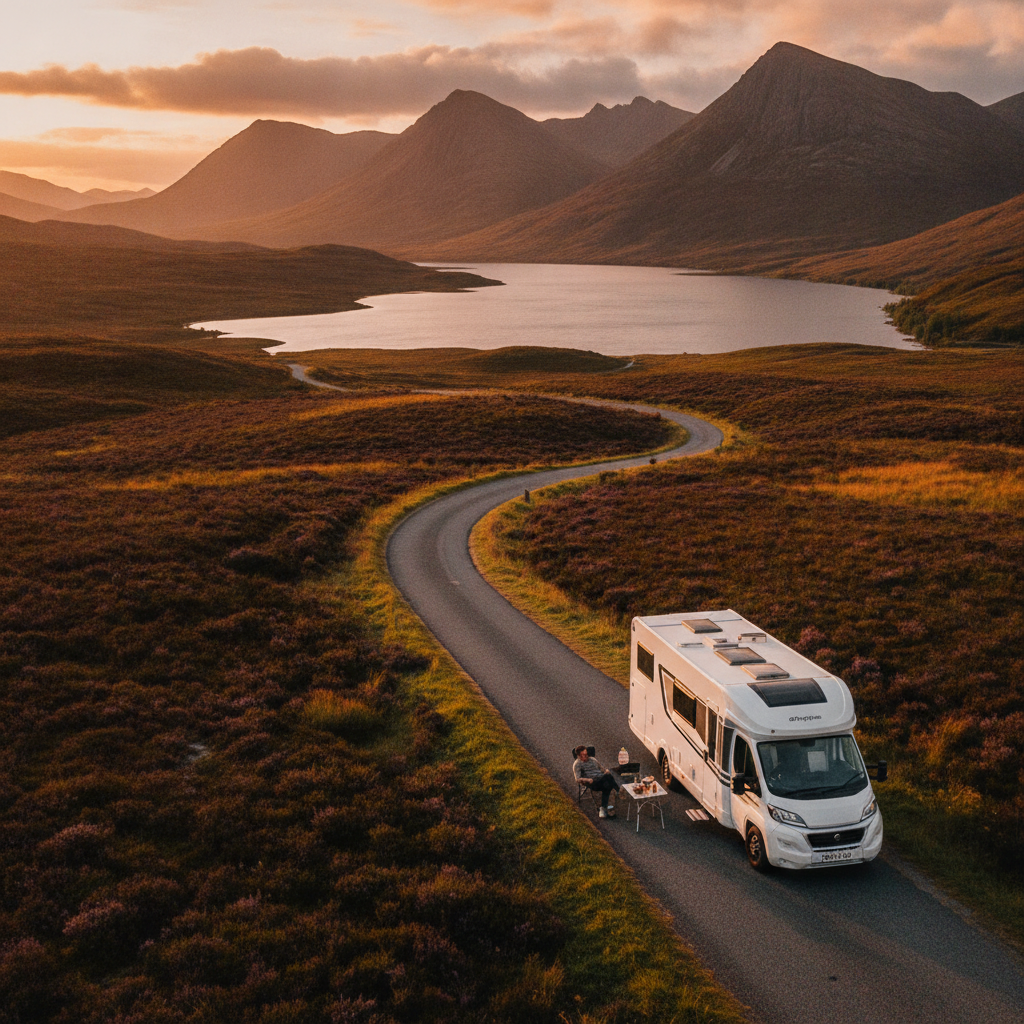
Planning your first proper motorhome trip around the UK is one of those genuinely exciting things that can also feel a little overwhelming. There are so many routes to choose from, so many rules to get your head around, and so many opinions on the internet that contradict each other. This guide to motorhome routes UK cuts through the noise. Whether you've just collected your first motorhome or you've been touring for years, there's something here to help you plan a better trip.
We'll cover the best routes across England, Scotland, and Wales, give you the honest truth about wild camping regulations, and share some practical tips that'll save you time, money, and a few headaches along the way.
Why Motorhome Touring in the UK Is Having a Moment
The numbers don't lie. The UK motorhome and caravan market saw record sales figures in recent years, and that growth hasn't slowed down. More families, couples, and retirees are swapping package holidays for the freedom of the open road. And honestly, it's easy to see why.
You set your own schedule. You wake up somewhere beautiful. You make your own breakfast and move on when you feel like it. No check-in queues, no overpriced hotel breakfasts, no arguing over suncream by a pool. Just you, the road, and whatever's round the next bend.
But good touring doesn't happen by accident. A little planning goes a long way.
The Best Motorhome Routes UK Travellers Keep Coming Back To
The UK has some genuinely world-class driving routes, and a few of them are almost criminally underrated. Here are the ones worth adding to your list.
The North Coast 500, Scotland
Let's get the obvious one out of the way first. The NC500 is 516 miles of some of the most dramatic scenery in Europe. You'll pass through Inverness, up past Dunrobin Castle, around the far north to Durness, then down through Torridon and Applecross before looping back.
It's breathtaking. It's also very popular now, which means summer queues at passing places and busy campsites. Go in May or September if you can. The roads are narrow in places, so if you're driving a larger motorhome over 7 metres, do your research on specific stretches before you go.
The Pembrokeshire Coast, Wales
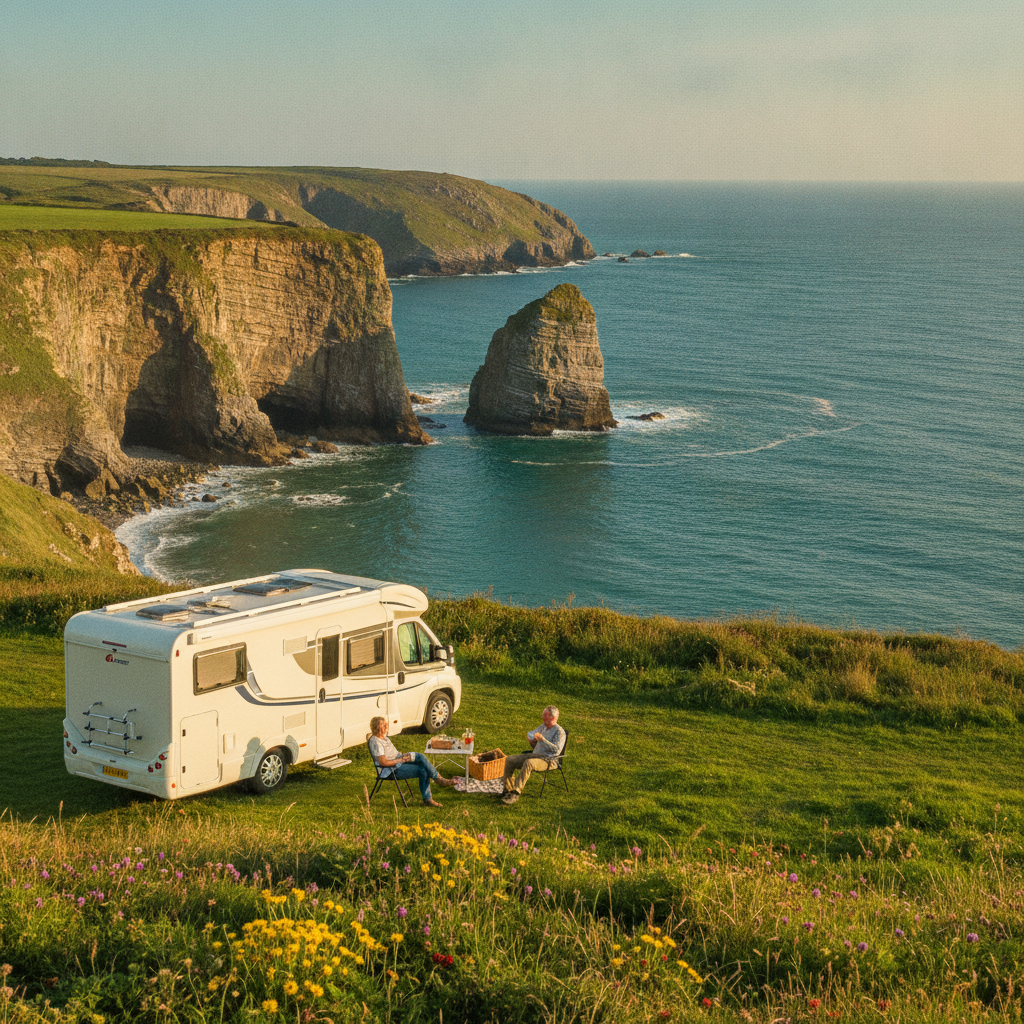
This is one of the most underrated touring routes in the whole of the UK. The Pembrokeshire Coast Road hugs 186 miles of National Park coastline, with dramatic cliffs, hidden beaches, and little harbour towns that feel like they're from another era entirely.
St Davids is the smallest city in the UK and an absolutely brilliant base for a night or two. The sunsets from Marloes Sands are something else. And the caravan parks and camping sites along this stretch tend to be excellent, with many small independents offering stunning coastal views for very reasonable prices.
The Yorkshire Dales and Moors Loop
If Scotland feels a bit far and you're based in the Midlands or North of England, this loop is a cracking alternative. Start in Skipton, head north into the Dales, swing across to Richmond, then down through the North York Moors to Whitby and back inland. You'll cover around 250 miles of incredible varied scenery.
Whitby alone is worth the trip. The harbour, the ruins, the fish and chips. Combine that with the moorland roads and the Dales villages and you've got a brilliant long weekend or short week.
The Jurassic Coast, Dorset and Devon
For those who want milder weather odds and a more relaxed pace, the Jurassic Coast drive from Exmouth to Studland Bay is 95 miles of fossil-rich cliffs and charming seaside towns. Lyme Regis, Charmouth, West Bay (yes, the Broadchurch one), Swanage. Each stop is worth an afternoon.
There are dozens of excellent holiday parks along this stretch. You can browse sites and book ahead at campercation.com to make sure you're not left scrambling for a pitch in July.
Understanding Wild Camping Regulations in England, Wales and Scotland
This is where a lot of people get confused. Wild camping rules in the UK are not straightforward, and they vary significantly depending on where you are.
Scotland: The Best News for Wild Campers
Scotland has the most generous access rights in the UK, thanks to the Land Reform (Scotland) Act 2003. You have the legal right to camp on most unenclosed land, provided you act responsibly. That means leaving no trace, not camping in one spot for more than 3 nights, and respecting the land and its users.
This applies to tents and, generally speaking, motorhomes too, though local bylaws in popular areas like Loch Lomond have introduced more restrictions in recent years. The Loch Lomond and The Trossachs National Park now requires a permit for some camping zones between March and September. Always check the current rules before you park up.
England and Wales: A Different Story
In England and Wales, wild camping is technically illegal without the landowner's permission. Full stop. There's no equivalent right of access for overnight camping on private or unenclosed land.
There are a small number of exceptions. Dartmoor National Park is the only place in England with a legal right to wild camp, and even that right was temporarily challenged in a high-profile court case in 2023 before being reinstated. Wild camping on Dartmoor is permitted on the open moorland, but not within 100 metres of a road or within specific exclusion zones.
For motorhomes specifically, overnight parking on public roads and car parks is subject to local authority rules. Many councils prohibit it explicitly. Others tolerate it. Don't assume it's fine just because nobody's said anything the first night.
The Motorhome Parking Grey Area
There's an important distinction between wild camping and overnight parking in a motorhome. Sleeping in your motorhome on a public road isn't the same as setting up camp with a tent on a hillside. In many places, it's perfectly legal to park overnight as long as you're not causing an obstruction and no local signs prohibit it.
Apps like Park4Night and Campercontact are incredibly useful for finding spots where other motorhomers have stayed without issues. They're community-driven, updated regularly, and much more reliable than random forum posts.
Choosing Between Holiday Parks, Campsites, and Motorhome Stopovers
Not every night needs to be a full-service campsite. Good motorhome touring usually mixes things up a bit.
Holiday Parks and Caravan Parks
These offer the most facilities: electric hook-ups, shower blocks, sometimes a bar or restaurant on site, kids' play areas, and often organised activities. Great for families and for nights when you want a proper hot shower and a flat pitch.
Costs vary enormously. In peak season on a popular stretch of the Cornish coast, you might pay £45-£60 a night at a well-equipped holiday park. Off season, or at a smaller independent site, you could be looking at £18-£25. It pays to shop around and book early for school holidays.
Certificated Locations and Small Sites
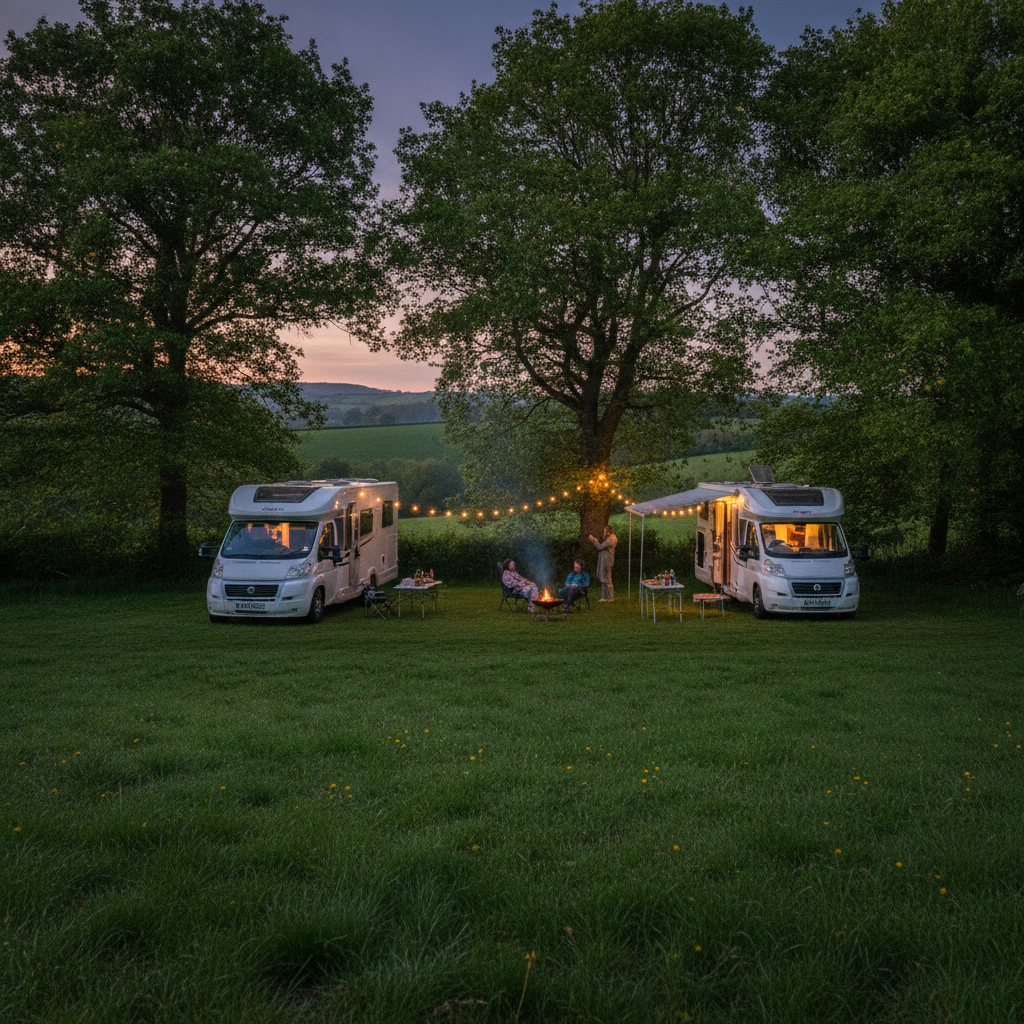
The Caravan and Motorhome Club and the Camping and Caravanning Club both run networks of small sites called Certificated Locations (CLs) and Certificated Sites (CSs). These are limited to 5 pitches and are often on farms or private land. They're quieter, usually cheaper, and often in genuinely lovely spots.
Club membership is required to use them, but it often pays for itself pretty quickly if you're touring regularly.
Aires and Motorhome Stopovers
The continent has a well-established network of aires, dedicated motorhome stopovers often run by local councils. The UK is catching up slowly. You'll find a growing number of dedicated motorhome parking areas, some with basic facilities like a water point and waste disposal, for a small fee or free.
These are brilliant for a quick overnight stop between destinations. They're not meant for multi-night stays, but as part of a touring itinerary they're invaluable.
Practical Motorhome Touring Tips That Actually Help
A few things experienced tourers know that don't always make it into the guidebooks.
Sort Your Waste and Water Routine Early
Knowing where your nearest Elsan disposal point and water fill-up is at any given time will save you stress. Apps like the Camping and Caravanning Club's site finder, or the CAMC app, show facility points as well as pitches. Get into the habit of filling your water tank and emptying your waste cassette whenever you get the chance, not when you're desperate.
Plan Your Route Around Road Width, Not Just Distance
Google Maps does not know you're in a 7.5 metre motorhome. It will cheerfully route you down a single-track Devon lane with a 10-foot width restriction and a tractor coming the other way. Use a motorhome-specific sat-nav like a Garmin Camper or TomTom Camper, and enter your vehicle dimensions before you set off.
Don't Try to Cover Too Much Ground
This is the classic first-timer mistake. You've got a week off, you've planned stops in Cornwall, the Lake District, Edinburgh, and the Cotswolds. That's not a holiday, that's a driving challenge. Pick one region, explore it properly, and save the others for next time. You'll enjoy it far more.
Book Ahead for Peak Season, Stay Flexible Off-Peak
July and August on popular coastal routes require advance booking. Easter and half-term too. But if you're travelling in May, June, September, or October, staying flexible and booking a day or two ahead is perfectly workable, and often means you can grab a last-minute pitch at a site you didn't know existed. Some of our favourite spots have been total surprises.
Where to Find and Book Great Motorhome Pitches in the UK
Finding the right pitch is half the battle. Campercation lists hundreds of holiday parks, caravan sites, and motorhome-friendly locations across the UK, with honest reviews and up-to-date availability.
You can filter by region, facilities, price range, and whether a site specifically caters for motorhomes. It's free to browse and searching takes about 30 seconds. If you're starting to plan a route, it's a good idea to search your intended destinations early, particularly if you've got school holiday dates to work around.
Head to campercation.com and start exploring what's available along your chosen route. You might just find a spot you've never heard of that turns out to be the highlight of the whole trip.
Ready to Hit the Road?
Motorhome touring in the UK genuinely is one of the best ways to see this country. The flexibility, the freedom, the ability to wake up somewhere new every morning. It's hard to beat once you've caught the bug.
Start small if it's your first time. Pick one region. Plan a loose itinerary with a couple of confirmed bookings and some flexibility built in. Get to grips with the waste and water routine before you need it. And don't try to replicate someone else's epic Instagram adventure in your first week out.
Your trip, your pace, your rules. That's what it's all about. Browse motorhome-friendly sites across the UK at campercation.com and start planning something brilliant.